

Table of Contents
A drip irrigation kit is the shortest route from a drum of water to a self-watering field. It is also the purchase most Kenyan growers get wrong. The box is rarely the fault. The mismatch between the kit, your row spacing and the pressure the pump really delivers is.
This page gives the sizes we keep in stock and what each one costs. Then it covers how much water a crop needs, and the six checks that decide whether a quoted kit will run on your land. Read the price table first if you only want the number. Read the six checks before you pay.
What a drip irrigation kit actually does
A drip irrigation kit moves water from a source to each root zone, one small volume at a time. Nothing is thrown into the air. Also, very little wets the soil between rows. Because the water leaves the pipe at low pressure through a tiny emitter, the field receives about what it lost to evaporation and plant use. It receives no more.
For example, a tomato bed watered twice a week through tape needs far less than the same bed flooded from a furrow. However, the saving is not cleverness. A furrow pushes water across the whole surface, so the sun takes a large share before roots reach it. For that reason, most growers who switch report fewer pumping hours as much as less water.
The kit has a second job, which is fertiliser. Soluble nutrients injected upstream leave with the same water. So the crop is fed at the root in small doses, instead of in one heavy band. That is why a fertigation tee earns its money even on a quarter acre.
What is inside a drip irrigation kit
Every drip irrigation kit we supply carries the same seven parts, sized to the plot. The table says what each part does. It also gives the exact question to ask when a quotation lists a part by name only. Furthermore, it names the specification a buyer usually forgets to check.
| Part | What it does | What to ask for |
|---|---|---|
| Drip tape or drip line | Carries water along the bed and releases it at each emitter | Emitter spacing in centimetres, not roll length alone |
| Mainline pipe | Runs water from the pump to the field boundary | Diameter in millimetres and the pressure rating |
| Sub-main pipe | Feeds one block of laterals from the mainline | Diameter, and how many laterals it can serve |
| Filtration unit | Stops sand and algae before they reach the emitters | Micron rating matched to your water source |
| Connectors and fittings | Join pipe to pipe and pipe to tape, and close the ends | Barb sizes, takeoffs, end clamps and a punch |
| Pressure regulator | Holds the field at the pressure the tape is rated for | Inlet and outlet range in bar |
| Storage tank | Holds water so pumping follows the crop, not the river | Optional. Capacity in cubic metres |
The seven parts of a drip irrigation kit, and the specification behind each name.
Two of those parts decide whether the rest works. The filter protects every emitter in the field. The regulator protects the tape. So a kit sold without either is a kit sold with a failure already inside it.

Drip irrigation kit sizes and prices in Kenya
We price a whole kit against the area it waters. The figures below are current shelf prices in Kenyan shillings. Each covers the seven parts above, in the sizes that plot needs. One acre is about 4,048 square metres, so the area column is a straight division of that number.
| Kit size | Area covered | Whole-kit price (KSh) |
|---|---|---|
| Kadogo drip kit | 50 to 200 m² | 5,500 to 9,850 |
| One eighth acre | 506 m² | 17,500 |
| Quarter acre | 1,012 m² | 33,000 |
| Half acre | 2,024 m² | 65,000 |
| Three quarter acre | 3,036 m² | 80,000 |
| One acre | 4,048 m² | 135,000 |
Whole-kit prices by plot size, with areas divided from 4,048 m² to the acre.
The Kadogo kit is the one to start with if you have never run drip. It fits a keyhole bed, a nursery or a small plot beside the house. It also teaches the same habits a field kit demands. Then, when you move up, the mistakes are already paid for.
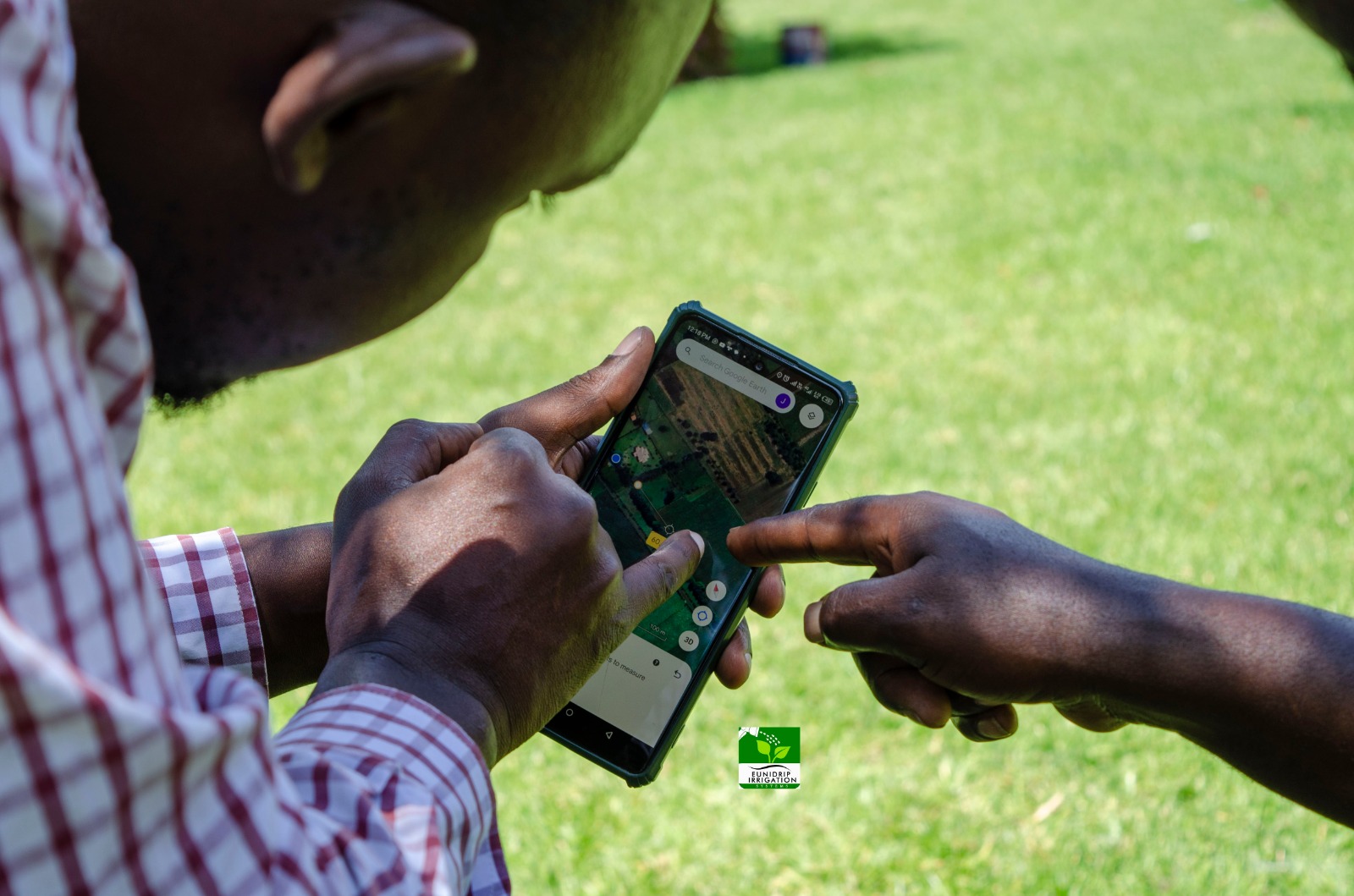
A drip irrigation kit above one acre is designed, not boxed. For those projects we size the mainline from pump to far corner. We split the field into blocks and quote each block. Pumping and storage sit outside a field kit, so a whole-system figure is set out on our drip irrigation system costs page.
Two ways the same acre gets quoted
Our online shop lists the same drip irrigation kit sizes a second way. It prices them by how many lines of tape run down each bed. That grid is usually cheaper at one line per bed, because less tape and fewer fittings leave the shelf. It is not a different quality of kit. It is instead a different density of watering.
| Plot | Whole kit (KSh) | Shop, 1 line per bed | Shop, 2 lines | Shop, 3 lines |
|---|---|---|---|---|
| One eighth acre | 17,500 | 10,000 | 15,000 | 20,000 |
| Quarter acre | 33,000 | 16,000 | 25,000 | 35,000 |
| Half acre | 65,000 | 30,000 | 45,000 | 60,000 |
| One acre | 135,000 | 65,000 | 95,000 | 130,000 |
Whole-kit prices beside the shop’s lines-per-bed prices for the same four plots.
Read the two tables together before you compare a quotation from anyone else. Ask which grid a price came from. Specifically, a supplier quoting 65,000 for an acre and a supplier quoting 135,000 may both be honest. Only one of them may be offering three lines per bed.
The one acre kit page on the shop carries that grid in full, with the tape quantities behind it.
How many drip lines your crop needs
Within a drip irrigation kit, lines per bed is a crop decision, not a budget decision. A dense root system spread across a wide bed cannot reach water from one line at the centre. So it needs tape on both sides. A widely spaced crop, however, does not. The grouping below is what we install.
| Lines per bed | Crops we run this way | Rolls for one acre | Metres of tape |
|---|---|---|---|
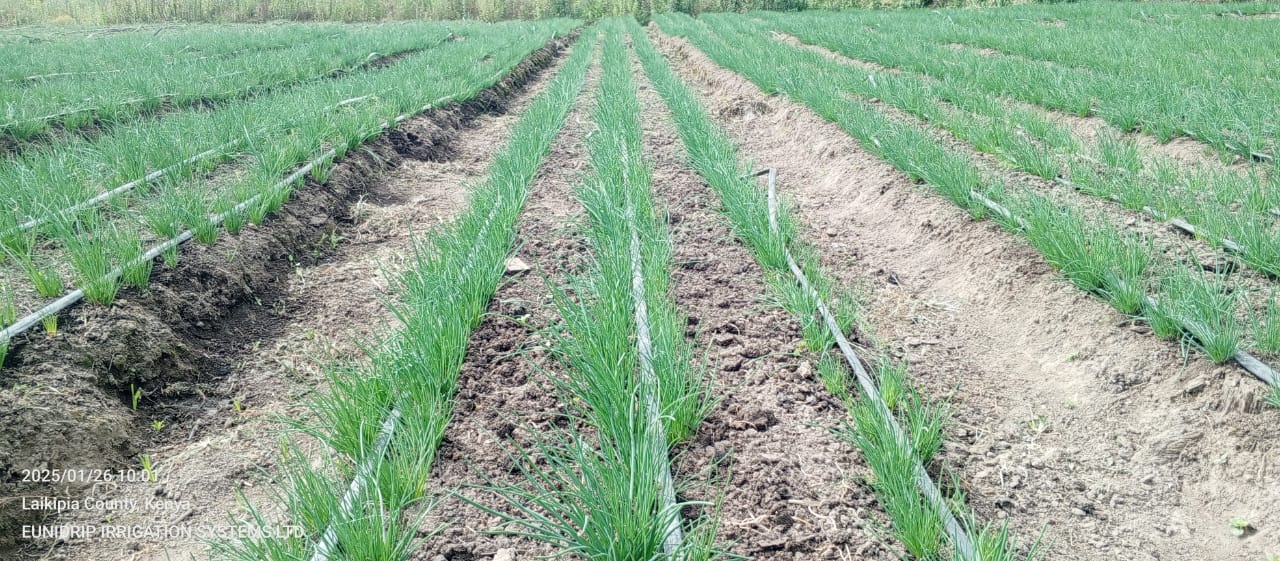
| 3 | Strawberries, ornamental flowers, garlic, French beans, onions, herbs and spices | 8 | 64,000 |
| 2 | Spinach, capsicum, potatoes, kales, tomatoes, collards, cabbage, peppers and other traditional vegetables | 6 | 48,000 |
| 1 | Butternut and watermelon | 4 | 32,000 |
Tape quantity by crop group. A standard roll holds 8,000 m of line.
Onion is the crop that punishes a cheap quote. Growers buy a one-line kit for an onion bed. Then the middle of the bed stays dry while the edges stay wet. Onions, garlic and French beans want three lines. The onion kit page sizes that layout crop by crop.
How a drip irrigation kit is laid out
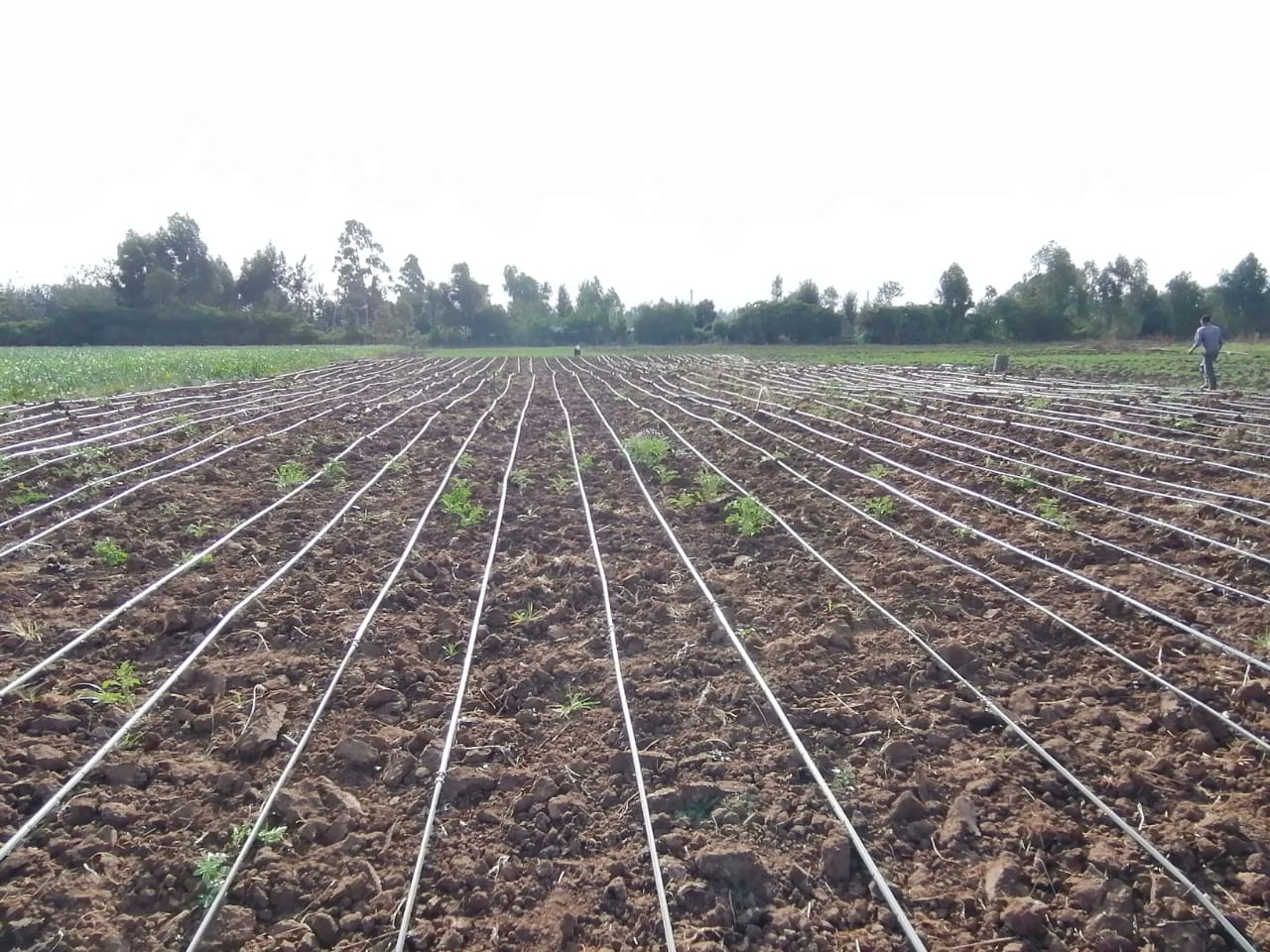
Water travels the same order in every drip irrigation kit, and each step loses a little pressure. Counting those losses is how a kit gets sized. A tape rated at one bar will split or starve if the regulator is set from the pump reading instead.
- The source: a borehole, a river intake, a dam or a tank on legs.
- The pump, sized to the field and not to the nearest shop shelf.
- The filter, sitting upstream of everything that has an emitter.
- The fertigation point, usually a Venturi tee or a dosing bucket.
- The mainline, running the length of the farm at the largest diameter.
- The sub-main, feeding one block of beds at a time.
- Takeoffs and laterals, where pressure is lowest and flow must still be even.
Because the far end of the last lateral sees the least pressure, a block should be short. Typically one sub-main serves about fifty metres of tape on each side. Beyond that, the layout is split again. That single rule is the difference between an even field and one where the first ten beds flood and the last ten stay dry.

Component prices you can verify
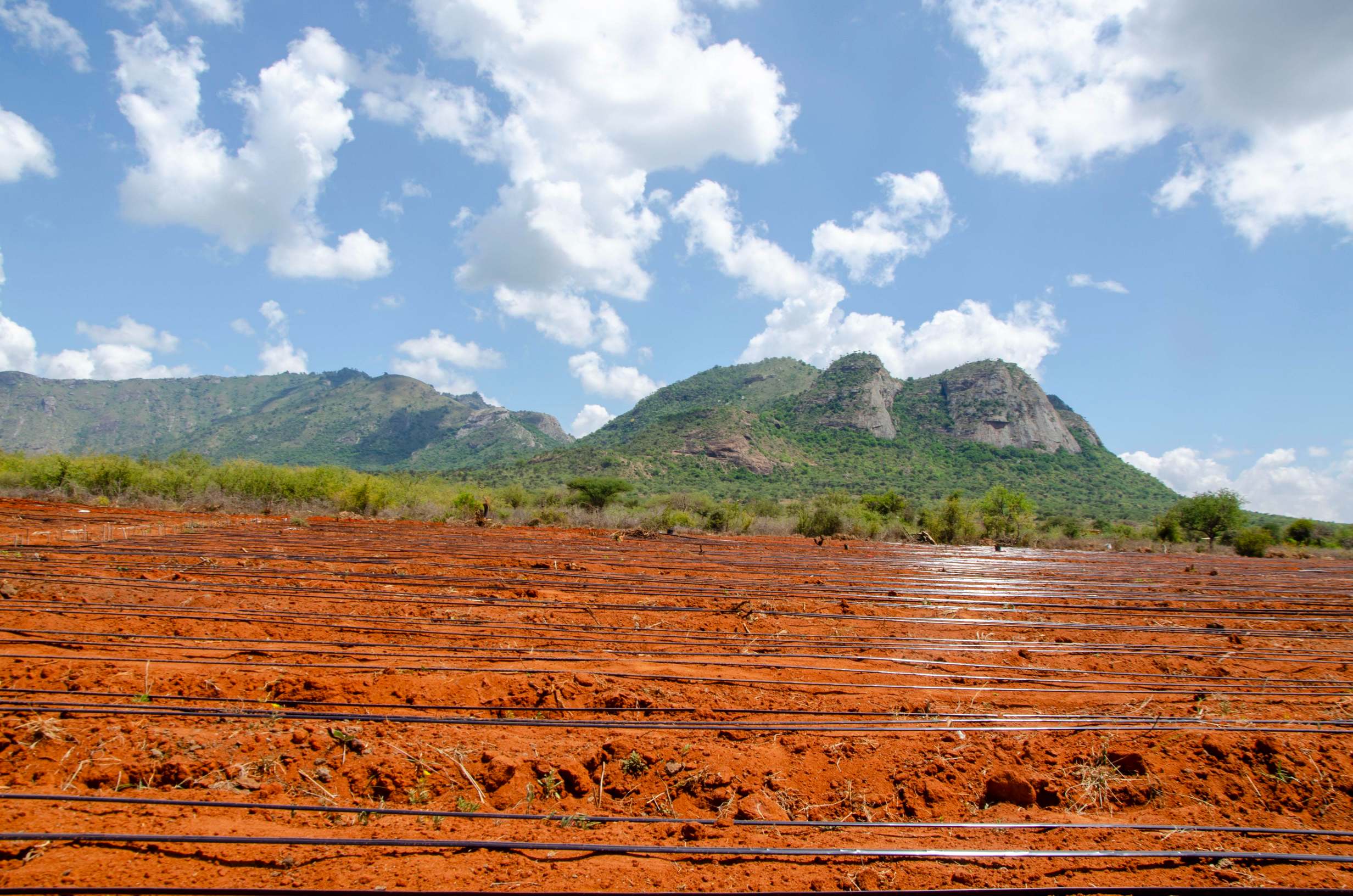
A whole drip irrigation kit is convenient, but the parts have their own prices. Knowing them tells you whether a quotation is fair. Each figure below is a live shop price in Kenyan shillings, for the smallest listed size or pack.
| Component | Shop price (KSh) |
|---|---|
| Drip tape, per roll | 8,000 to 14,500 |
| Irrigation water filter | 1,400 to 6,500 |
| Screen filter element | 900 to 5,000 |
| Venturi injector | 2,000 to 21,500 |
| Pressure compensating button dripper | 10 to 20 each |
| Adjustable button dripper | 10 to 30 each |
| Arrow dripper | 60 each |
| Takeoff connector | 15 each |
| Drip starter connector | 15 each |
| Drip tape connector | 15 each |
| Saddle clamp | 250 to 830 |
| Drip valve | 60 each |
| HDPE punch | 700 |
| Irrigation pipe, all sizes | 1,800 to 52,500 |
Part prices from the shop, useful when a quotation lists a kit as one line.
Consequently, a fitting that costs fifteen shillings is not where a kit is overpriced. The tape and the filter are. So if a quotation will not break those two out, ask for it to be broken out.

Drip irrigation kit versus a self-built system
Buying loose parts is a real option, and for some farms it is the better one. The comparison below is honest about where a drip irrigation kit wins and where loose parts win.
| Question | Boxed kit | Parts bought separately |
|---|---|---|
| Time to install | Same day for a first acre | Two or three days of counting and returning |
| Sizing risk | Pre-matched to the plot | Yours to carry |
| Upfront cost, small plot | Lower | Similar, sometimes higher after mistakes |
| Upfront cost, large plot | Higher than a designed layout | Lower, if the design is correct |
| Future expansion | Limited to the box | Add blocks at any size |
| Warranty | One supplier for the whole set | Claim part by part |
| Best suited to | Under one acre, first-time growers | Over two acres, growers with an adviser |
Where a boxed drip irrigation kit wins, and where loose parts do.
In practice, most first installations should be boxed. The reason is not price. A boxed kit arrives with parts that already fit each other, and a first season is the wrong season to learn that a barb does not match a tape. In contrast, a two-acre block farm is designed, not boxed. There the parts route is cheaper.
Six checks before you buy a drip irrigation kit
Work through these six with any drip irrigation kit quotation in front of you. Each one has cost a grower a season.
- Measured area, not claimed area. Bring the length and width in metres. A plot sold as one acre is often 3,200 m² of plantable beds once the headland is removed.
- Emitter spacing. Twenty centimetres suits onions and greens. Thirty to forty centimetres suits maize and tomatoes. Thus, a kit that will not state the spacing will not suit your crop.
- Lines per bed. Agree the number before the price. It changes the tape quantity, and tape is the largest single cost.
- Filtration rating. River and dam water need a disc or sand unit. A borehole that runs clean may only need a screen. Ask for the micron rating either way.
- Working pressure. Ask what the regulator delivers at the field. Instead, ignore what the pump draws at the switch.
- End of the lateral. Check that end clamps, flush valves and a punch are in the box. Similarly, these are the items most often quietly left out.
Therefore, take the quotation to a second supplier and ask them to price the same six answers. If the second number is much lower, the difference is almost always tape thickness, emitter count or filter grade.
Water source, pressure and the licence
A drip irrigation kit only saves water you are already entitled to use. Boreholes, river intakes and dams across a watercourse in Kenya fall under the Water Resources Authority. Abstraction without a licence exposes the farm to enforcement. The authority publishes its licence types and conditions at wra.go.ke/licences. Accordingly, read it before the pump is bought.
Next, the source sets the layout. A borehole that yields three cubic metres an hour cannot fill a one-acre field in twenty minutes. So the kit needs storage, and a second pump sized to the tank, not to the borehole. Gravity from a tank on legs is the cheapest pressure there is. It also takes the pump out of the running cost.
How much water the crop itself needs is a published figure, not an opinion. The FAO method, set out in Part B of Irrigation and Drainage Paper 56, turns local weather into a daily depth in millimetres. Multiply that depth by the bed area and you have the volume each laterals run must deliver. Our land preparation guide covers the bed making that has to happen first.
Installing a drip irrigation kit in Kenya
Installing a drip irrigation kit follows the layout order above. A first acre is a two-day job for three people, once the beds are made. Mark the headland and run the mainline along the boundary. Then hang the sub-main on the first bed and pull tape down each row. Then clip the tape at the start and the end.
Then open the system before any planting goes in. Flush every lateral with the ends raised. Check that the last emitter in the far block drips at the same rate as the first. Only then close the ends. This test takes twenty minutes, and it finds every sizing error while the tape is still on the surface.
We install as a service across Kenya and in the wider East African region. The crew, the process and county coverage are on the drip irrigation installation page. For the equipment side of the same job, see our irrigation equipment suppliers breakdown. A worked acre, from bare ground to running tape, is on the Molo project page.
What the kit costs to run
The purchase price is the smaller half of the total. Running cost is pump hours, fertiliser dissolved into the line, and the parts that wear. Hence the two questions a buyer should ask before paying, not after.
Typically a one-acre vegetable field runs between forty minutes and one hour a day through the dry season. That is where the savings against furrow irrigation come from. Fewer hours, and less water to move in those hours. Tape is the item to budget for. Under careful use it lasts several seasons above ground. Under sun and rough handling, though, it thins and splits sooner. Consequently, spacing and pressure decide its life more than the brand does.
For the pump itself, the sizing rules are on the pump for drip irrigation page. The solar option that removes most of that running cost is covered under solar irrigation systems.
Keeping a drip irrigation kit clear
Clogging is the failure that ends a drip irrigation kit on Kenyan farms, and it is almost always preventable. Root growth, silt and fertiliser residue are the three causes. Each, however, has a different cure.
First, flush the laterals weekly with the end caps off. Do it before the water goes cloudy on its own. Second, keep the filter cleaned. A dirty filter drops pressure across the field, which reads as a blocked line when nothing is blocked. Third, inject an acid or chlorine treatment on a schedule whenever you fertigate, because fertiliser residue is what seals an emitter from inside.
The written order of work sits on the unblocking a clogged drip tape page. Likewise, the takeoff page covers the fittings most often cracked during a flush.
Frequently asked questions about drip irrigation kits
What does a drip irrigation kit include?
Tape or lines, main and sub-main pipe, a filtration unit, connectors and fittings, a pressure regulator and a manual. A storage tank is optional and quoted separately, because its size depends on the source, not on the plot.
What farm sizes do the kits cover?
From a fifty square metre kitchen garden up to one acre as a boxed kit. Above one acre the field is divided into blocks, and each block is designed. So a ten acre farm is not ten one acre kits.
How much does a drip irrigation kit cost in Kenya?
Kadogo kits run from 5,500 to 9,850 shillings. An eighth acre is 17,500, a quarter 33,000, a half 65,000, three quarters 80,000 and a full acre 135,000. The shop quotes the same plots by lines per bed instead, so match the basis before comparing two prices.
Do you deliver and install?
Yes. Kits go anywhere in Kenya, and installation is a paid service carried out by our own crews. Many growers nevertheless fit a small kit themselves after the flush test above.
Can a kit be changed for my crop and water source?
It should be. Emitter spacing, lines per bed, filter grade and pipe diameter all change with the crop and the source. A kit that cannot be changed is the wrong kit for a farm that plants more than one crop.
Is drip better than a rain hose?
For row crops, yes, because water goes to the root and not between the rows. A rain hose is simpler, and it suits pasture, hedges and nurseries. The two are compared on the shop’s drip tape versus rain hose page.
How long does the tape last?
Several seasons under careful use, and less under strong sun and rough handling. Emitter spacing, working pressure and how often the field is flushed decide it more than the maker does.
Where to buy a drip irrigation kit in Kenya
Order a boxed drip irrigation kit from the shop, or send the measured length and width of your plot and we will quote the layout. The one acre kit and the kitchen garden kit are the two most common starting points. The fittings list covers everything a kit does not carry.
For the wider picture, drip is one of the methods compared in our irrigation in Kenya guide. The best drip irrigation system page covers tape, button dripper and spray-line choices. Both serve the same decision this page makes: what waters your crop, at what pressure, for what money.