

Table of Contents
Bed making is the step where a field plan becomes a layout on the ground. Decide the width, height and path now, and the tape length, emitter count and flow per block all follow. Decide them after the tape is bought, and the field carries a design it was never measured for.
This guide covers the layout a Kenyan vegetable or herb block needs. It sets out how wide and how high to build each bed, how many beds fit a field, where the tape sits, and what the materials cost. For the tillage before this step, see how to prepare land for drip irrigation. That page ends where this one starts.
Why bed making decides how the drip line runs
The bed is the unit a drip lateral serves. Its geometry sets the hydraulics before any pipe is cut. A bed carries one, two or three plant rows, and each row needs water. Therefore the number of laterals per bed is the first cost decision on the field.
A 0.9 m bed with two rows can run a single lateral down the centre. The wetting pattern spreads sideways under the bed. A 1.5 m bed with three rows cannot. The middle row sits too far from the tape, and the outer rows dry at the shoulder. Widen past about 1.2 m and the lateral count doubles, and so does the tape order.
Bed length sets run length, and run length sets pressure. On flat ground a 16 mil tape can carry a long run. On a slope the same tape loses pressure along the fall, so the far end of a long bed runs weaker than the near end. Good bed making therefore measures the bed against the ground it sits on, not against a size borrowed from a neighbour.
Bed making measurements: width, height and path
Four numbers decide the layout: width, height, path and length. First, width is what a person can reach. Second, height is what the soil and the crop need. Next, path is what a worker or a sprayer needs. Finally, length is what the ground and the tape will allow.
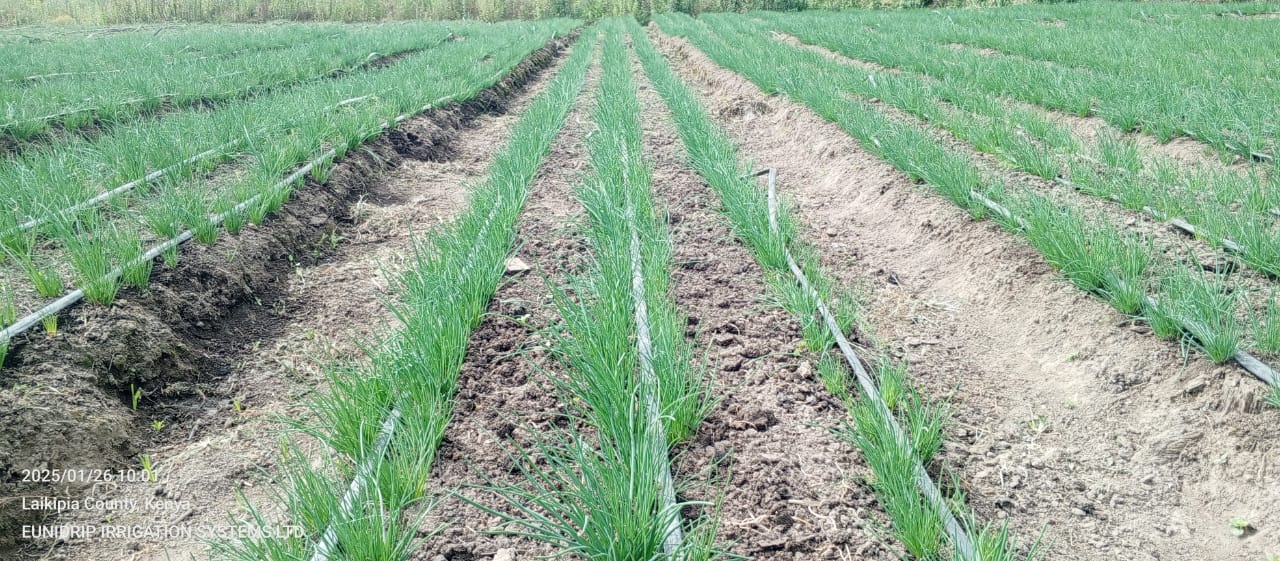
Typically, a working bed is 0.9 m to 1.0 m wide, because that is roughly arm’s reach from both sides. Wider beds look efficient on paper. In practice they become a maintenance problem, since weeding and harvesting both mean reaching past the middle.
Height depends on drainage. For example, on loam and sandy soil, 12 cm to 15 cm lifts the root zone above standing water. On black cotton and other heavy soils, go to 20 cm to 25 cm. Those soils hold water for days after rain, so a shallow bed leaves roots in it.
Paths run 30 cm to 50 cm. Narrower than 30 cm and workers step on the bed shoulder, which compacts the soil where the tape sits. Wider than 50 cm and the field loses cultivable area for no gain.
| Bed type | Width | Plant rows | Height | Path |
|---|---|---|---|---|
| Leafy greens and herbs, hand worked. | 0.6 to 0.8 m. | Two. | 12 to 15 cm. | 30 to 40 cm. |
| Standard vegetable bed, onions and tomatoes. | 0.9 to 1.0 m. | Two. | 15 to 20 cm. | 40 to 50 cm. |
| Wide bed for perennials and cut herbs. | 1.2 to 1.5 m. | Three. | 20 cm. | 50 cm. |
| Greenhouse bed. | 1.0 to 1.2 m. | Two. | 15 to 20 cm. | 50 cm. |
These ranges are conventional, because the constraint behind them is physical: reach, drainage and foot traffic. Extension guidance on raised beds for vegetables reaches the same working widths from the same starting point.
Bed making arithmetic: how many beds fit the field
Count the beds before buying tape. The order then becomes arithmetic instead of guesswork. The number that matters is the bed-plus-path cycle, which is one bed plus one path.
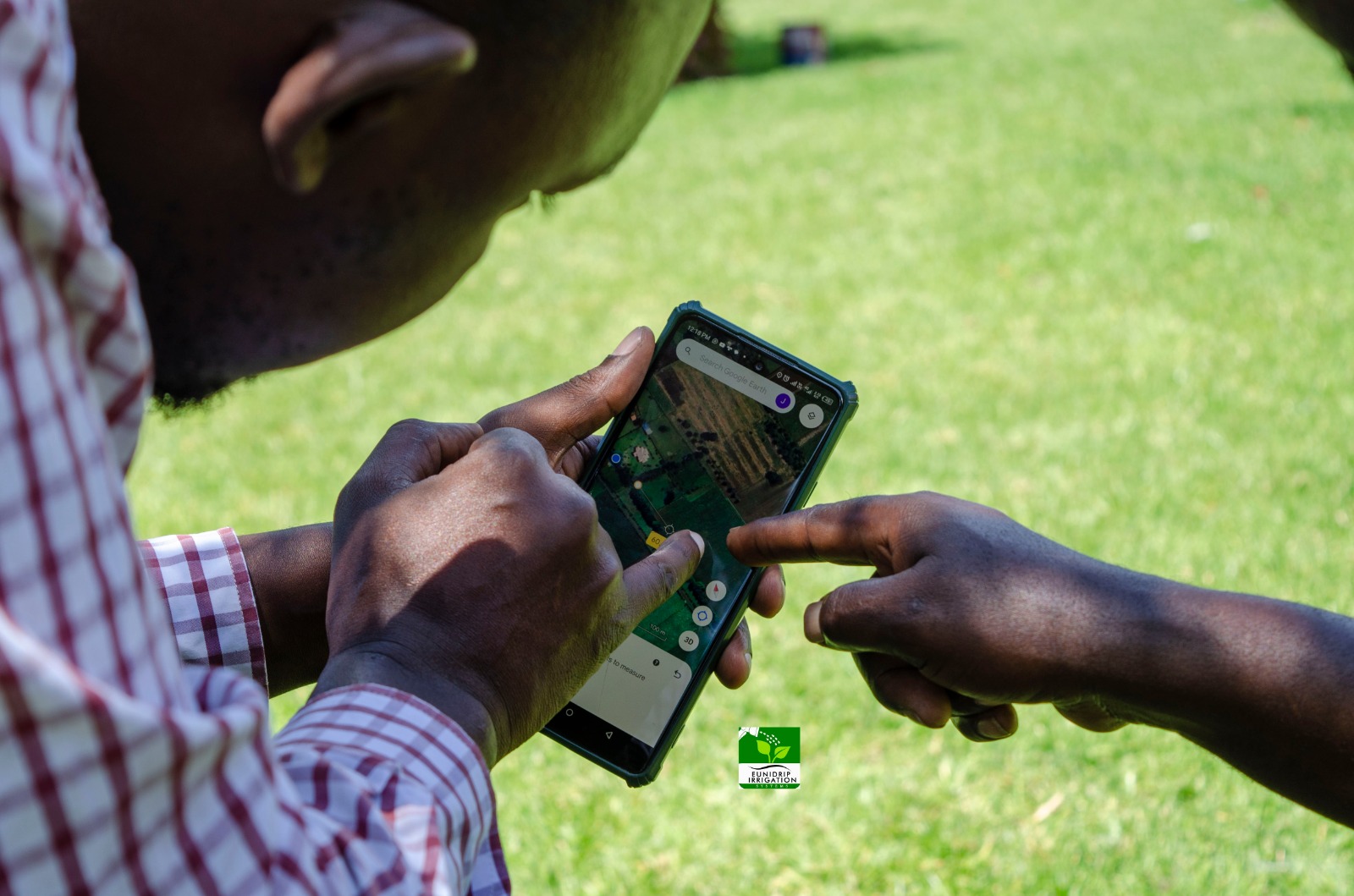
Take a block of 40 m by 60 m. A 1.0 m bed with a 0.4 m path gives a 1.4 m cycle. Forty metres divided by 1.4 m gives 28 beds, each 60 m long.
Now the tape. One lateral per bed, 60 m each, is 1,680 m for the block. Add 5 percent for the tails; consequently, the figure is about 1,764 m. That fits inside one 2,000 m roll. Two 1,000 m rolls would fall short, and that is the mistake the arithmetic prevents.
Similarly, emitters follow the same logic. Tape spacing runs from 10 cm to 50 cm. At 20 cm spacing a 60 m bed carries 300 emitters. The shop quotes 1.5 to 3 litres per hour per emitter, so one bed asks for 450 to 900 litres per hour.
Twenty-eight beds running together would demand 12,600 to 25,200 litres per hour. No small pump will deliver that. Divide the block into valves and run two or three beds per block. Then size the pump and filter against the block, not the whole field.
Six moves from stake line to finished bed
The physical work is short when the layout is already marked. Work the block in one direction, so the crew repeats the same six moves. The beds then arrive level and parallel.
Stake the block corners
Set the four corners first and square them with the 3-4-5 method. A block that is out of square wastes a strip of field and makes every path pull sideways.
Mark both bed edges
Run a line along each edge of the first bed, not a single centre line. Two lines give the crew a width to build to. The gap between them is what stays planted.
Rip the edges, then throw soil inward
Open a shallow furrow along each line and throw the soil to the middle. On a hand block a hoe does this. On a block above a few acres, a ripper pass along the lines saves days.
Break clods and clear stones
Work the bed body down to a fine tilth, 12 cm to 30 cm deep, and take the stones out. Sharp stones are the most common cause of a tape puncture once pressure arrives. They are free to remove now and expensive later.
Firm the shoulders and level the top
Press the sides with the back of a rake or a boot. A loose shoulder slumps after rain and buries the tape. Level the bed top with a straight edge, because a dip in the middle pools water and starves the ends.
Check the fall, water, and let it settle
Pull a string along the bed top and check it against a line level. The bed should sit within a few centimetres end to end. Water the finished bed and let it settle for a day before the tape goes down. The soil then moves before the tape does.
Bed making on slopes and in heavy soil
On a slope, run the beds along the contour, never up and down the fall. Water then moves slowly across the bed instead of racing down it. The soil also stays where the crew put it.
Also, a small cross fall of 0.1 to 0.2 percent still helps on contour beds, because it drains a downpour without ponding. Beyond that, add graded risers or a cut-off drain above the block. A bed on a steep slope acts as a dam in the first heavy rain.
Heavy clay needs a different sequence. Form those beds when the soil is dry enough to crumble. A bed built from wet clay sets like brick, and roots cannot explore it. Therefore raise the bed to 20 cm to 25 cm and keep the tilth inside it coarse.
Where the tape sits once bed making is done
Placement on the finished bed is a short decision with long consequences. Set the tape 10 cm to 15 cm from the plant row. Then match the depth to the soil and the crop.
In practice, on a vegetable bed the tape usually sits on the surface beside the row, or 2 cm to 5 cm under it. Surface tape is easier to inspect and repair. Shallow buried tape holds its position and lasts longer under foot traffic. Either way, lay it flat, with no twists, and peg it at the bed end rather than kinking it.
Wall thickness matters more on a bed than in a catalogue. The 12 mil tape suits short-season crops and beds rebuilt each cycle. The 16 mil tape costs more and takes the knocks of a permanent layout. Both come in 1,000 m, 1,500 m and 2,000 m rolls, with emitter spacing from 10 cm to 50 cm.
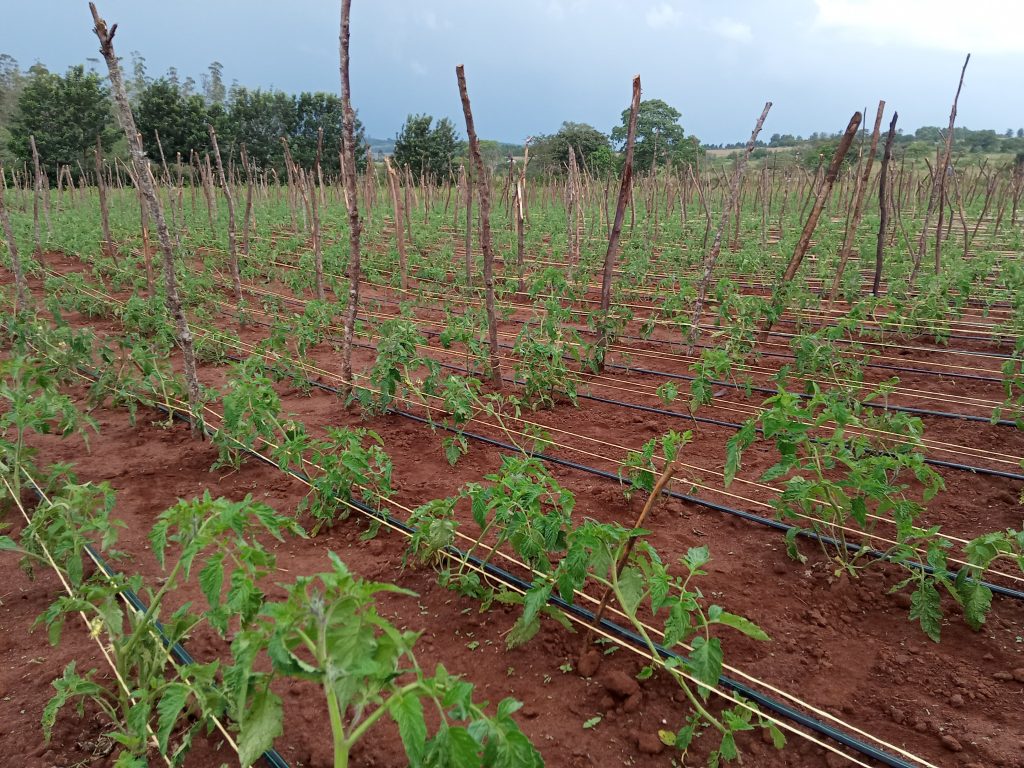
Then each bed needs its own connection. A sub-main runs along the headland, and a connector and a short tail join each lateral to it. On 28 beds that is 28 connections, each one a place where a leak can start. The headland is therefore worth laying out with the same care as the beds. Sizing a whole system is covered in drip irrigation systems in Kenya.
Mulch after bed making: film, straw or bare soil
Mulch goes on after the bed is formed, watered and firmed, never before. A film laid on a loose bed bridges the hollows. The bed then settles under it and leaves the film hanging.
However, plastic film is the usual choice on a commercial vegetable bed. Lay it tight, bury the edges 5 cm to 10 cm into the shoulder, and cut planting holes at the row spacing. The film holds moisture, suppresses weeds and keeps the surface from crusting.
Organic mulch, straw or dry grass, does the same job more slowly and adds organic matter as it breaks down. It suits herb and leafy beds where the tape runs on the surface, since it covers the tape and slows evaporation.
Bare soil is a defensible choice on a bed that is worked often, because every pass with a hoe disturbs film. The trade is more weeding and faster drying at the shoulders. See plastic mulch for the film types stocked.
Bed making inside a greenhouse
Inside a greenhouse the same measurements apply with a shorter path. Space is the expensive input under cover, so paths run 40 cm to 50 cm. The beds take the rest.
In addition, run beds along the length of the house, not across it. A lateral that runs the full length needs one connection at the head and no joints inside the growing area. That removes the leaks that drip onto a crop. Meanwhile the headland stays clear for the filter, the valve and the sub-main.
The film and frame decisions belong to the structure pages, and the bed decision belongs here. Greenhouse farming in Kenya covers the crop cycle inside the house. Greenhouse construction covers the structure itself. FAO guidance on greenhouse vegetable crops covers bed and mulch practice under cover as well.
What bed making costs at the shop
The soil work has no catalogue price, because it depends on the crew and the state of the ground. The materials do, and they can be priced per bed before the first stake goes in.
Drip tape sells by the roll at KSh 8,000 to KSh 14,500, across 1,000 m, 1,500 m and 2,000 m lengths. Ask for the price of the length you need, not the range. Roll length and wall thickness both move the figure. On the 40 m by 60 m block above, 1,764 m of tape fits one 2,000 m roll.
Also, connectors cost KSh 15 each, and a block of 28 beds needs one per lateral plus a few spares. Emitters run from KSh 10 to KSh 30 each. A screen filter to protect the tape runs from KSh 900 to KSh 5,000, depending on the flow the block demands.
Add the filter and the valve at the headland, and a 28-bed block carries one roll, 28 to 32 connectors and one filter. Everything else is soil, labour and the mulch choice. That is why bed making comes before the order. The fittings list sits in the drip tape listing and in the drip irrigation kit page.
Five bed making mistakes in the first season
Most first-season problems trace back to the layout rather than the equipment. All five of these show up within a month of planting.
Beds built too wide. A 1.5 m bed with two rows leaves the middle dry and out of reach. The tape wets a strip, not a bed, and the grower blames the emitters.
Beds built too low on heavy soil. A 10 cm bed on black cotton holds water after rain, and the roots sit in it. The fix is 20 cm to 25 cm of height before planting, not a trench afterwards.
Paths too narrow to walk. At 20 cm the crew steps on the shoulder and compacts it. The tape beside it then stops wetting evenly. Thirty to fifty centimetres of path is not wasted field.
Tape laid on an unsettled bed. Laying tape the same afternoon the bed is formed means the soil moves after the first watering. The tape then sags into a hollow.
Bed ends left uneven. A bed 15 cm higher at one end runs weaker at the other. The plants at the low end look overwatered and the plants at the high end look starved, from the same lateral.
Frequently asked questions about bed making
How wide should a bed be for drip irrigation?
Between 0.9 m and 1.0 m for most vegetables, because that width puts the middle within arm’s reach from either path. Go to 1.2 m only if the bed carries three rows and two laterals. Leave it at 0.6 m to 0.8 m for leafy crops worked by hand.
How high should a bed be?
Twelve to fifteen centimetres on loam and sandy soil, and twenty to twenty-five centimetres on heavy clay. The height lifts roots above standing water. Therefore the wetter the soil stays after rain, the higher the bed needs to be.
How many beds fit in an acre?
It depends on the shape, not the area, because the bed count comes from the width of the block. An acre of 4,046 square metres laid out 63 m by 64 m carries 45 beds of 64 m at a 1.4 m cycle. That is about 2,880 m of tape before the tails.
Can I lay tape on flat ground instead of making beds?
Yes, on sandy soil with good drainage and a crop that does not mind wet feet. Flat ground saves the bed labour and loses the drainage. On heavy soil a flat block ponds after rain, and the tape sits in it.
Do I need to mulch after bed making?
Not always, but the return is highest on a bed that dries fast or weeds heavily. Film pays on a commercial vegetable bed. Organic mulch suits herbs and leafy crops. Bare soil is workable on a bed that is hoed often.
Should beds run up the slope or across it?
Across it, along the contour. Beds that run up and down the fall channel water, erode the paths in a downpour and lose pressure at the low end of every bed.
Book a bed layout and drip design visit
A measured layout saves tape, fittings and a season of uneven watering. Our team surveys the block and sets the bed width and height against the soil. It then counts the beds and sizes the tape, filter and valves to match. Bring the field dimensions, or let the survey produce them. The order is then written against a design rather than a guess.
- Block survey and bed layout marked on the ground.
- Bed count, tape length and emitter count worked out per block.
- Filter, valve and sub-main sized to the block, not the whole field.