Table of Contents
A clogged drip tape rarely announces itself. It shows up as a dry patch at the far end of a row, a seedling that stalled, or a harvest that thins out on one side of the plot. Most growers respond by pulling the tape and buying more. That is the expensive answer, and it treats the symptom.
Emitters are the small outlets spaced along the tape, and they are the narrowest point in the whole system. Anything the water is carrying has to pass through them or stop there. This page covers how to identify what is blocking a line, what flushing can fix, what it cannot, and the filtration and chemistry that keeps an open outlet open through a season.
How a clogged drip tape actually forms
Typically, blockage starts at the emitter.
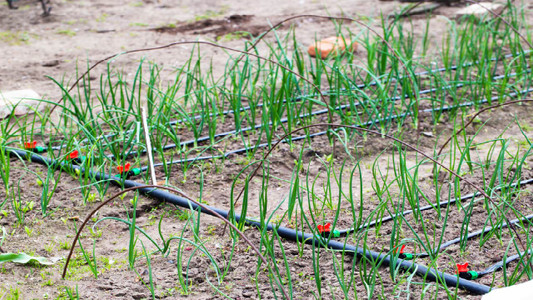
The flow path inside a tape outlet is usually under 1 mm wide. A particle small enough to travel through the mainline can still bridge two of those paths. Once the water slows there, suspended silt settles on it, and settled silt becomes a plug within days.
Six conditions account for most of what we are called out for:
- Silt from a river or shallow pan, especially after long rains.
- Fertiliser that did not fully dissolve in the injection tank.
- Biofilm growing on the inside wall of the tape.
- Algae from an open storage tank in full sun.
- Root tips reaching an outlet that sits in moist soil.
- Sand drawn back in through an emitter when the line drains.
The three clog types and how to tell them apart
Treating a clogged drip tape depends on which one you have.
Treating a biofilm with acid wastes a drum. Treating mineral scale with chlorine wastes another. Cut an emitter from a suspect section, split it with a knife and look before you buy anything.
| Clog type | What causes it | Field signs | Treatment |
|---|---|---|---|
| Physical | Sand, silt, soil particles | Gritty water, weak flow at the ends, clears after a flush | Filtration and flushing |
| Chemical | Calcium, iron, bicarbonates | White or rust staining, hard crust, no change after flushing | Acid treatment |
| Biological | Biofilm, algae, bacterial slime | Slippery film, foul smell, patchy outlets | Chlorine or hydrogen peroxide |
Grit under the fingernail is physical. A crust you have to scrape is chemical. A film that smears is biological. Then treat the type you found, not the type you guessed.
Measure the flow deficit before you treat anything
Measure before you dose.
Catch the output of a few outlets in a known container and compare it with the rate the line was designed to deliver. Arizona Cooperative Extension’s seasonal maintenance guidance for drip systems treats about 10% below the design rate as the point where corrective action is worth taking, and a smaller gap as normal variation.
That threshold matters in both directions. Acid is not free, a filter element is not free, and neither is a season of stunted rows caused by treating a healthy line.
Flushing, the procedure that fixes most clogs
Flush first, and usually that is enough.
Open the end caps of one section and run water until it leaves clear. Then move to the next section. Working one at a time matters: velocity is what carries debris out, and opening every lateral at once drops the velocity in all of them.
Our field practice is at least three flushes per season. First after land preparation and installation, then at the peak water demand around budding, then after every fertiliser application. Specifically, flush before the fertiliser residue has a chance to settle.
Watch the colour as it runs. Initial brown water clearing to a bright flow means sediment was the problem. However, if the water has not cleared within about 20 minutes, stop flushing. The blockage is no longer loose material, and it needs the chemistry below.
Replace every end cap before you restart the system, and wash the filter element while the section is open. Because the caps and the filter are where debris re-enters, a flush that ends with both left dirty is a flush you will repeat next week.
Filtration is the cure, not the flush
A clogged drip tape that needs weekly flushing has a filtration problem.
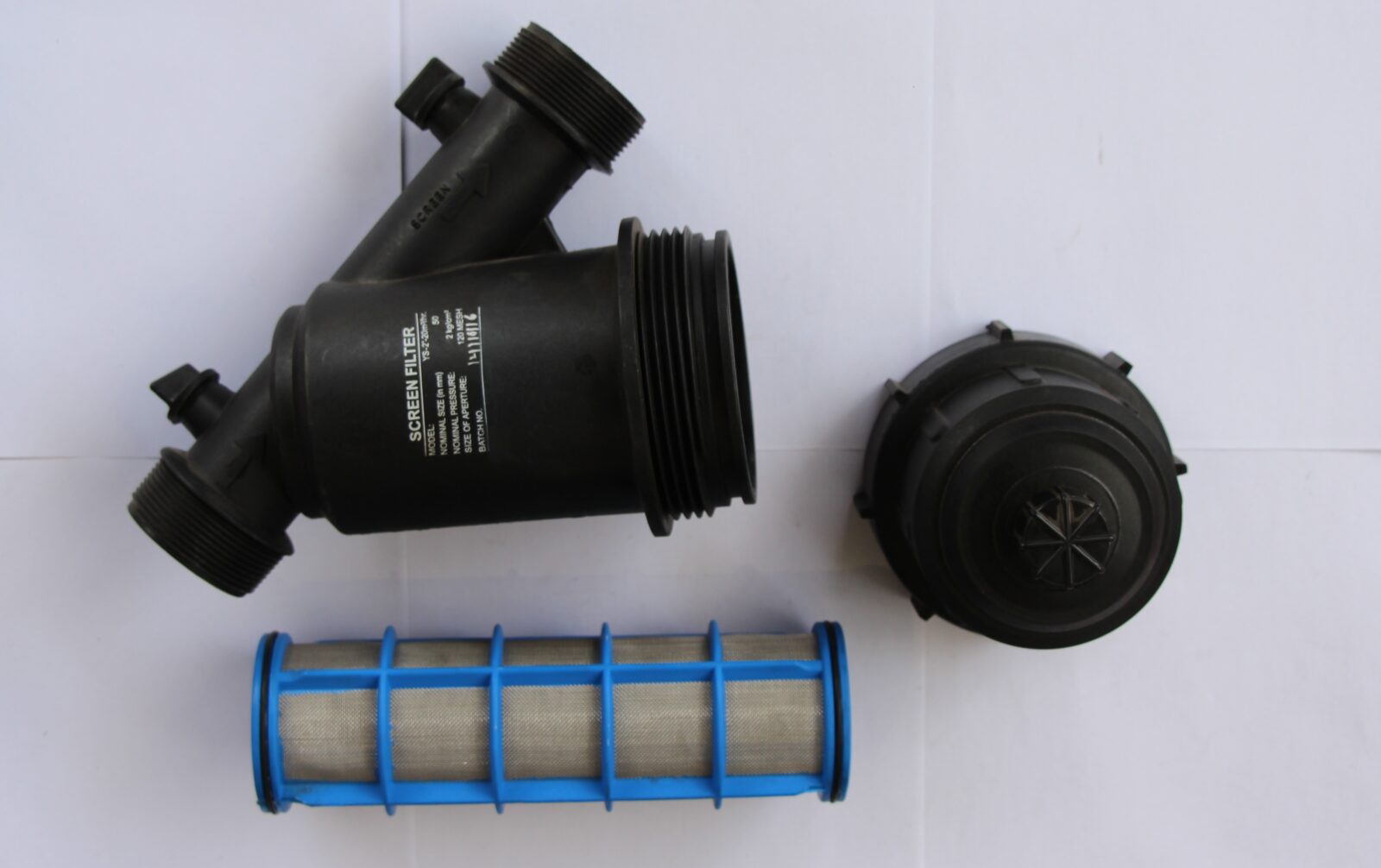
Screen filters are the usual answer for tape. Water passes through a mesh cylinder inside a body, and the debris is swept into the dead end of the housing, where a cap releases it. The Y-type unit we fit most often is rated at 130 mesh. Since 1 inch is 25.4 mm, 130 openings across that inch sit about 0.2 mm apart, so the clear area of each is close to 0.1 mm.
Match the filter to the water, not to the price. A borehole that looks clear in a bucket can throw sand after two hours of pumping, and that will blind a fine screen fast. Conversely, a screen chosen coarse enough to avoid blocking will pass exactly the particles that kill an emitter.
Then read the pressure. A growing gap between the inlet gauge and the outlet gauge means the element is loaded and needs cleaning that day, not at the end of the week. Our page on irrigation water filters covers the sizes we stock and the flow each one carries.
Acid treatment for a clogged drip tape
Mineral scale moves only with acid.
The two acids used in the field are hydrochloric at around 33% strength and phosphoric at around 85%. Dilution arithmetic comes first, and acid goes into water, never water into acid. Keep the section in place while it works, then flush it out.
Research supports going stronger than most growers do. A 2025 trial published in Scientific Reports on acid washing and ultrasonic cleaning of field emitters found that acid washing at pH 3 outperformed pH 5, and the gap was widest on emitters more than 75% blocked, where the clog was mainly chemical.
Acid does nothing for a biofilm. If the cut emitter showed a smear instead of a crust, spend the money on the oxidiser instead.
Biofilm, chlorine and the peroxide option
Biological clogging is a living problem.
That means it needs an oxidiser, and it means contact time. Shock the section, let the solution sit for the period the product label gives, then flush. Dosing and immediately flushing removes the chemical before it has done any work.
Sodium hypochlorite has been the standard choice. The Arizona guidance notes that its use is now restricted in some areas because of harmful by-products, and that hydrogen peroxide has become a widely accepted alternative for disinfecting and oxidising irrigation water. Meanwhile peroxide breaks down without leaving a residue a sensitive crop will react to, which is why we reach for it under tape in vegetable work.
Also, algae in an open tank will re-seed a clogged drip tape no matter how often you shock it. Shade the tank, or close it, and the treatment schedule halves.
Root intrusion and the suction that pulls soil in
Two forms of a clogged drip tape have nothing to do with your water.
Roots grow toward the steady moisture at an outlet and can enter it. Separately, when a line drains on shutdown, the falling water column creates suction that draws a fine spray of soil back through the open emitter. That soil then dries into a plug in the outlet.
Neither is fixed by acid. Root intrusion is a placement and replacement job. Suction ingress is solved by keeping the line pressurised at shutdown, using emitters that seal as pressure drops, or draining deliberately to a low point instead of letting the tape empty through its own outlets.
Pressure control on non-compensating tape
Some clogged drip tape complaints are not clogs at all.
Non-pressure-compensating tape changes its output with pressure, so a hydraulic problem reads exactly like a blockage. On tape with 30 cm emitter spacing, the head of a long row delivers more than the tail, and the tail looks blocked even when every outlet is clear.
The same guidance calls pressure regulating valves critical on systems using non-compensating tape for this reason. Therefore, check the gauge at the head and the tail of the section before you treat for scale. If the weak outlets follow the pressure gradient rather than the emitter positions, your fix is a valve and a shorter run, not a drum of acid.
For the layout decisions behind that, see how we design a drip system for a plot and what to weigh when buying a pump for drip irrigation.
A season schedule that prevents a clogged drip tape
Prevention is a calendar.
- Test the water before the season, not after the first failure.
- Size the filter to your worst reading, not your average one.
- Flush after installation, at peak demand, and after every fertiliser dose.
- Read the pressure gap across the filter every 7 days.
- Dissolve fertiliser fully, and let the injection tank empty to the last line.
- Log the head and tail flow every 30 days so a drift is visible early.
Where the water history says you will need it, plan one acid pass and one oxidiser pass per season instead of reacting in month four. As a result, the tape is bought once, not twice.
Six mistakes that make a clogged drip tape worse
All six are avoidable.
- Replacing tape that only needed a flush.
- Choosing a coarse screen because a fine one blocks often.
- Running acid against a biofilm, or chlorine against scale.
- Flushing every lateral at once, so no section gets full velocity.
- Storing fertiliser solution in an open tank and growing algae into the system.
- Restarting with end caps left off and letting dirt back in.
If you are laying tape on freshly worked ground, the land preparation steps for a drip line decide how much soil enters it in week one. For the kit side, our drip kits page lists what we supply, and the drip tape we sell is sized by emitter spacing from 10 cm to 50 cm and wall thickness of 12 or 16 mil.
Frequently asked questions about a clogged drip tape
How often should drip tape be flushed? At least three times a season: after installation, at peak demand, and after every fertiliser application. Harder water or a silty source means more often.
Will a clogged drip tape clear on its own? No. An outlet blocked by scale, film or a root will stay blocked, and the neighbours take the extra flow and fail faster.
Can household vinegar replace field acid? Not for scale in a working line. Vinegar is too dilute to move the crust that forms inside a tape outlet, and the volume needed to reach a useful pH in the field is impractical.
Why do only the last emitters in a row fail? Usually pressure and friction loss along the run, sometimes sediment that settles as velocity drops. Check the head and tail pressure before treating the line chemically.
What filter rating suits drip tape? A screen around 130 mesh is the common choice, because the openings sit about 0.2 mm apart and the debris that matters is near 0.1 mm. Size it to the dirtiest reading your source produces, not the clearest.
Does hard water always cause chemical clogging? No. It depends on bicarbonate content, iron and the pH drift as water sits in a warm line. Test once a season and treat the result, not the reputation of your water.