Table of Contents
A best drip irrigation system is not the most expensive line on a catalogue. It is the one whose emitters, filter, pipe sizes and flushing routine match the water you actually have. It must suit the slope you actually farm and the crop you actually sell. Six decisions set that match, and each one has a number attached to it.
Work through them in order, because the later ones depend on the earlier ones. Emitter choice sets the filtration rating. Filtration sets the maintenance load. In practice, slope sets whether you need pressure compensation at all. Therefore a kit that reads well in a brochure can fail on your land. The best drip irrigation system on paper is often the wrong one on your plot.
What Makes a Best Drip Irrigation System Fit Your Plot
First, three questions come before any product list. What is the source, and what does it carry? How long is the run, and how does it fall? What is the crop spacing, and what yield does the market pay for? Answer those and the catalogue gets short quickly. Specifically, two of the four emitter classes usually drop out.
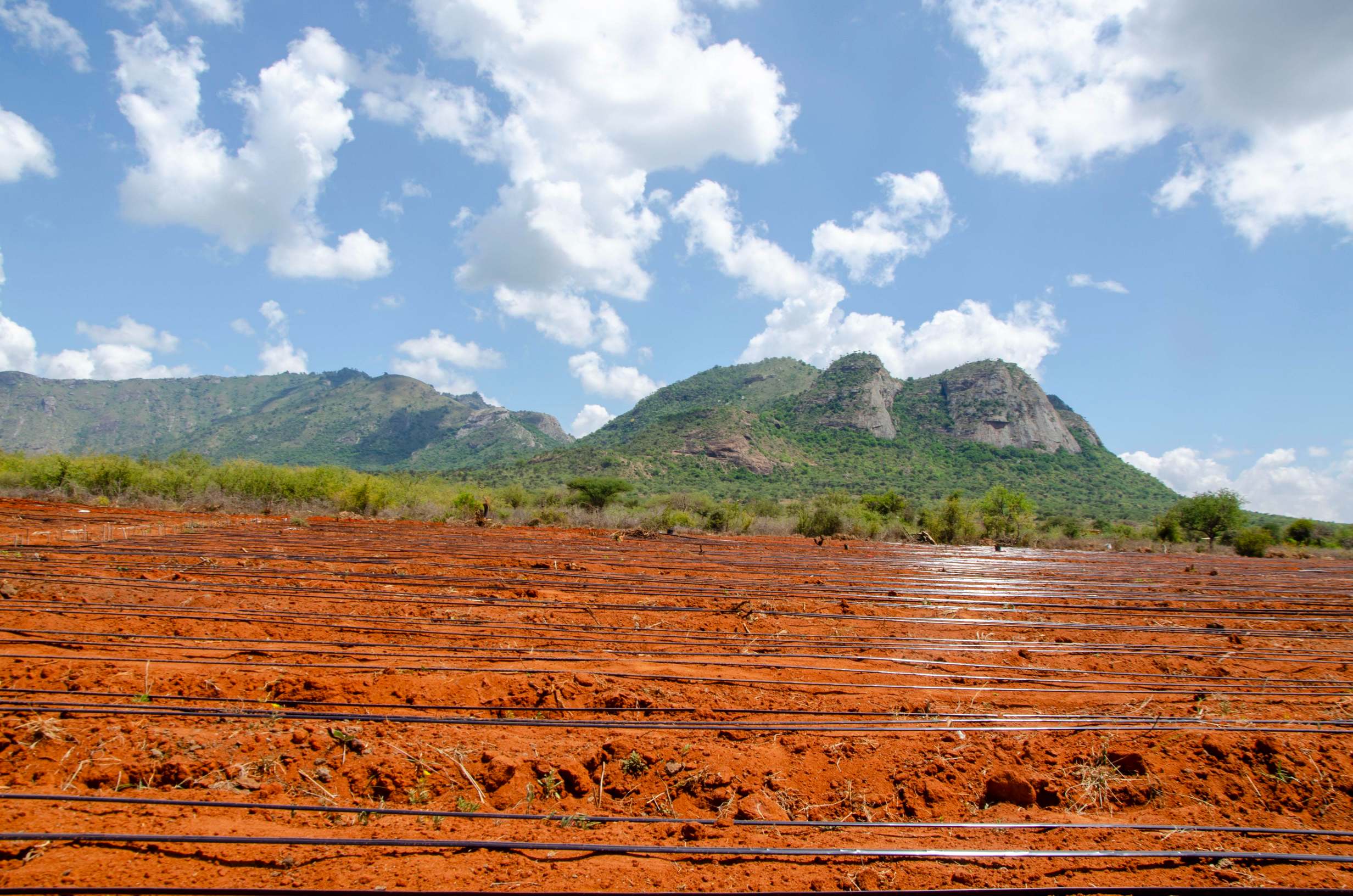
Water quality sets everything downstream. First, look at what the water carries. Sandy borehole water is a filtration problem. Algae in a shallow well is a flushing problem. Iron in river water is a clogging problem that appears months later, after the first wet season. Also the land itself matters, because land preparation for drip irrigation decides whether laterals sit on a level bed or bridge over furrows.
Then ask what the system must do that a cheaper method cannot. The workings of a drip system suit high-value rows, difficult soils and sites where water is metered or pumped on a tariff. Similarly they suit a nursery of potted seedlings. They do not suit a flood-tolerant fodder plot on flat, free water.
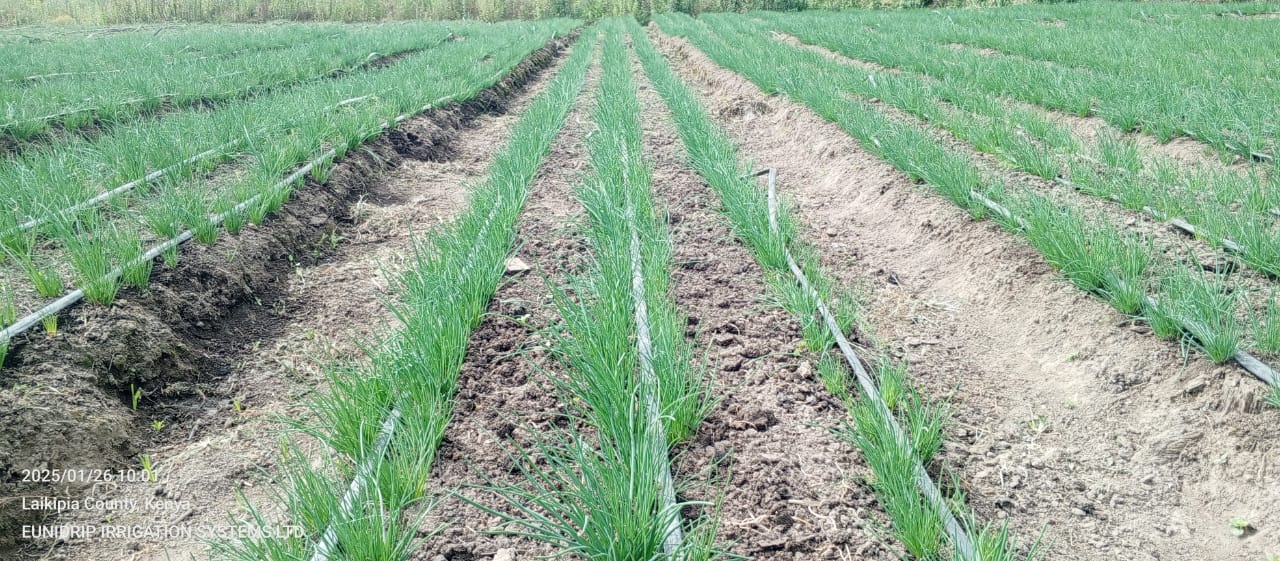
First choose the crop, then the hardware. A best drip irrigation system for onions in narrow rows has no reason to carry orchard drippers. An orchard block laid with tape at 10 cm spacing will be replaced inside two seasons. Same money, opposite results.
Emitter Choice Decides the Best Drip Irrigation System
Four emitter classes sit on the Kenyan shelf. However, they are not interchangeable. The table compares them on flow, operating pressure, price and the ground each one suits.
| Class | Listed flow | Listed pressure | Unit price | Where it belongs |
|---|---|---|---|---|
| Pressure compensation button dripper | 2, 4, 8 and 16 litres per hour | Regulated by an internal diaphragm | KSh 10, regular KSh 15, listed range KSh 10 to 20 | Slopes, long runs and any block where head varies along the lateral |
| Adjustable button dripper | Half, one and two litres per hour by colour | 15 to 25 PSI | KSh 10, regular KSh 15, listed range KSh 10 to 30 | Nursery benches, pots and small blocks where one line feeds different plants |
| Arrow dripper | 2, 4 and 7 litres per hour | 58 to 80 PSI | KSh 60, regular KSh 80 | Widely spaced points, tree crops and hedgerows |
| Drip tape | 1 to 2.5 litres per hour per outlet | 1 to 2.5 bar | KSh 8,000 per roll, regular KSh 8,500, listed range KSh 8,000 to 14,500 | Dense rows on flat ground, seasonal crops, 12 mil or 16 mil wall |
Four emitter classes the shop lists, with the flow, pressure and price beside each one.
Read the pressure column before the price column. The tape listing runs at 1 to 2.5 bar. The arrow dripper listing wants 58 to 80 PSI, which is roughly 4 to 5.5 bar. Those are different systems, so a pump sized for one will not perform in the other. For this reason a quote that mixes them without saying so is worth reading twice.
Spacing is the other tape figure that changes the cost per acre. The shop lists tape at 10, 15, 20, 30, 40 and 50 cm emitter spacing, in 12 mil and 16 mil wall, on rolls of 1,000, 1,500 and 2,000 metres. Specifically, closely spaced outlets wet a continuous band and suit shallow-rooted rows. Wide spacing suits crops with a larger root zone and lowers the outlet count, so the pump and filter duty fall with it. Thus the outlet count, not the roll length, drives the price.
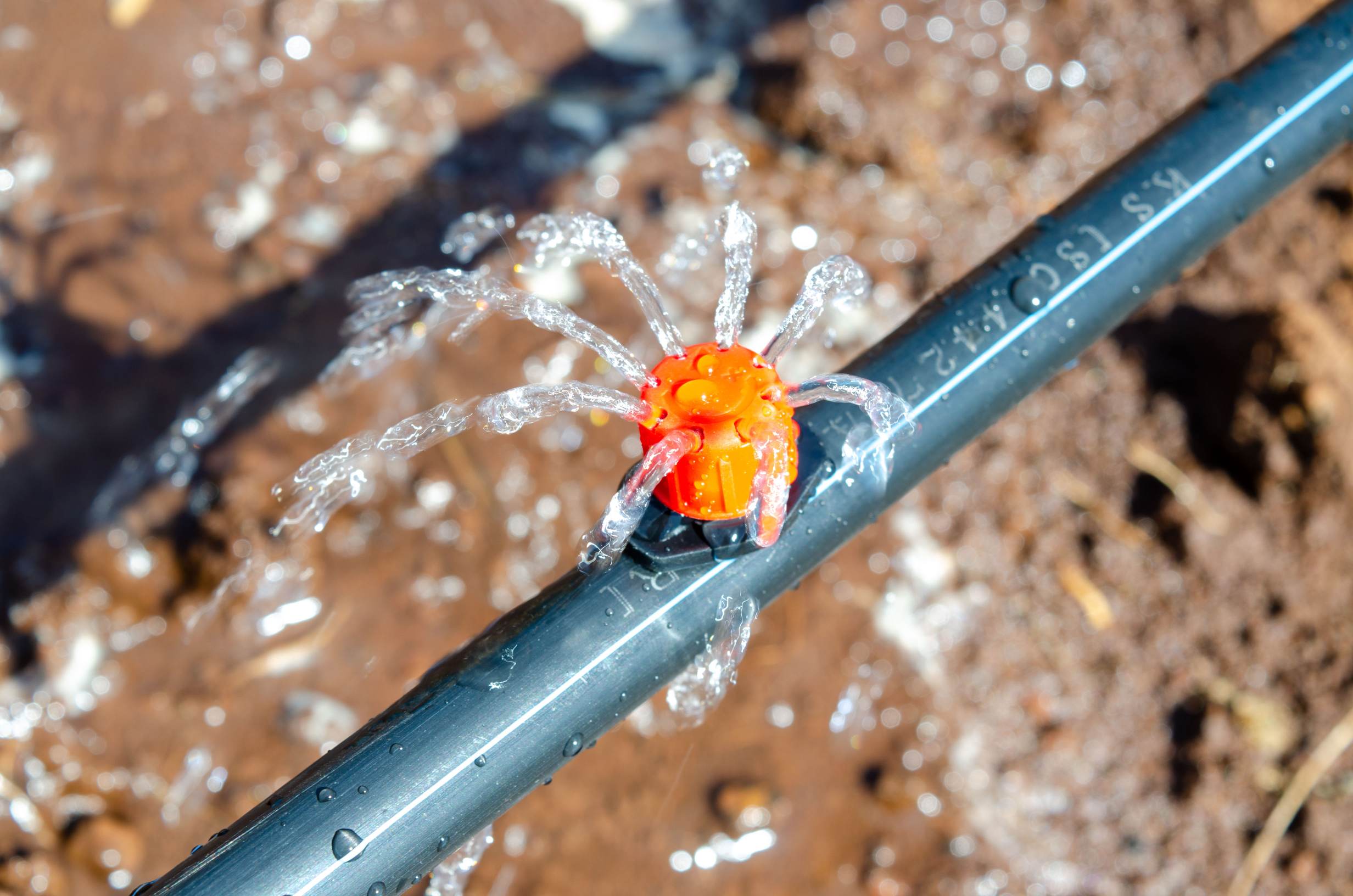
For a slope, the case for compensation is arithmetic. The cost page for a full system puts the threshold at about 2 percent, and the avocado installation guide works through the same problem on orchard terraces. Below that fall, a fixed-flow dripper is cheaper and good enough. Above it, the best drip irrigation system is a pressure-compensating one. In a fixed-flow line the outlets at the head of the row out-flow the outlets at the tail. As a result the tail plants starve while the head plants drown.
Filtration Sizing for a Best Drip Irrigation System
Filtration is where a good plan quietly fails. Typically it fails at the rating, not at the price. Two body sizes of filter sit on the shelf. Screen units come in three quarter, one, one and a half and two inch bodies at KSh 900, with a listed range to KSh 5,000. Disc and screen assemblies run from 25 to 110 millimetres at KSh 1,400, listed range KSh 1,400 to 6,500.
Body size is not the rating that matters. The rating that matters is the opening, and these listings state the connection size. They do not state a mesh or micron figure. Two numbers circulate in drip farming, and they are not the same unit. The flushing and unblocking guide works through one of them: 130 openings across 25.4 millimetres sit about 0.2 millimetres apart.
Therefore write the rating into the order and make the supplier confirm it in writing. The required opening for the emitter you chose is NOT VERIFIED on the current listings. Treat any figure you are given as a specification to check against the tape or dripper packaging, not as a general rule.
Next, size the filter to the flow, not to the pipe. A unit fitted to a two inch mainline but asked to pass the full pump duty will blind within an hour. It then forces a bypass, and that is how sand reaches laterals. Sand media units carry a higher load and need backwash water, so they belong where the source is dirty and where you have somewhere to put the wash. Hence a dirty source needs a drainage point as well as a filter.
One cheap upgrade is worth adding to any design. Wikipedia’s overview of drip irrigation recommends a last-line filter just before the final delivery pipe, in addition to whatever sits upstream. It names two reasons, and both are field reasons. Fine particles settle out after the main filter, and anything dropped into an open line during a repair travels downstream. A best drip irrigation system is only as clean as its last filter.
Pressure, Head and Slope
Head converts at about 0.98 bar for every 10 metres of static rise, a figure the low pressure irrigation page uses in its sizing worked example. That conversion, however, settles the common gravity question. A tank on a three metre stand gives roughly 0.3 bar. Tape is listed to run from 1 bar, so gravity alone will not run tape from a low stand. Add height or add a small booster.
The published figures differ, and the difference is useful. The pump guide designs drip lines around 1.0 to 1.5 bar, which is 10 to 15 metres of head. The tape listing tolerates up to 2.5 bar. The cost page puts field systems at their best at 3 bar and below. Those describe the operating point, the tape’s tolerance and the rest of the pipework. First ask which figure a quote used. Then ask for the pressure at the far end of the longest lateral, not at the pump, because a best drip irrigation system is judged at its weakest outlet.
Also budget for the fittings that protect the line. An air release valve in 25, 50 and 63 mm sits at KSh 950, listed range KSh 950 to 3,500. It prevents the vacuum that empties laterals at shutdown. A drip valve at KSh 60, regular KSh 80, isolates one block so a burst does not stop the whole field.
Mainline, Sub-main and Lateral Sizing
Pipe is the largest single line in most budgets. HDPE irrigation pipe is listed from 16 to 110 millimetres at KSh 1,800, with a range running to KSh 52,500. Pressure ratings of 6, 8, 10, 12.5 and 16 are published with it. Thus the rating is not decoration. A thin wall pipe at a high pressure point creases, and a creased mainline changes the hydraulics of every lateral below it.
In contrast, fittings are where a quote is usually padded. Couplings in 16 to 110 mm list at KSh 20, range KSh 20 to 3,300. Elbows list at KSh 180, range KSh 180 to 3,400. Tees list at KSh 130, range KSh 130 to 4,500. End caps list at KSh 100, range KSh 100 to 550.
The small connectors are cheap and they get lost. A starter connector, a take-off and a tape connector each list at KSh 15, regular KSh 20. Order spares with the pipe, because one missing fitting stops a row for a day.
Likewise, one tool is worth checking before installation day. The HDPE puncher is listed out of stock at the time of writing, with no price shown. A punched hole that matches the fitting size is the difference between a leak-free joint and a line that weeps at every take-off. So confirm the punch size before a knife reaches the pipe.
What a Best Drip Irrigation System Costs in Kenya
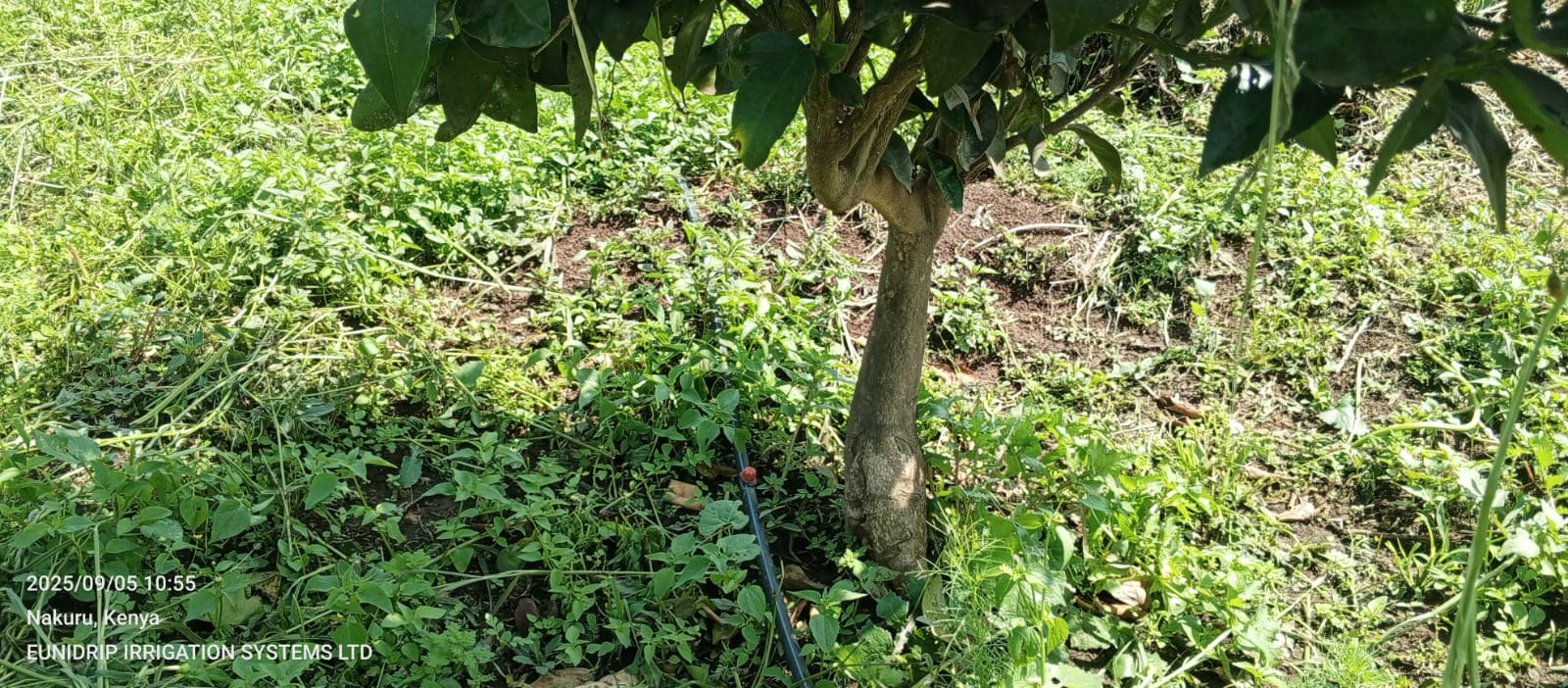
Two figures circulate for one acre, and they should be read together. The kit page lists a one acre kit at KES 135,000 as a fixed item. The cost page bands a full acre at KSh 85,000 to 160,000 and prices smaller plots from KSh 15,000. Both are published. Ask which one a quote is built from, because the difference is usually tape versus drippers, outlet count and filtration class.
Price a best drip irrigation system by the outlet count, not by the acre. An acre of onions in narrow rows carries far more outlets than an acre of avocados at tree spacing. Same area, different pump, different filter, different bill. Consequently the cheapest quote per acre is often the most expensive system per season.
Moreover, energy is the second half of the bill. The pump guide puts a petrol pump at about KSh 25,000 and its fuel at KSh 1,500 a day. That fuel line is the number that surprises owners in the second season. A solar set is quoted near KSh 200,000 and pays that difference back inside a year of daily pumping on that arithmetic.
Additionally, fertigation hardware sits between those two lines. An automatic fertigation machine is listed without a price, so its figure is NOT VERIFIED. A foot valve is likewise unpriced on the current listing. For a small block, a tank, a tap and a metering valve do the same job at a fraction of the cost.
Maintenance That Keeps a Best Drip Irrigation System Working
Installation is the cheap half, and most budgets stop there. The unblocking guide sets the discipline. Act when flow falls about 10 percent below design. Flush at least three times a season, and stop a flush once the water runs clear. Meanwhile take the differential pressure across the filter every 7 days, and record flow at the head and the tail every 30 days.
Chemical treatment follows the same rule of measuring first. The advantages and disadvantages page gives a field recipe of 50 ml of 33 percent hydrochloric or 85 percent phosphoric acid in a 10 litre bucket, run for at least an hour, then flushed for at least 45 minutes. Nevertheless the two pages state different target conditions for acid work, so treat the recipe as a starting point. Test on one lateral before dosing a field.
Finally, keep the emitters you actually have. A blocked arrow dripper is a five minute job in an orchard. A blocked tape line at 10 cm spacing is a replacement. That difference is why a well run orchard often costs less to maintain than a cheaply installed vegetable block. Maintenance is part of the design, not a cost that follows it.
Six Checks Any Best Drip Irrigation System Quote Must Survive
- Does the quote name the emitter, its listed flow and its operating pressure in one unit, not two?
- Does it name the filtration rating, and does it state the flow the filter passes at that rating?
- Does it give pipe sizes with a pressure rating, and does the longest lateral end pressure appear?
- Does it price flushing points, end caps and air release valves, or have they been folded into a lump sum?
- Does it say what is excluded, since pump, storage tank and trenching are commonly left out?
- Does it commit to a measured uniformity check after commissioning, with the head and tail readings recorded?
Ask these six in writing. A supplier who answers them has designed the system. A supplier who answers with a total has quoted a box of parts. Therefore the cheapest best drip irrigation system is rarely the cheapest quote on the table.
Frequently Asked Questions about a Best Drip Irrigation System
Is tape or button drippers the better choice?
Tape wins on flat ground, dense rows and seasonal crops, because outlets are cheap and the line is replaced each cycle. Button drippers win on orchards, slopes and long runs, because one blocked outlet does not end the lateral. For example, a slope above about 2 percent needs the pressure-compensating class.
Do I need a filter on a borehole?
Yes, because borehole water carries silt and dissolved iron, and iron precipitates inside a line weeks after a clean start. Size the unit to the pumping rate and ask for the rating in writing.
Can a gravity tank run drip tape?
Not from a low stand. Ten metres of head is about 0.98 bar, and tape is listed to run from 1 bar. Therefore a three metre tank stand gives roughly 0.3 bar, which sits below that floor. Add height or add a booster pump.
Why do two acre prices differ?
Because one is a fixed kit and the other is a band. The kit page prices a set configuration. The cost page ranges the same acre by crop, outlet count and filtration class. Compare the two bill of materials, not the two totals.
How long does a well maintained line last?
Thicker wall tape and hard drippers outlast UV exposure more often than they outlast clogging. Shade the line, flush on schedule and keep the filter honest. Typically tape is treated as a seasonal item, while hard drippers outlive several tape cycles.
Where to Take the Design
Eunidrip designs and installs drip across the country. The same team publishes the equipment supplier guide and the one acre installation record from Molo. Send the crop, the source and the field dimensions to the contact page and ask for the six answers above in the written quote. Then hold that quote to the pressure at the tail of your longest lateral, because that is where a best drip irrigation system is won or lost.