

A holding house is not a production house. Net house construction for cuttings and seedlings answers one question: how many plants must stay in good condition between the propagation bench and the field? The roof sets the light, the sides set the airflow, and the benches set the capacity. Get those three right and the structure pays for itself in one season of clean transplants.
Most builds start with a footprint copied from a neighbour and then fill it. That order is backwards. Peak standing crop decides the size, not the average, because the week when two batches overlap is the week trays end up stacked on the floor. So write the peak down, and let it drive the rest of the net house construction plan.
What a net house construction brief must answer
Write five numbers on one page before anyone quotes you. The peak number of cuttings or seedlings in the house at once. The holding period in weeks. The tray or cell size you use. The number of batches that overlap. The labour available for watering and moving trays.
Those five numbers produce the floor area, the bench area and the water demand. In practice, a supplier who quotes a structure without asking for them is quoting a building, not a nursery.
This page covers that holding job from the plant side. For the net grade, roll maths and frame comparison on a production house, our shade net farming guide works through the same materials for a different purpose.
The seven steps of net house construction
The sequence below runs from the plant count to the first batch leaving the house. Each step locks a decision the next one depends on. Skipping step three is the common mistake, because benches are invisible on a plan and easy to cut from a budget.
Step 1: count plants before you draw the plan
First, start with the peak week. If you stick 2,000 cuttings on a Monday and another 2,000 the following Monday, and the first batch stays six weeks, then the house holds twelve thousand cuttings before the first one leaves. That figure, not 2,000, is the design load.
Then check the batch pattern. Seedlings raised for a single planting window arrive in one surge and leave in one surge, so the peak equals the total. Cuttings taken through the season arrive in a steady trickle and overlap more gently.
Finally, add a quarantine bench. New plant material should sit apart for a week before it joins the main crop. That bench is 5 to 10 percent of the total, and it belongs in the count from the start. Typically, it is the bench that gets cut when the budget tightens.
Step 2: site the house for wind and water
Net catches wind like a sail, and a three metre side wall is a large one. Set the long side across the prevailing wind so the whole width gets cross-flow, then brace for the load that creates. A site with an open downhill slope on the windward side will tear a loose edge in the first storm.
Ground that holds water is worse than ground that slopes. In net house construction, the floor is a drainage surface before it is a walkway. Standing water under benches keeps the floor wet, and a wet floor carries disease from tray to tray. Slope the floor away from the door at about one percent, or raise the benches above the wet line.
Water supply comes next. Because a mist line needs pressure at the far end, check the pressure at the last nozzle, not at the tap. Then put the filter before the line, not after it.
Access decides the door. A tray trolley needs a metre of clear width, and a pickup needs a turning circle outside. Measure both before the posts go in, because a door widened later costs more than a door built right.
Step 3: size the bench, not the floor
In net house construction, the benches and paths split the floor. Working paths take 35 to 45 percent of a well-run holding house, and the benches take the rest. A house with more bench than that is a house you cannot carry a tray through.
Bench height matters as much as area. At 80 centimetres, a standing worker reaches the back of a one metre bench without bending. At 40 centimetres, the same worker bends over every tray and the work slows by the afternoon.
For example, the table below uses a 60 percent bench share, a 5 centimetre cutting spacing and a 6 centimetre seedling cell. Change any of those three and the arithmetic changes with them.
| Floor area | Bench at 60 percent | Cuttings at 5 cm | Seedlings at 6 cm |
|---|---|---|---|
| 8 m by 15 m, 120 square metres. | 72 square metres. | 28,800. | 20,000. |
| 8 m by 24 m, 192 square metres. | 115 square metres. | 46,100. | 32,000. |
| 8 m by 30 m, 240 square metres. | 144 square metres. | 57,600. | 40,000. |
Read the numbers as a ceiling, not a promise. Trays, labels, gaps between batches and the quarantine bench all eat into the figure. A house planned at 80 percent of the ceiling will still have room to walk in the busiest week.
Step 4: fix the frame, the mesh and the door
The roof carries net tension, not weight. Net house construction uses a post and wire grid, not a greenhouse hoop. Timber posts cost less up front. Galvanised steel holds tension longer, which matters where the wind is steady rather than occasional.
A perimeter wire runs round each side, and the net is laced to it. The edge is where a net fails first, because a loose skirt saws on a wire until the weave opens. Tension the wires before the net arrives, not after.
The holding house has one detail a production house can skip: sides that open. A net house with fixed walls traps humid air under a roof, and cuttings in still air rot rather than root. Roll-up curtains give you the morning and evening air movement that a closed structure cannot.
Use insect mesh on the openings, not shade net. Mesh counts differ by pest, and a 50 mesh screen will stop whitefly where a 40 mesh screen lets it through. Our insect nets for greenhouses page compares the two counts against airflow.
Next, build the door as a porch, not a gap. Two leaves a metre apart let one close before the other opens, which keeps wind and insects out during the busiest hour of the day. A gravel apron stops mud reaching the floor.
Step 5: cover the roof and hang the curtains
The roof is the light budget and the sides are the airflow budget. For cuttings at sticking, a 75 percent roof gives the softer light that suits leafy material under an open sky. A 90 percent roof suits delicate tissue and very hot lowland sites.
Hang the curtains so the bottom edge ties at about chest height when open. Fully open sides in the middle of a hot afternoon dry a tray faster than any mist line can replace the water, and cuttings wilt before they root.
Then run the net square to the frame and overlap seams by 20 to 30 centimetres. Work from the middle outward so the weave stays square. A net pulled diagonally to reach a short rail will flap forever at one corner.
Step 6: put the water under the bench
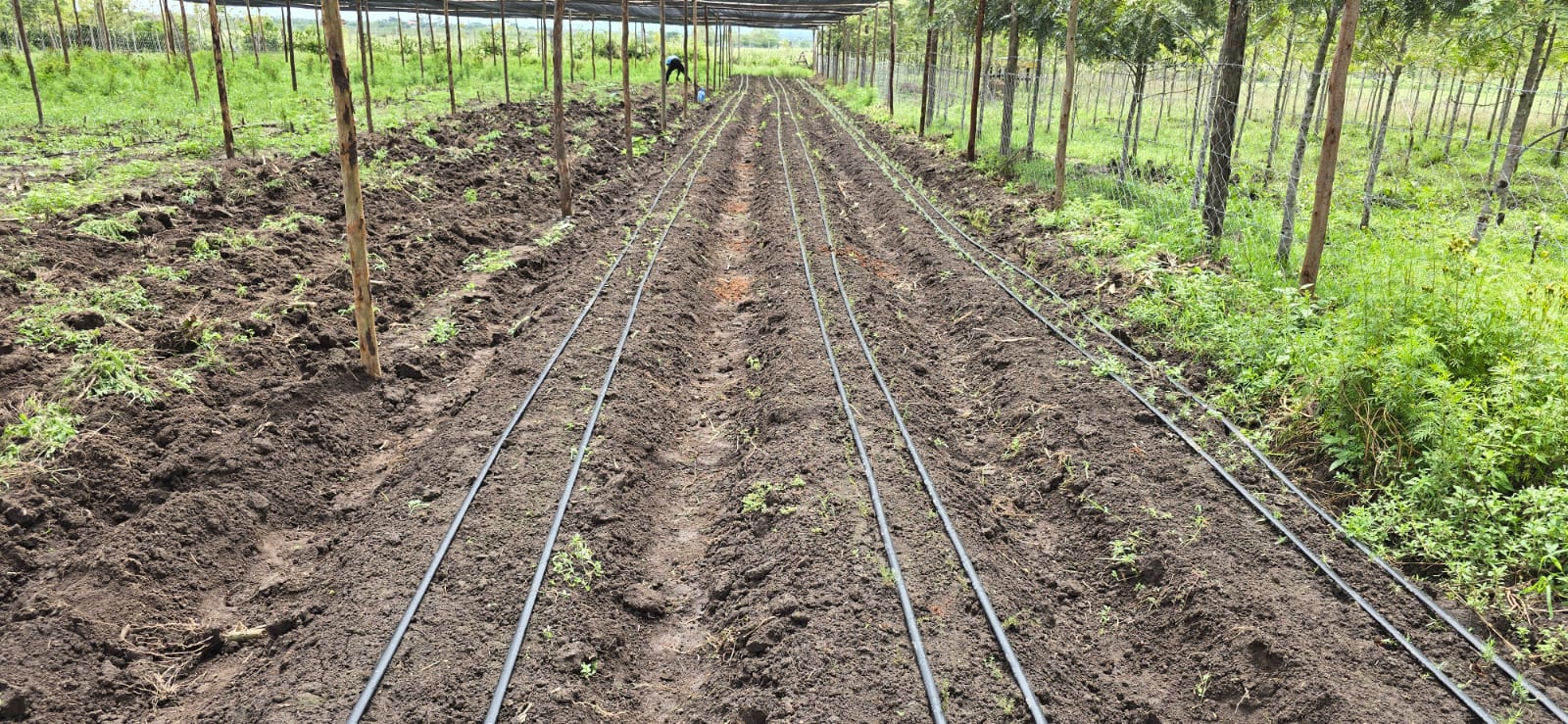
Cuttings lose water through the leaf faster than a cut stem can take it up. That is why propagation runs on humidity first and irrigation second. A mist line above the bench wets the leaf surface and holds the air humid around the tray.
Then run the mist on short cycles, not long ones. Twenty seconds every twenty minutes at midday does more than a five minute soak at noon, and it keeps the tray mix workable. A timer with a manual override lets you respond to a hot afternoon.
Next, filter the line before the nozzles. A mist nozzle has a small opening, and grit from a borehole blocks it in a week. A 120 mesh filter ahead of the line is the cheapest part of the system and the one that decides whether the mist works in month three.
Seedlings in cells are different. Because they take water at the base, a wet leaf at dusk invites disease. Bottom watering, capillary matting or a low drip line suits them better than overhead mist.
Step 7: run the hardening ramp and the exit test
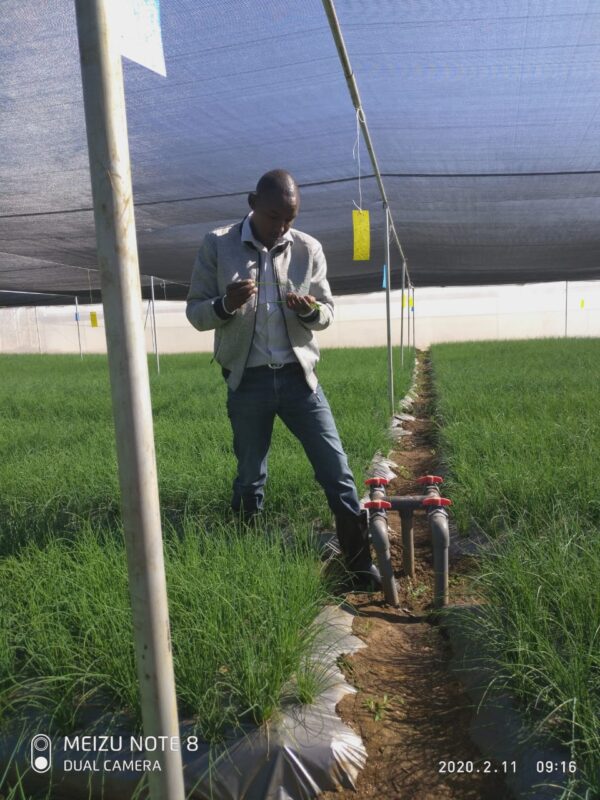
A plant raised in soft light will scorch in the field. The ramp is the bridge, and it belongs in the build plan, not in the week of planting. Start it seven to ten days before the field date.
Each day, open the sides a little more. Shift the shade from the roof by degrees, either by rolling a curtain or by swapping a strip of net. Watch the leaves at ten in the morning, because that is when the deficit shows.
Then test the batch before it leaves. Lift a tray and look at the roots. A plant that wilts by ten in the morning on the third day of full light is not ready, and three more days in the house will save a week of field losses.
How net house construction differs from a greenhouse
A greenhouse is a closed box with a controlled climate. A net house is an open frame with a filtered sky. The difference decides which plants suit which structure, and it decides the disease risk you carry into the season.
| Detail | Net holding house | Polythene greenhouse | Open nursery bed |
|---|---|---|---|
| Air movement. | Constant through open sides. | Only through vents and doors. | Unrestricted, including hot wind. |
| Light control. | Set by the roof grade. | Set by film and shade paint. | None without a cover. |
| Humidity. | Moderate and hard to hold. | High and easy to hold. | Follows the weather. |
| Disease pressure. | Lower leaf wetness, more wind-borne dust. | Higher, because still air holds moisture. | Highest, because rain and soil splash reach the plants. |
| Best for. | Hardening off and holding stock before field planting. | Rooting cuttings and raising seedlings from seed. | Rugged seedlings for a short stay. |
In practice the two work as a pair. Cuttings root in the humid house, then move to the net house for the ramp. A site that tries to do both jobs in one structure usually ends up with a greenhouse too hot for hardening, or a net house too dry for rooting.
For the film-covered option, our greenhouse construction guide covers the frame, cover and ventilation sequence.
Net house construction cost, line by line
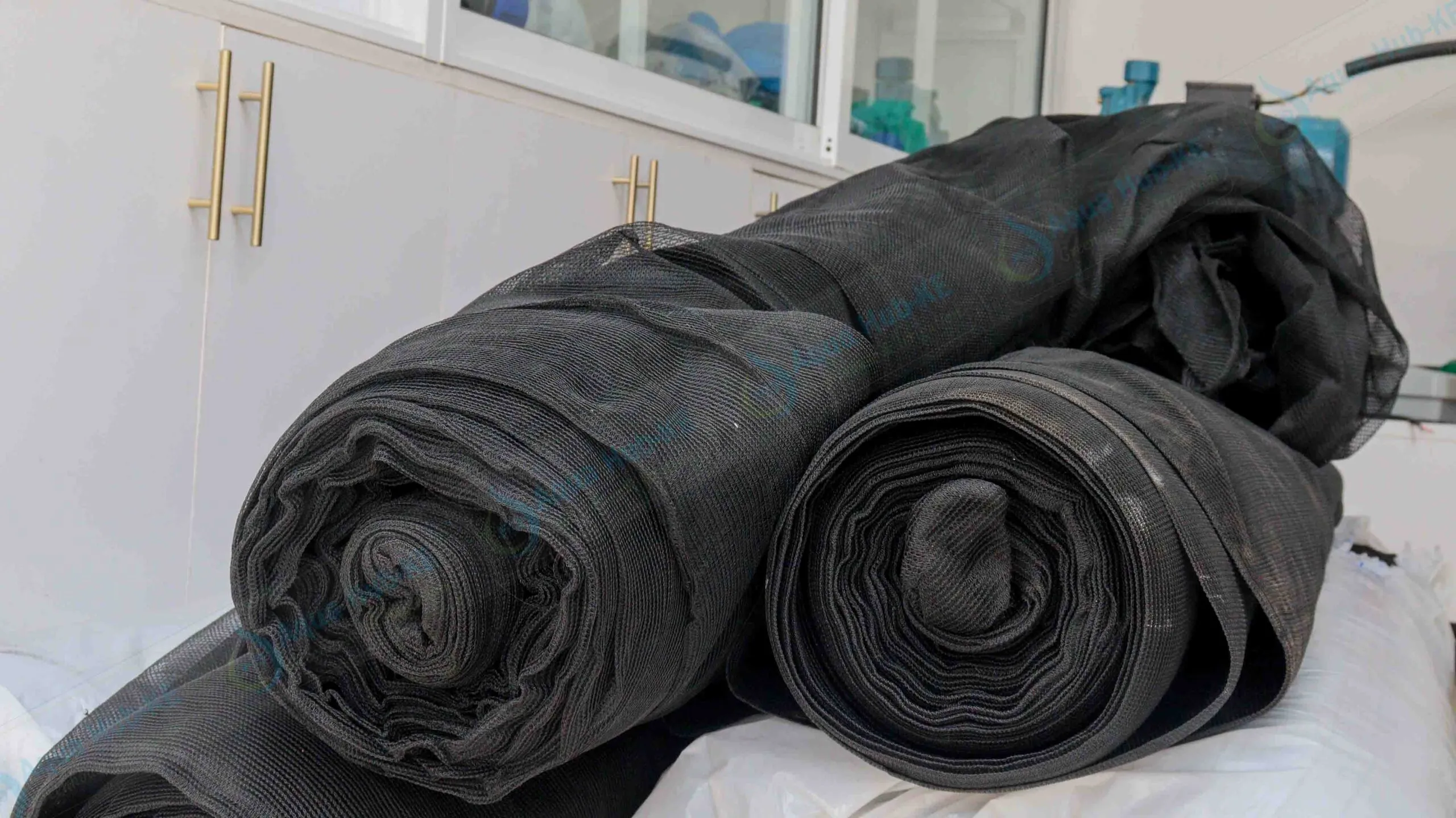
Net house construction has one line that can be priced from stock: the net. The shop sells black net by the roll, and each roll measures 4 metres wide by 50 metres long, covering 200 square metres. It costs KSh 12,000 at 55 percent, KSh 19,500 at 75 percent and KSh 28,000 at 90 percent. That works out at KSh 60, KSh 97 and KSh 140 per square metre.
Everything else is a site item. Posts, wire, tension hardware, bench timber, mist line, filter and labour are quoted by span, by bench metre and by nozzle. A holding house usually spends more on benches and water than on net, because the roof is one surface and the benches are many.
Therefore, ask for the quote in four parts: cover, frame, benches, water. A single lump sum hides the line that will be cut first, which is always the benches. The shade net percentage guide sets the grade against the crop, and the shade nets for sale listing carries the current roll prices.
Five net house construction failures in the first season
First, too dark. A 90 percent roof over a slow-rooting cutting produces long, pale stems and soft leaves. The plant looks tall and healthy until it reaches the field, where it collapses in a day. Move to a lighter grade once callus forms.
Second, sudden exposure. A batch moved from deep shade to full sun in one morning scorches on the first afternoon. The ramp exists to prevent exactly that, and it takes days rather than hours.
Then wet leaves at dusk. Mist that runs into the evening leaves the canopy damp overnight, which is when fungal disease spreads fastest. Stop the mist early enough that the leaf dries before the light goes.
Next, a loose edge. Wind finds the gap under a skirt, the edge works against a wire, and the tear travels to the next rail. Walk the perimeter after the first storm of the season, not at the end of it.
Finally, pests carried in. Mesh keeps flying insects out, not the ones already sitting on a tray. Inspect incoming plant material at the quarantine bench, and keep that bench away from the main crop.
Frequently asked questions about net house construction
How much does a net house cost to build in Kenya?
The net house construction figure that gets quoted first is the cover, because it is the only part with a shelf price. A 200 square metre roll runs from KSh 12,000 to KSh 28,000 depending on grade. The frame, benches and water line are quoted separately, and on a holding house they usually cost more than the net. Ask for the four parts in writing.
What shade percentage suits cuttings and seedlings?
Start at 75 percent for leafy cuttings and 90 percent for delicate tissue on a hot site. Step down towards 50 percent during hardening so the plant meets field light before it meets the field.
Do I need insect mesh on a net house?
On the openings, yes. A 50 mesh screen stops whitefly and thrips where a 40 mesh screen lets the smallest pests through. Keep enough opening area that the finer mesh does not still the air.
How many seedlings fit in an 8 by 15 metre house?
About 20,000 at a 6 centimetre cell with 60 percent of the floor in benches. At a 5 centimetre cutting spacing the same house holds about 28,800 cuttings. Reduce both figures for trays, labels and the quarantine bench.
Can a greenhouse do the same job?
For rooting, often better, because a closed house holds humidity. For hardening off, a net house is easier, because open sides keep the air moving and the temperature down. Many farms run both.
How long do plants stay in a holding house?
Two to eight weeks for most cuttings, and three to six weeks for seedlings, depending on species and season. The exit test is the roots and the morning wilt, not the calendar.
Where to buy the net and the fittings
Net house construction in Kenya usually starts with one roll, one bench and a hose, then grows from there. The net, the mesh and the filter come from the shop. The shade nets listing carries the three grades in 4 m by 50 m rolls, and the insect net guide sets the mesh count for the sides. For the water line, start with a filter sized to the mist run.
If you want the plant schedule and the hardening plan written for your own crop, our agronomy services team works from the same numbers used on this page. For a full drip layout under the benches, the drip irrigation kit page covers line spacing and run length.
Propagation practice for softwood cuttings, including humidity and bottom heat, is set out by the Royal Horticultural Society. The greenhouse climate principles behind the comparison table come from the FAO guide to greenhouse vegetable production.