
Table of Contents
Agronomy services in Kenya start with the ground you have, not the crop you saw on a neighbour’s farm. A plan built on a soil test, a water test and a planting date is the difference between a crop that finishes and one that stalls. The dry spell decides which. This page sets out what the service covers, the seven steps we work through, and what each one hands you.
Agronomy Services in Kenya: What the Service Covers
In practice, agronomy is the part of farm planning that decides what to plant, when to plant it, how much water and nutrient the crop needs, and what to change when the season moves against the plan. In our work it sits beside irrigation design. A schedule is only as good as the system that delivers it. For example, a crop plan that assumes 30 mm a week fails where the pump can move half of it.
| What we cover | What you receive |
|---|---|
| Soil and water analysis | A lab report read against the crop you intend to grow, not a sheet of numbers. |
| Crop choice and market check | A shortlist with a planting window and a market route for each crop. |
| Season and planting calendar | Dated activities for the long and short rains, including nursery and transplant dates. |
| Irrigation schedule | Water depth per week by crop stage, converted into run hours per block. |
| Fertigation and input plan | Product, rate and timing, matched to what the soil test says is short. |
| Monitoring and records | Visit notes, scouting records and the adjustments made after each one. |
| Season review | A written comparison of plan against outcome, with the changes for the next cycle. |
First, notice what the list does not promise. It does not promise a yield figure. Because yield depends on weather, pest pressure and management as much as on the plan, the service stops short of a figure. Instead, every recommendation can be traced to a measurement on your farm.
Who Uses Agronomy Services in Kenya
Four groups ask for this work. Each arrives with a different problem.
- Smallholders moving off rain-fed cropping. One or two acres, a new drip kit, and a first season where the schedule matters more than the equipment.
- Greenhouse growers. A protected crop needs a different water and nutrient regime from the same crop in open field. The cost of a wrong schedule is also higher.
- Agribusinesses and estates. Several blocks, several crops and a manager who needs one calendar that the whole team works to.
- Institutions and investors. A school, hospital or new estate farm needs a plan it can hand to staff. It also needs a costed design to budget against.
Consequently, the first conversation is about the season ahead and not about a product. A farmer already harvesting and chasing a higher yield gets one engagement. An investor still choosing a site gets another.
Seven Steps in an Agronomy Engagement
The sequence below is deliberate. Each step depends on the one before it, and skipping forward usually means paying twice.
Step 1: Site and Soil Assessment
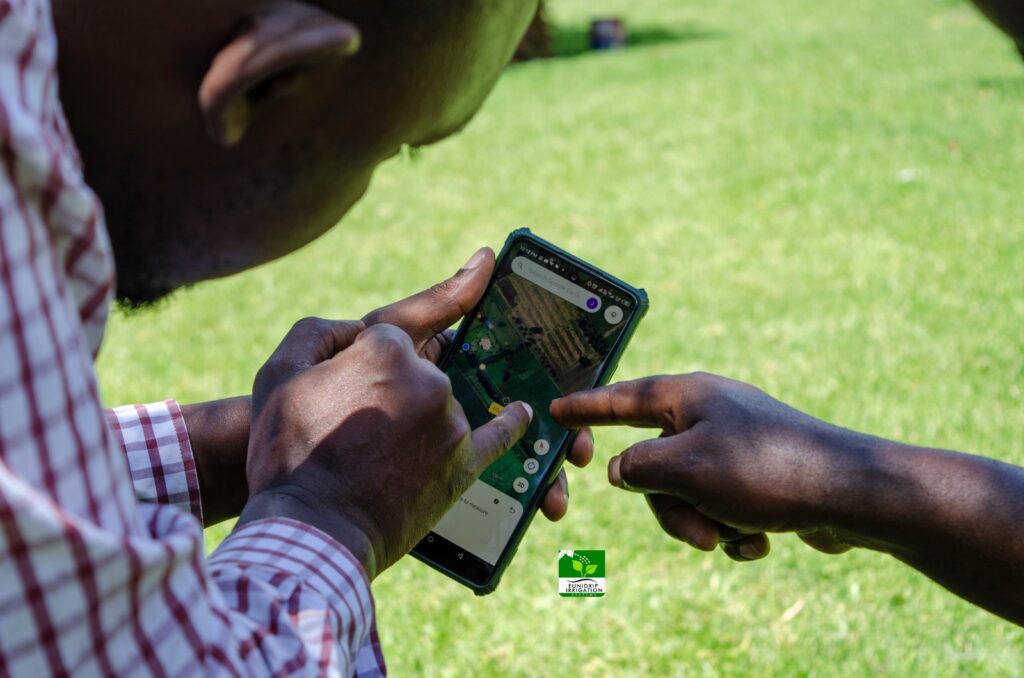
First, we walk the farm and sample the soil. A topsoil sample comes from 0 to 20 cm. A deeper sample from 20 to 40 cm is added where the crop roots below the plough layer, as avocado does. Every block that differs in colour, slope or cropping history gets its own sample. One average across three soils describes none of them.
Step 2: Water Test and Source Review
Next, we test the water you intend to irrigate with, then record the flow and pressure the source can hold. Borehole, river, dam or mains each carry a different risk. High iron or hardness clogs emitters. Salinity limits what the crop can tolerate. The water result therefore decides whether the plan needs filtration, blending or a different block layout.
Step 3: Crop Selection and Market Check
Then the soil and water results narrow the list. Then the market narrows it further, because a crop that yields well and sells slowly still costs money. We shortlist crops with a planting window that fits your water supply. Each one needs a route to a buyer, and we record why it was kept or dropped.
Step 4: Season Plan and Planting Calendar
Typically, Kenya’s long rains run between March and May. The short rains run between October and December. Each window sets a planting date that the rest of the calendar hangs on. Nursery sowing, transplanting, first fertigation and the last irrigation all follow from it. A crop planted three weeks late can miss the market it was chosen for.
Step 5: Irrigation and Fertigation Schedule
In practice, this step turns the crop plan into instructions an operator can follow. Weekly water depth is split across the blocks the pump can serve at once. It then converts into run hours using the emitter rate and spacing. Our tape delivers 1 to 2.5 litres per hour at working pressure between 1 and 2.5 bar, in 16 mm and 12 mm diameters. Emitter spacing runs from 10 to 45 cm, so a block laid at 20 cm carries half the emitters of one laid at 10 cm and needs twice the run time for the same depth.
Step 6: Input Plan and Budget
Finally, seed, seedlings, fertiliser, crop protection and labour are costed against the calendar, not bought in a rush. Therefore the plan shows when money leaves the farm. That matters most to a grower financing a first season. Where the soil test shows a deficiency, the input plan names the product and the rate that corrects it.
Step 7: Monitoring and Season Review
However, a plan is only a starting position. We return through the season to scout for pest and disease. Each visit checks that the schedule is being followed. Where rainfall, temperature or growth stage changes the demand, the plan is adjusted. At the end, the season review compares what was planned with what happened, so the next calendar starts from evidence.
What a Soil Test and a Water Test Tell You
A soil report is only useful when it is read against a crop. We ask for the full set. The report covers pH, electrical conductivity, organic carbon, phosphorus, potassium, calcium, magnesium, cation exchange capacity and texture. Phosphorus and potassium decide the basal fertiliser. pH decides whether lime is needed. Texture decides how the block should be wetted.
Similarly, water is the second half of the picture. The lab reports pH, salinity, hardness, iron, manganese, chloride and sodium. Each one has a consequence for the system. Iron and manganese feed the bacteria that block emitters. A clogged emitter is often a water problem, not a tape problem. Salinity and sodium decide whether the crop can be grown with that water at all.
Also, sampling discipline matters more than the lab. Take cores from several points in a block and mix them. Keep the depth consistent, and label the bag with the block name. Also sample before the season, not after a disappointing one. A test taken mid-season describes soil that has already been fertilised.
Irrigation Scheduling and Fertigation
First, crop water demand rises through the season and peaks at flowering and fruit fill. A schedule fixed in week one will be wrong by week eight. We publish the demand as a weekly depth, then convert it into run hours per block. That conversion is the part of agronomy services in Kenya that most plans miss.
Then fertigation follows the same order. Inject nutrients through the middle of the irrigation cycle, so the lines are flushed before and after. Never mix calcium with phosphate or sulphate fertilisers in the same tank. The precipitate blocks emitters and wastes the product. On a system with pressure-compensating drippers, the whole block receives the same dose. That is what makes a fertigation schedule reliable across uneven ground.
Consequently, where the pump cannot hold pressure across all blocks at once, the schedule is written block by block. The high volume low pressure design notes explain how reservoir sizing and mainline bore set that limit. The pump sizing page covers the head and flow figures.
How Agronomy Services in Kenya Fit with Irrigation and Greenhouses
Typically, most agronomy services in Kenya are commissioned beside a system, and the two decisions pull on each other. A crop plan sets the water demand. The demand sets the system size, and the system size sets the budget. Consequently, the crop decision belongs before the kit is ordered, not after it is installed.
The drip irrigation cost in Kenya page shows how widely the kit price moves with the crop. An eighth acre of watermelon sits near KSh 15,000. A dense acre of onion runs to about KSh 160,000. For a protected crop, the greenhouse design decides ventilation and humidity. Those decide how often the crop needs water.
However, a dam or pond changes the answer again. Ponds and dam construction sets storage against the dry months the schedule has to survive. Land preparation belongs at the front of the same chain. Beds that are not levelled or formed to the right width distort the schedule before the first irrigation, and land preparation for drip irrigation covers the sequence.
Frequently Asked Questions about Agronomy Services in Kenya
What is included in an agronomy visit? A farm walk, soil and water sampling, and a written recommendation. The recommendation covers crop choice, planting dates and the irrigation schedule. Follow-up visits check that the plan is being followed.
Do I need a soil test before planting? Yes, if you are changing crops, changing fertiliser or installing irrigation for the first time. The test costs less than a season of the wrong fertiliser rate.
How long does a season plan take? The assessment and the recommendations usually take two to three weeks, because the soil and water results arrive from the lab in between. Urgent plantings can be planned around a rapid test.
Can you work with a system someone else installed? Yes. First we test the pressure and the flow at the block. Then we write the schedule for the system that exists rather than the one the plan assumed.
Do you supply inputs as well? We advise on them and supply the irrigation and growing media side. Fertiliser and crop protection come from your usual supplier, unless you ask us to price them into the budget.
Is agronomy worth it on one acre? On one acre the schedule is the cheapest part of the season and the easiest to get wrong. Most agronomy services in Kenya at that scale amount to one visit and a written calendar. A single corrected planting date can pay for it.
Book Agronomy Services in Kenya
First, send the plot size, the crop you are considering, the water source and your target planting date. We will confirm what the assessment covers and arrange the site visit. Call 0728 163 329, or send the same details on WhatsApp and attach your last soil test.