Table of Contents
Ponds and dam construction is a decision before it is a digging job. The structure you choose, the site you choose and the soil under it decide whether the water stays. This page walks the choices in order, from the first site check to the final quote. Then it hands each part of the build to the page that covers it in depth.
What Ponds and Dam Construction Covers
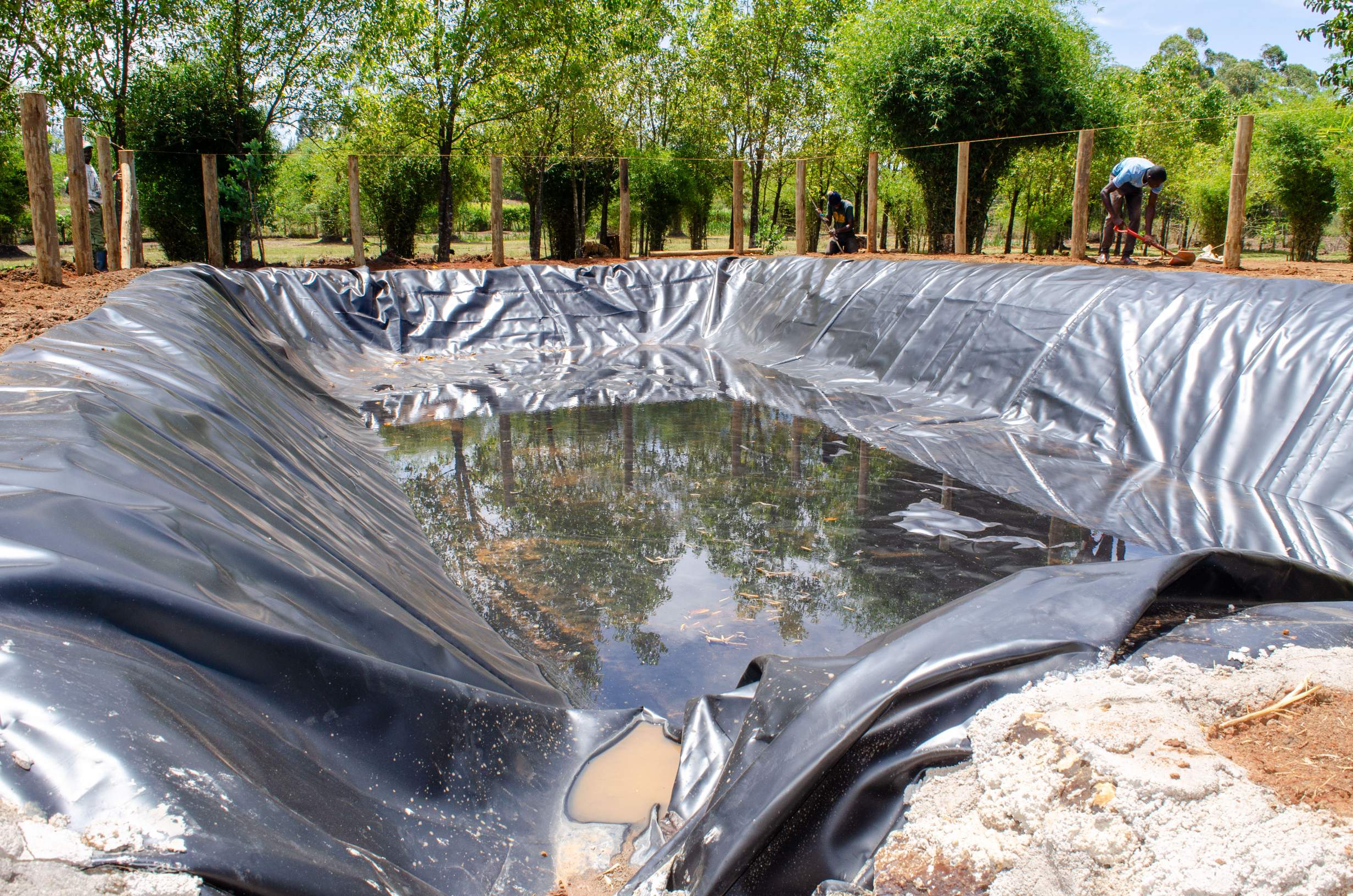
Ponds and dam construction covers every structure a farm uses to hold water: the excavated pan, the embankment dam, the lined storage pond and the raised fish pond. Each one stores water differently, so each one suits a different site. The wrong choice leaks, overtops or costs twice what it should.
Eunidrip Irrigation Systems designs, registers and builds these structures countrywide. However, the owner makes the first decisions alone. What is the water for? Where does it come from? What will the site hold? Answer those three and the design brief writes itself. Skip them and even a good contractor builds the wrong thing.
Choose the Structure by Water Source and Use
Start with the water source, because it limits everything else. A site fed by seasonal runoff cannot support a large dam, however good the soil is. A site below a spring can fill by gravity all year. Therefore match the structure to the source before you price anything.
| Water source | What it can fill | Structure that suits it |
|---|---|---|
| Seasonal runoff from a catchment | A basin after each rain | Excavated water pan, lined if the soil is porous |
| Stream or spring above the site | Gravity flow, most of the year | Embankment dam with a spillway, or a lined pond |
| Borehole or pumped supply | Controlled flow at any level | Lined storage pond sited for the irrigation block |
| Small plot, piped water | A few cubic metres | Raised fish or storage pond, no excavation |
Next, match the structure to the use. Irrigation needs volume and a draw-off. Fish need constant level and clean water. Livestock need access and a fence. For the engineering difference between a pan and a dam, our dam excavation page compares the two feature by feature.
Site Checks for Ponds and Dam Construction
Seven checks pass or fail a site before any machine arrives. Run them in this order, because the first failure is the cheapest to walk away from.
- Gravity first. Select land slightly lower than the water intake source. Then the pond fills by gravity instead of pumping, and the fuel bill stays at zero.
- Clay content. Soil with at least 20 percent clay holds water. Rocky, sandy or gravelly soil does not, so plan a liner from the start.
- Gentle slope. A slope of about 1 percent is ideal. Steep ground costs more to excavate and pushes the embankment design into harder engineering.
- Flood path. Avoid land that floods. A pond in a flood path fills with silt in one season and can overtop into the neighbours.
- Pollution. Never site a fish pond close to crop fields. Fertiliser and pesticide runoff reaches the water and kills stock. Keep away from polluted streams too.
- Source strength. Confirm the source runs through the dry season, not just the rains. A spring that dies in August cannot refill a pond in September.
- Access and market. Confirm transport for materials in and produce out. Labour must also reach the site, because construction and feeding are daily jobs.
These checks apply to every structure on this page. However, a large dam adds approvals and a design report before breaking ground. The approvals table on the dam excavation page lists what is needed, from whom, and when.
The 20 Percent Clay Rule Before You Dig
The soil decides whether you need a liner, so test it before you commit to a budget. Take a sample from the proposed bed, not the topsoil. Then work it wet: soil with at least 20 percent clay binds into a ribbon and holds water. Sandy soil crumbles and leaks.

A clay site can hold water unlined, which saves the liner cost entirely. A porous site cannot, however well it is compacted. Therefore the clay test is a budget decision, not a formality. If the result is borderline, price the liner anyway and treat an unlined basin as a bonus. Liner costs sit on our dam liner prices in Kenya page, by thickness and by dam size.
How Ponds and Dam Construction Is Priced
No single number prices ponds and dam construction, because the quote is 3 quotes in a trench coat. Earthmoving is priced by the cubic metre of soil. The liner is priced by the square metre at a chosen thickness. Design, approvals and plumbing sit on top. Therefore ask for each part separately, and hold each against its own benchmark.
| Cost part | What drives it | Where it is priced |
|---|---|---|
| Excavation and embankment | Volume moved, soil type, machine choice | Dam excavation methods and rates |
| Liner and installation | Area, thickness, welding and anchoring | Dam liner prices in Kenya |
| Whole reservoir build | Design, steps, commissioning | Irrigation reservoir construction |
| Approvals and reports | Authorisation, impact assessment, design report | The approvals table under dam excavation |
A quote that bundles everything into one figure hides the margins. So split it, then compare like with like. The excavation rate should match the soil you actually have, not the softest soil in the district.
Fish Pond Siting: Water, Soil and Market
Fish add three demands to the general site checks. First, water quality and quantity must be constant, because a pond that drops or fouls loses stock. A nearby stream, spring or lake is a real advantage here. Second, the pond design must match the species you plan to rear; the fisheries department and recognised fishery bodies publish designs for common species. Third, the market must be close. Transporting fish far cuts the price and the quality, and raises the cost of feed and medicine trips.
Land area sets the ceiling. Earthen ponds suit large production, while small plots take raised units. Therefore decide the scale before the design, not after. For the rearing side (species, feeding and management), read our shop’s fish farming in Kenya guide. This page stays on the construction decisions.
Raised Fish Ponds and Shade Net Covers
A raised pond skips excavation entirely. The frame sits on level ground, a liner holds the water, and a shade net cover cuts evaporation and keeps leaves and predators out. This is the small-plot option, and it works in arid areas where the soil cannot hold water at any price.
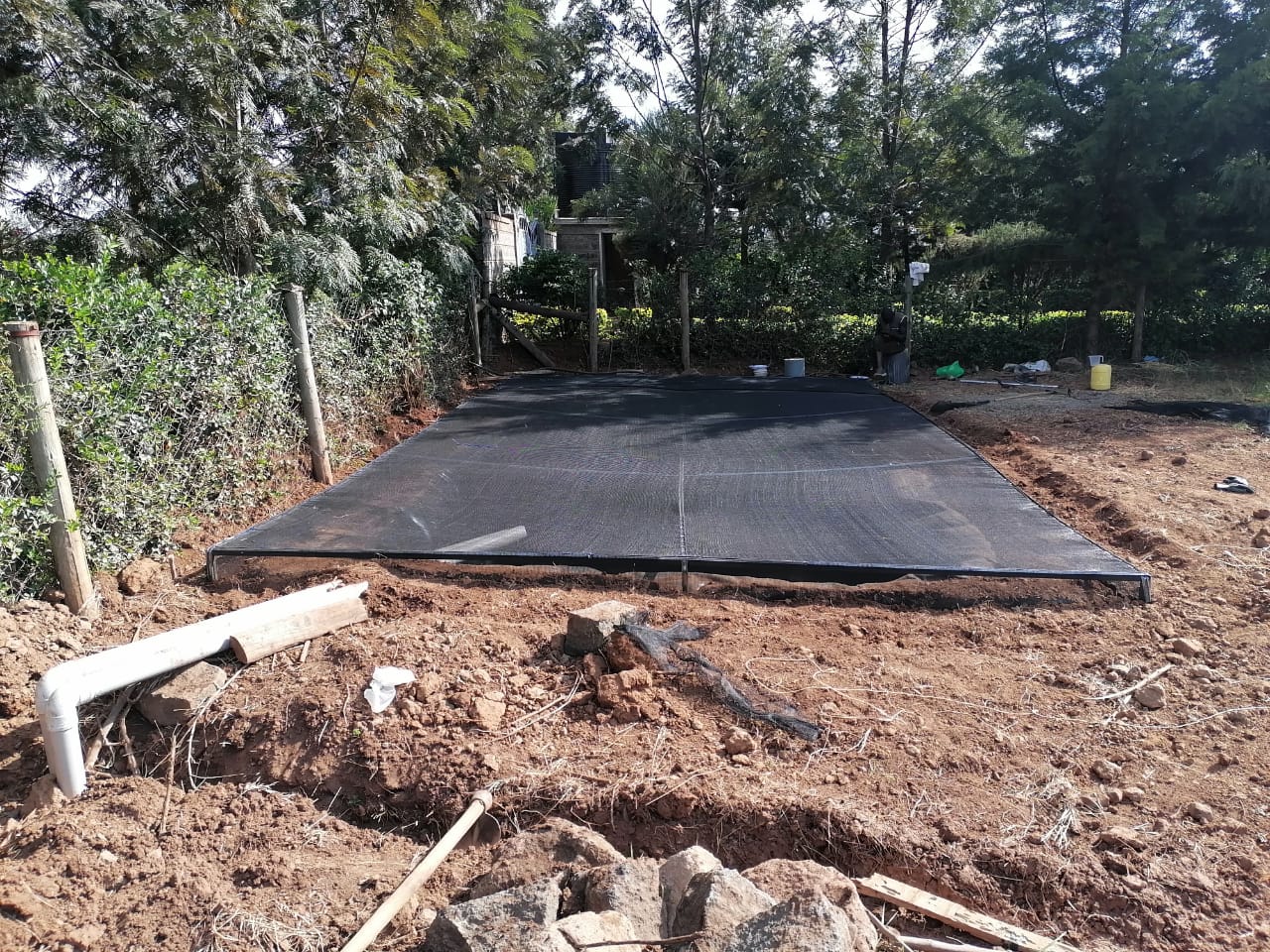
Plumb the inlet before the liner goes in, and plan the drain at the low end. Harvesting a pond without a drain means buckets. So lay the pipe work first, then the liner, then the cover. The liner itself is the same dam liner used in full-size ponds, cut to the frame.
When a Pond or Dam Needs a Liner
The clay test answers this. Above 20 percent clay, the basin can hold water unlined. Below it, a liner is the structure, not an extra. Most farm sites in sandy or rocky ground fall in the second group, so price the liner from the start.
Thickness follows the soil and the depth, and the price follows the thickness. Our dam liner prices in Kenya page breaks that down band by band. To size the sheet before ordering, use the shop’s dam liner sizing formula. And if the choice is against concrete rather than soil, the shop’s concrete reservoirs vs HDPE dam liners comparison prices both builds.
Ponds and Dam Construction: Who Does What
Ponds and dam construction is not one trade. It is 5 roles, and a failure in any one of them leaks into the others. Know who holds what before the contract is signed.
| Role | What they hold |
|---|---|
| Owner | The brief, the site checks, the budget and the approvals duty |
| Designer | Survey, sizing, basin and spillway design, the design report |
| Contractor | Registered earthworks crew, machines, compaction, embankment |
| Liner installer | Sheet sizing, welding, anchor trench, patch kit |
| Authorities | Water Resources Authority authorisation; NEMA impact assessment where triggered |
The build itself runs survey, design, excavation, lining, plumbing, filling and testing. Our irrigation reservoir construction page walks those seven steps with the sizing arithmetic. The excavation half (machines, soil volumes and spoil) sits on the dam excavation page. This page stops at the decisions, because the decisions are what the owner cannot delegate.
Water Storage Ponds for Irrigation
An irrigation pond is sized from the crop, not from the hole. Daily demand times the dry-spell days gives the volume, and the basin is designed about 20 percent larger. That arithmetic, with a worked one-acre example, lives on the irrigation reservoir construction page. Bring the volume figure to any quote.
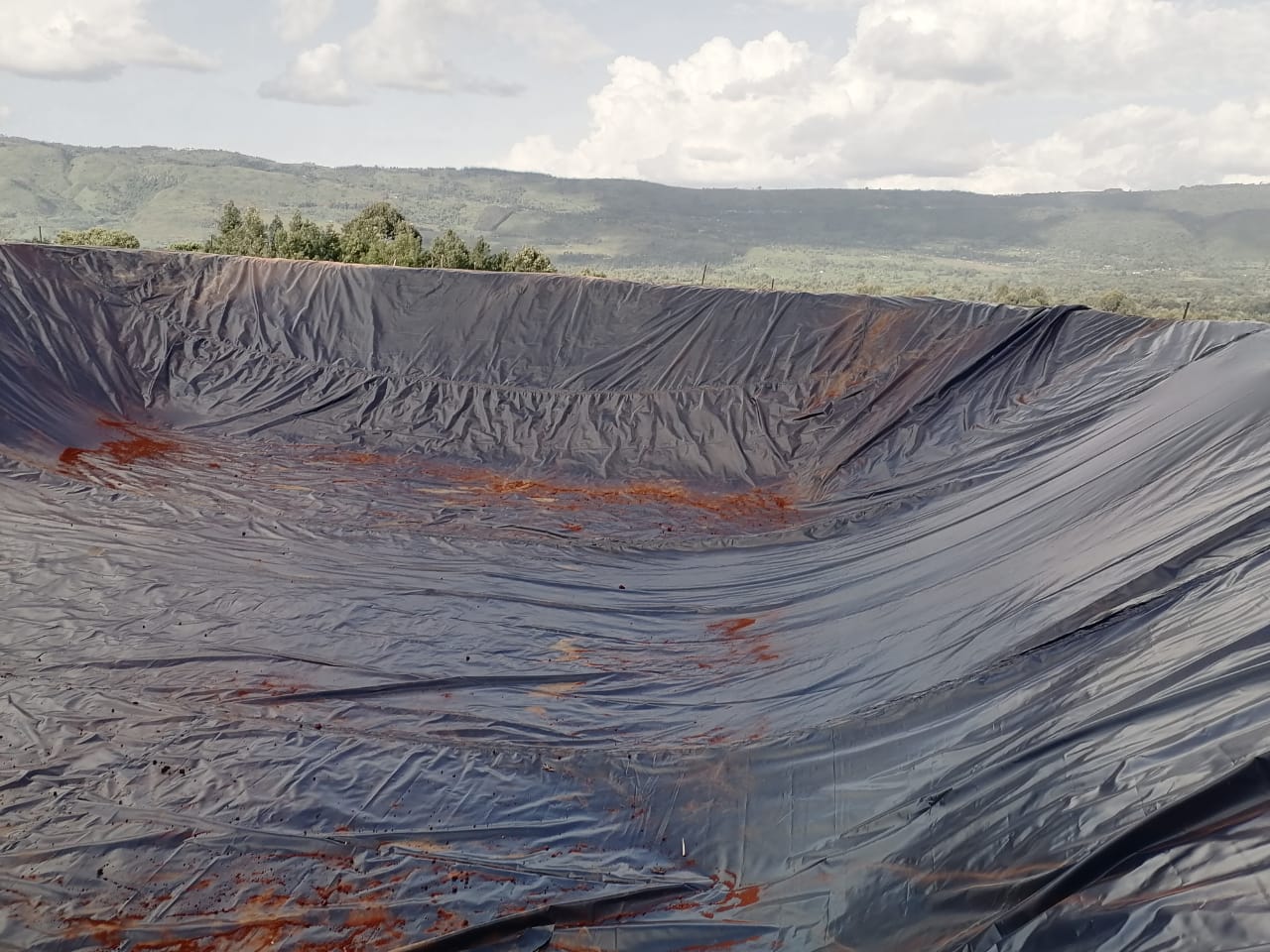
Site the storage pond above the irrigation block where possible, so draw-off runs by gravity. Then put the draw-off pipe at the low end with a valve and a filter, because drip lines clog on pond sediment. Finally, fence it. Also, a storage pond without a fence is a livestock and child safety problem, not just a water asset.
Ponds and Dam Construction Mistakes to Avoid
Most failed ponds fail at the decision stage, not the digging stage. These are the 5 that recur:
- Wrong structure for the source. A large dam on a small catchment never fills. Match the structure to the water first.
- No clay test. A basin dug into sand without a liner budget leaks from day one. Test before you dig.
- Siting in a flood path. One flood fills the basin with silt and can breach the embankment. Walk the site after rain.
- No spillway plan. Stored water must have a designed way out. An uncontrolled overtop cuts the embankment.
- Quoting before the survey. A quote without a survey note is a guess. Get the survey, then the price.
Each of these is cheap to fix on paper and expensive to fix in soil. So spend the week on the checks before the machine burns a litre.
Start Your Ponds and Dam Construction Plan
Take the seven site checks to the land this week. Then write the brief: use, source, volume target, soil result and budget range. With that brief, a designer can size the structure and a contractor can price it honestly. Ponds and dam construction goes wrong when the brief is vague, and goes right when it is one page long.
Eunidrip Irrigation Systems handles the whole chain: design, registration, excavation, lining and commissioning. Send the brief through our contact page and the first reply will tell you which structure your site can hold. Ponds and dam construction starts with that answer.
Frequently Asked Questions About Ponds and Dam Construction
What is the difference between a pond and a dam?
A pond is an excavated basin, usually lined, that stores water at or below ground level. A dam adds a compacted embankment and a designed spillway, so it can hold water above the original ground. Dams therefore carry more engineering and more approvals.
Do I need a liner if my soil has clay?
Soil with at least 20 percent clay can hold water unlined. Below that, plan a liner from the start. Test the subsoil at the proposed bed, not the topsoil, and price the liner if the result is borderline.
How much does ponds and dam construction cost in Kenya?
Excavation, liner and approvals are priced separately, so no single rate exists. Excavation follows the cubic metre of soil, the liner follows the square metre by thickness. Our dam excavation and dam liner prices pages carry the current bands for each part.
Can I build a fish pond on a small plot?
Yes. A raised pond with a liner and a shade net cover needs no excavation and works on piped water. Match the design to the species, keep the market close, and plan the drain before the liner goes in.
What approvals does a dam need in Kenya?
Water works need Water Resources Authority authorisation, and projects that meet the threshold need a NEMA impact assessment. Regulated storage dams also need a design report and a registered contractor. The approvals table on our dam excavation page lists each document and its stage.
Who should build my pond or dam?
A registered contractor with a designer’s survey and, where needed, a specialist liner installer. Ask for the survey note before the quote, and split the quote into excavation, liner and approvals so each part can be checked.