

A kitchen garden turns a small backyard into a steady supply of fresh vegetables. It fits families who want sukuma wiki, spinach and tomatoes within reach of the kitchen door. The plot is small, but it still needs a plan. This guide walks through layout, crops, soil and a gravity drip design that keeps every bed watered without daily bucket work.
What a Kitchen Garden Needs
Start with three checks. First, sun: most vegetables want six hours of direct light. Second, water: a tap, tank or well within a short pipe run. Third, access: a path you can walk with a harvest basket. A plot of 20 to 50 square metres feeds a household well. Therefore choose the sunniest corner near the house, not the leftover strip behind the fence. Historically the kitchen garden sat closest to the home for exactly this reason.
| Items | Size | Quantity | Unit price(KES) | Cost(KES) |
|---|---|---|---|---|
| Tank | 5000 Litres | 1 | 43,000 | 43,000 |
| Pipe ( metres) | 1 inch | 50 | 60 | 3,000 |
| Ball cork | 1 inch | 1 | 650 | 650 |
| Screen Filter | 1 inch | 1 | 1500 | 1500 |
| Hdpe elbows | 1 inch | 2 | 300 | 600 |
| Hdpe adapters | 1 inch | 3 | 200 | 600 |
| Rubbers | 16mm | 9 | 10 | 90 |
| Pe to Pe mini valves | 16mm | 75 | 50 | 3750 |
| Starters | 16mm | 10 | 15 | 150 |
| Hdpe Endcap | 1 inch | 1 | 150 | 150 |
| Hdpe pipes | 16mm | 25 | 1800 | 45000 |
| Insert Tees | 16mm | 375 | 25 | 9375 |
| Insert elbows | 16mm | 75 | 20 | 1500 |
| Hdpe endcaps | 16mm | 75 | 15 | 1125 |
| Adjustable Button drippers | – | 7500 | 10 | 75000 |
| Tank connector | 1 inch | 300 | 300 | 300 |
| Thread seals | big | 1 | 80 | 80 |
Sample quotation for 1/8 acre plot of land
NB: Transport and labor costs excluded.
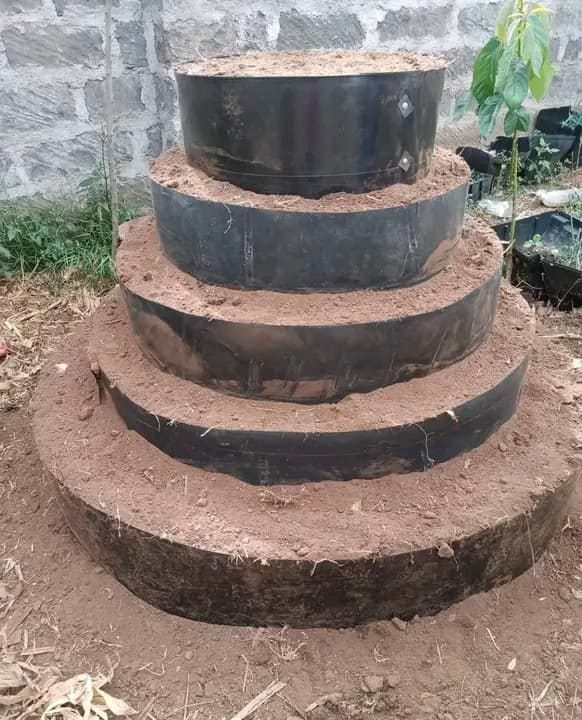
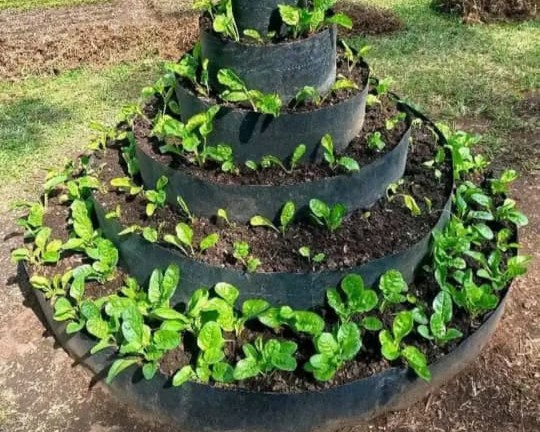
One conical kitchen garden costs @ 2300 and 6000 plus labor charges( set up charges)
Planning the Bed Layout
Work in raised beds rather than one open patch. Beds keep soil loose and stop you stepping on root zones. Keep each bed about one metre wide so you can reach the centre from either side. Leave paths of 40 to 50 centimetres between beds. Run beds across the slope, not down it, so water does not channel away.
| Element | Recommended | Reason |
|---|---|---|
| Bed width | 1 m | Reach centre from both sides |
| Path width | 40-50 cm | Walk and harvest comfortably |
| Bed length | 3-6 m | Short drip runs stay uniform |
| Bed height | 15-20 cm | Drainage and loose root zone |
Choosing Crops and Succession
Grow what the household actually eats. Leafy crops give quick returns, while fruiting crops pay back over a longer season. Mix both so the basket is never empty. Then sow small batches every two to three weeks instead of one large planting. Succession keeps harvests steady and spreads the watering load.
| Crop | Spacing | First harvest |
|---|---|---|
| Sukuma wiki | 30 cm | 6-8 weeks |
| Spinach | 20 cm | 5-7 weeks |
| Coriander | 15 cm | 4-6 weeks |
| Tomato | 45 cm | 10-12 weeks |
| Onion | 10 cm | 12-16 weeks |
Preparing Soil and Beds
Loosen the top 20 to 30 centimetres before planting. Mix in compost or well-rotted manure to hold moisture and feed roots. Rake the surface level so drip water spreads evenly instead of pooling at one end. Because vegetables are shallow-rooted, a loose, crumbly top layer matters more than depth. Finish with a light mulch to cut evaporation.
Sizing a Kitchen Garden Drip System
Size the system from the crop, not from guesswork. Count beds, then laterals per bed, then emitters per lateral. Multiply emitter flow by running hours to get daily litres. For example, four beds with two laterals each and ten emitters per lateral give 80 emitters. At two litres per hour for one hour, that is 160 litres a day. A 500 to 1,000 litre tank therefore covers several days of watering.
| Garden area | Beds | Tank | Zones |
|---|---|---|---|
| 20 m2 | 3-4 | 500 L | 1 |
| 50 m2 | 6-8 | 1,000 L | 1-2 |
| 100 m2 | 12-16 | 2,000 L | 2 |
Gravity Drip Layout and Tank Height
Raise the tank one to two metres above the beds. That head of water gives enough pressure for short drip runs without a pump. Set the tank close to the middle of the plot so pipe runs stay short. Fit a filter and a control valve at the tank outlet, then run a main pipe along the bed edges. Each bed takes one lateral with a drip line per crop row.
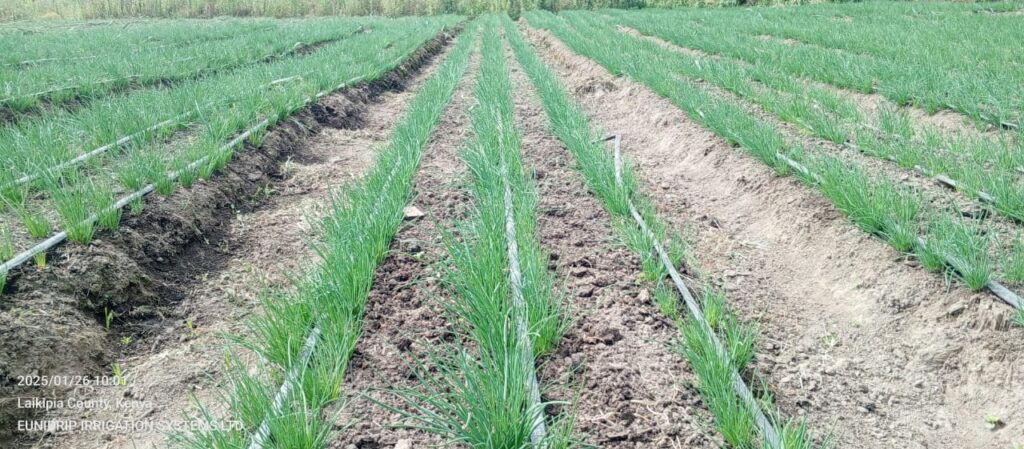
Set the drip line five to ten centimetres from the plant stem. That wets the root zone without keeping stems constantly damp. Open the end caps and flush before planting. In practice this one step removes most installer debris and saves emitters from early clogging.
Watering Schedule and Maintenance
Match the schedule to the soil. Sandy soil drains fast, so water little and often. Clay holds water, so water slowly and less often. Check the tank level and look for leaks daily. Flush lines weekly and clean the filter whenever flow drops. Similarly, walk the beds after each harvest to reset lines for the next crop.
Kitchen Garden Costs and Returns
The main costs are the tank, the stand, pipe, filter and drip line. A gravity kit avoids pump and power bills entirely. Returns come from three places: bought vegetables you no longer pay for, surplus you sell, and water you stop wasting. Because drip wets only the crop row, weeds between rows stay dry and weeding time falls. For live kit prices and sizes, see the shop’s kitchen garden drip kit guide.
Kitchen Garden Frequently Asked Questions
How big should a first kitchen garden be?
Start at 20 square metres. Expand once watering and harvesting feel routine.
Can a kitchen garden run without electricity?
Yes. A raised tank gives gravity pressure, so no pump or power is needed.
How much water does a small plot use?
Roughly 150 to 200 litres a day for four beds, depending on crop and weather.
Which crops are easiest for beginners?
Sukuma wiki, spinach and coriander. They grow fast and tolerate small errors.
Do I need a filter on a tank supply?
Yes. Even clean tank water carries sediment that clogs emitters over time.
When should I water?
Early morning or evening. Cooler air cuts evaporation loss from the soil.
Get Your Kitchen Garden Designed
Eunidrip designs and installs gravity drip systems for home plots and small farms. We size the tank, lay the beds’ pipework and commission the lines before you plant. For the wider method, read our drip irrigation systems overview and the irrigation in Kenya hub. To compare kit sizes before you buy, start with the drip irrigation kit for sale page. A little planning now keeps a kitchen garden productive for years.