

Table of Contents
A borehole drilling company in Kenya sells you something you will never see. The water sits tens of metres down, the casing is buried, and the drill log goes into a filing cabinet. That is why the lowest quote so often turns out to be the expensive one. Nothing on the surface tells you which bidder actually made the decisions. Nine checks do. Each check has an artefact you can ask for before you sign. In practice, each artefact is the thing a thin operator cannot produce on demand.
Eunidrip drills and equips these holes, so read this page against us as hard as against our competitors. Every claim here points at something you can ask to see.
What You Are Actually Buying From a Borehole Drilling Company in Kenya
You are buying six documents and one hole. Because the hole cannot be inspected later, the documents are the whole of your protection.
- The hydrogeological survey report, with the siting decision written down.
- The authorisation to construct abstraction works, before the rig moves.
- The cuttings log, bagged or laid out, depth against material.
- The casing and gravel-pack record, including how the hole was sealed.
- The test-pumping sheet: drawdown, recovery, duration, who signed it.
- The water analysis matched to what you intend to do with the water.
A borehole drilling company in Kenya that cannot show all six on a job it finished last season has not made those decisions for that customer. Someone made them by default, at no cost. The customer found out later. The whole cycle, survey and permits included, usually runs 7 days to 14 days. Therefore all six documents are made inside a fortnight, and none of them is a favour. The pages that cover the work itself are the drilling sequence, phase by phase and the groundwater hydrogeological survey in Kenya.
Check 1: The Survey Comes Before the Rig
A hole drilled on a guess is still a hole, and the guesser still gets paid. Therefore ask who chose the spot, and on what evidence.
A real survey tells you which formation you are standing on and the depth range worth testing. It names where the successful neighbour holes actually are, and what the plan is if the first zone runs dry. Therefore a report worth paying for states a band rather than a single depth. On our Murang’a projects we plan against 150 m to 200 m. Nakuru holes, meanwhile, usually finish somewhere between 70 metres and 250 metres. The report itself arrives as a short written document with a location sketch and a signature, at a fraction of the drilling line.
If the answer is that the rig can start on Monday and the team will see, the siting risk has moved onto your invoice. In that case the cheapest quote is not cheap. It is unbilled risk.
Check 2: The Permit Sequence, Start to Finish
Permitting is where a lot of drilling disputes start, because the sequence is not obvious and the paperwork is not optional. The Water Resources Authority publishes its own process. First an application, with attachments checked against a list, then an authorisation to construct the abstraction works, then the water permit itself. Its published steps end with a final inspection of the constructed works by WRA technical officers. Also a stated 33 Authority offices handle filings, across sub-regional, regional and national tiers.
Two consequences follow. First, the authorisation comes before construction. A driller who starts without one is asking you to carry an enforcement risk on land you own. Next, the inspection comes after. Then what you should expect at handover is a hole someone signed off and the document that says so. Because the permit renews every 5 years, the paperwork does not stop at handover. Ask who tracks that date on your behalf.
On the environmental side, NEMA licenses projects under the environmental regulations and runs the EIA application route. Also the report register sits on the same site. Ask who files, on whose letterhead, and what you hold if an application stalls for a month. A company that treats permits as your homework has just told you its real scope. The official permitting page is here at WRA.
Check 3: The Rig and the Compressor on Your Ground
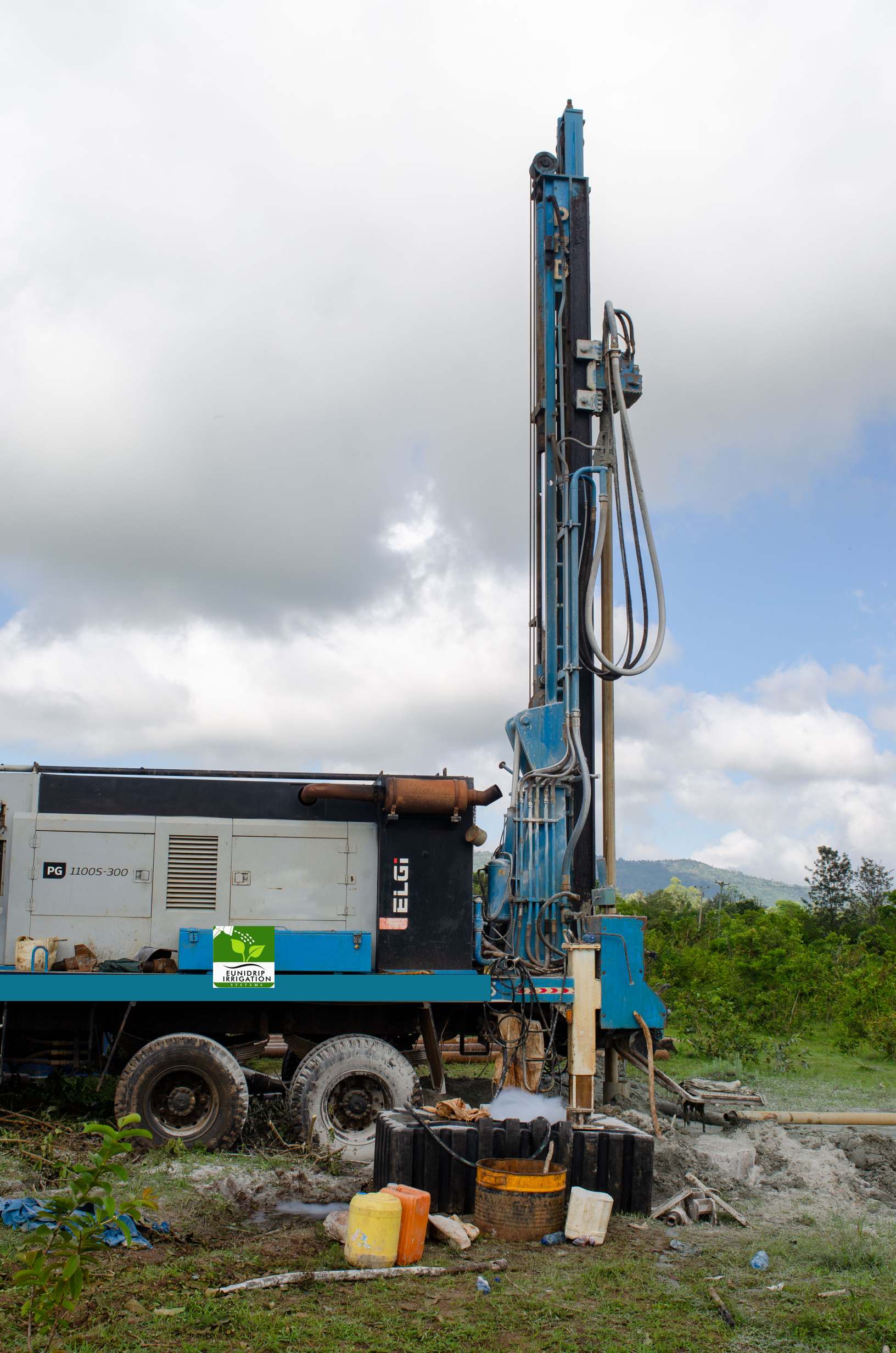
Two questions do most of the work when you compare one borehole drilling company in Kenya with another. Whose rig is it, and what happens when it breaks?
Owned rigs get maintained by someone with a financial reason. Rented rigs get maintained by someone else’s schedule, and your job queues behind whoever paid first. Ask which one is coming and what the compressor pairing is. Then ask what the standby day rate is if the machine is down. Because drilling fluid, water supply and access all sit on the same truck, a breakdown is rarely one lost day.
Then ask about access. A rig that cannot reach your ground without cutting a fence is a cost you have not agreed to. Likewise a rig that waits two weeks for dry soil is a cost nobody quoted. Then ask whether the ground will hold the jacks after 2 hours of rotation. A rig that sinks mid-job needs a crane, not a repair. The move itself has its own economics, and drilling equipment mobilization in Kenya is the page that breaks that out.
Check 4: How the Hole Is Made and What Is Left of It
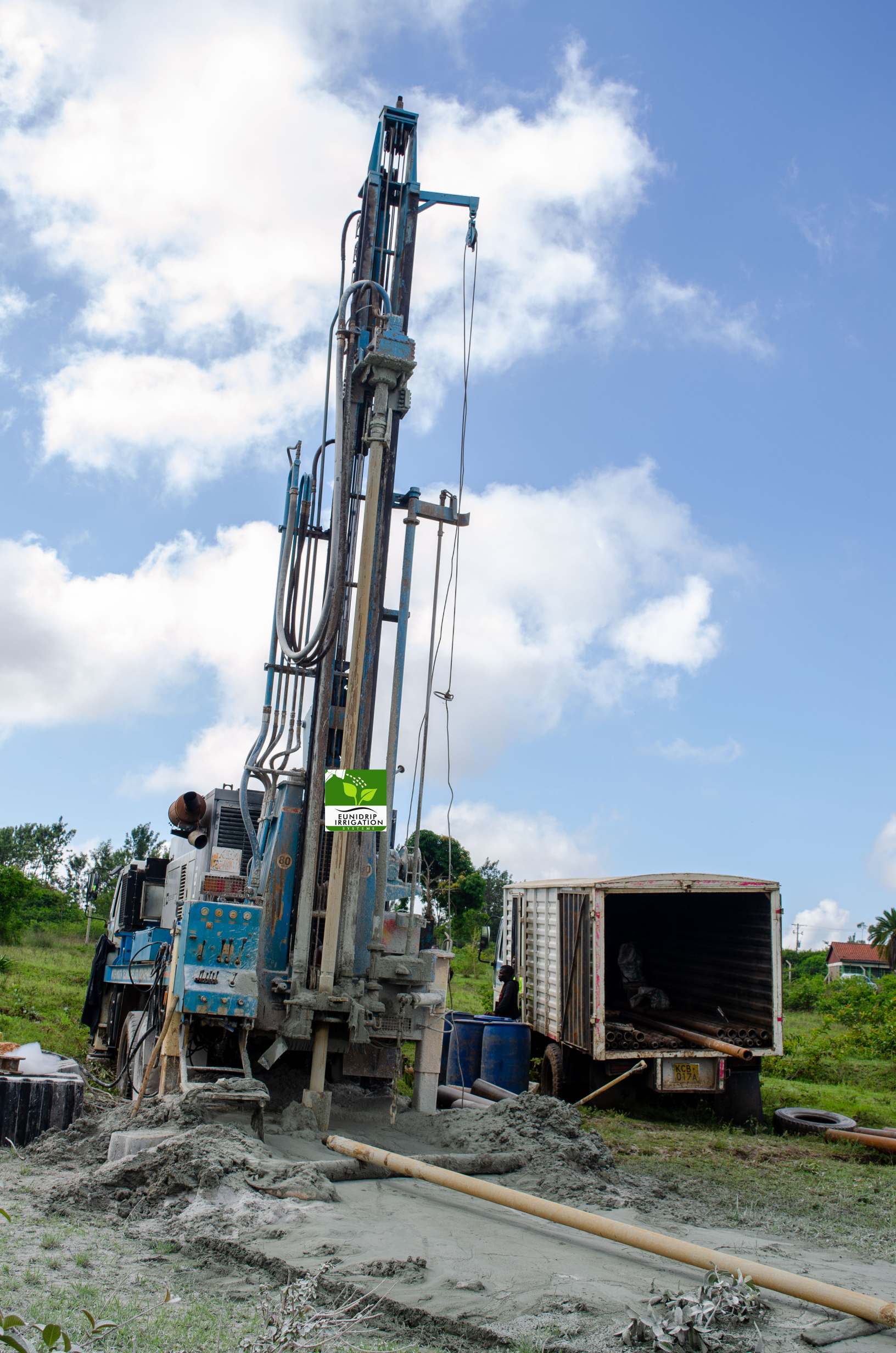
Cuttings come out of the hole continuously, and they are the cheapest geology you will ever get. A driller who collects them, bags them or lays them out in depth order is telling you the hole is documented. Conversely, one who lets them wash back into the pit is telling you that depth is the only record you will ever hold.
That log matters twice. First, the casing design should rest on it. Next, a pump supplier or an agronomist can read it years later, when the yield changes. Specifically, ask to see a logged hole from a job finished last month, not a photograph of a rig.
Check 5: Casing, Gravel Pack and the Seal
Casing keeps the hole open. The seal keeps the wrong water out of it. Those are two different jobs. In practice the second one is what a borehole drilling company in Kenya skips first.
Ask what the casing is, uPVC or steel and to what specification. Ask what filter material surrounds the screened interval and how much of it went in. Then ask the question that decides water quality for the life of the borehole: how is the top sealed against surface runoff? A hole that takes fertiliser or a neighbour’s washwater downhill was not sealed. No yield test will show the problem until someone drinks the result.
For a fair comparison, ask a borehole drilling company in Kenya to put you on a completed job near you, where those three answers are already in the ground.
Check 6: Test Pumping and the Yield You Are Handed
Yield is a number measured over time, not a flow watched for a minute. The difference is the whole of the value.
A usable test-pumping record states how long the hole was pumped and how far the water level fell. It gives the recovery time and the rate the pump ran at during the test. Also it says who witnessed it. Because a pump sized to a hopeful figure will run dry in February, that sheet is the document your pump purchase should be based on. Ask for it in writing on the day, and ask whether the same numbers appear on the completion report.
Where a driller offers a flow observed at the surface instead, you have learned the shape of the job. It is a hole, not a water supply, and the sizing decision has been deferred to you. Therefore run the arithmetic before you buy a pump. A hole yielding 1,200 litres an hour may need 6 hours to refill, which rules out a 1,200 litre an hour pump running all day. Storage tops out near 10,000 litres per tank.
Check 7: Water Analysis Before the Pump Is Chosen
What the water is for decides what to test for. Livestock, irrigation and human consumption have different problems, and a generic result answers none of them.
For irrigation, the numbers that damage a system are the ones that clog emitters and salt up a soil: iron, manganese, suspended solids and the sodium hazard. Those same figures decide filtration, and filtration is a shopping list. The pump decision and the pipe decision both follow the analysis. Therefore the pump for drip irrigation in Kenya and HDPE pipes for sale in Kenya come after a borehole, in that order.
Ask a borehole drilling company in Kenya whether it hands you a sample bottle and a lab, or whether the analysis is somebody’s impression of the water’s colour.
Check 8: What the Quote Breaks Out
A single figure for a whole hole hides the two variables that move cost most: the depth your ground actually needs, and what the hole is lined with. That is why the published rate in this cluster is stated per metre drilled, county by county, on borehole drilling in Kenya. For the same reason, two quotes are only comparable line by line. On one of our own Murang’a holes the survey planned 180 m and the rig finished at 210 m. Therefore the final drilling line ran 30 metres, roughly 16% longer, than the quoted one. Nothing went wrong there. Get the same honesty in writing from whoever quotes you.
| Stage | Artefact you should receive | Who signs it off. |
|---|---|---|
| Siting | Survey report with depth range and fallback plan | The hydrogeologist, not the rig driver. |
| Before construction | Authorisation to construct abstraction works | WRA, on the applicant’s filing. |
| Drilling | Cuttings log, depth against material | Site supervisor, daily. |
| Completion | Casing, pack and seal record | Contractor, with photographs. |
| Testing | Drawdown, recovery and duration sheet | Contractor and you, jointly. |
| Handover | Water analysis matched to your use | An accredited laboratory. |
Read the middle column down your own quote. Every artefact missing there is a decision somebody made without you, and a cost that has not been written anywhere yet.
Check 9: Who Comes Back After Handover
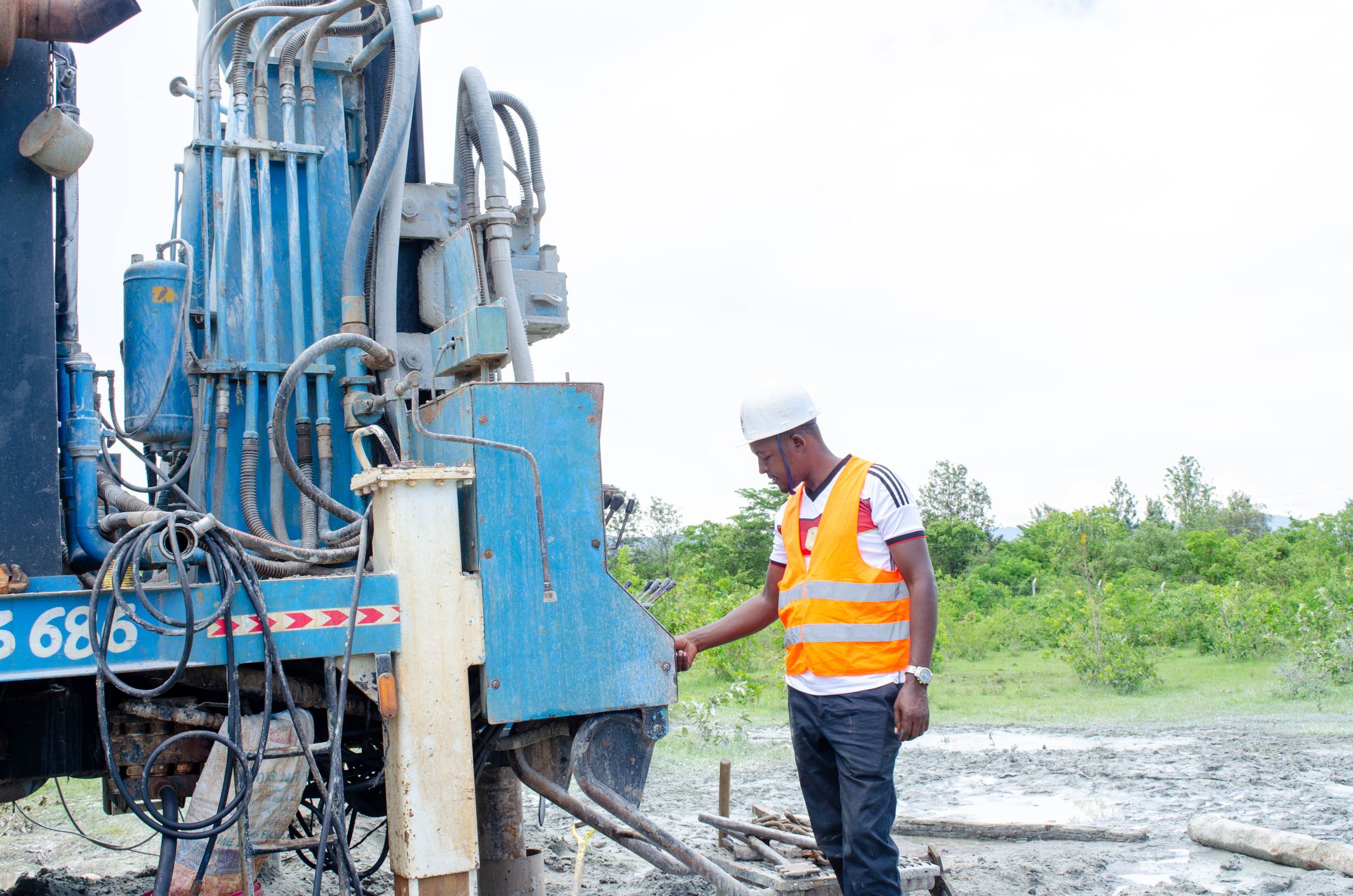
Three things fail quietly after handover: yield, silt and power. A drop in yield usually means the seal or the pack has moved. Silt means the development was rushed. Power means the pump, the control gear or the supply wiring, which is often a different contractor entirely.
A hole is planned to serve for 40 years. Pump sizing, casing choice and the holes drilled nearby all get set against its record, often 10 years on. Therefore ask what the response is to each failure above, and ask who owns the borehole headworks after the truck leaves. Meanwhile ask the second question that separates a driller from a supplier: can the same company design the irrigation that runs off this hole? That is where the two halves of the job meet. It is covered on irrigation in Kenya and on the advantage of a drip irrigation system.
Where to Check a Borehole Drilling Company in Kenya Before You Sign
Our own records are public, and they are written for a customer to read. Borehole drilling in Ithaga is one Murang’a hole, survey through handover. Borehole drilling in Nakuru covers volcanic ground and its rates. Borehole drilling company in Rumuruti covers the Laikipia plateau.
Three things to take from any company’s project pages, including ours. First, does the page name the ground, or only the town? Next, does it state what went wrong, or is every job a success? Then, does it give a depth and an outcome you could compare with your own site?
Ask for two references within one hour’s drive of your land, and telephone them yourself. Because a testimonial page is written by the company it praises, and a phone call is not.
Questions to Ask Any Borehole Drilling Company in Kenya
Take these five questions to every borehole drilling company in Kenya on your shortlist. The answers are comparable even when the totals are not.
| Question | The answer that is fine | The answer that is a warning. |
|---|---|---|
| Who sits the hole? | A named surveyor with a written report | The rig foreman, by eye. |
| Whose rig is coming? | Owned, with a standby plan | Hired, with no standby rate. |
| What is the seal above the zone? | Stated method and material | Silence, or cement at the top only. |
| How is yield measured? | Drawdown and recovery over hours | A bucket, or a visible flow. |
| What happens in year two? | A named response and a rate | That never happens here. |
Frequently Asked Questions About Hiring a Borehole Drilling Company in Kenya
How do I check a borehole drilling company in Kenya before paying?
Ask for the artefacts, not the photographs. A survey report, a cuttings log, a casing record, a test-pumping sheet and a laboratory analysis from one job will tell you more than any portfolio. Therefore pick a job completed in the last season and ask for all five. Then telephone two customers within an hour of your land.
What should a borehole quote include?
It should separate siting, permits, mobilisation, metres drilled, casing and filter material, development, testing and the pump. For this reason a total that is lower than the rest deserves a line-by-line reading before anyone calls it a saving.
Do I need a permit before the rig arrives?
The authorisation to construct abstraction works comes before construction, and the water permit follows the works. Since the regulator also inspects completed works, plan on paperwork both before and after the drilling. Then establish whose filing you are relying on.
Who decides how deep the hole goes?
The ground does, within the range the survey sets. Because that is why rates are quoted per metre, a depth agreed in advance is an estimate that can move. Ask what happens at the target depth if the water is not there. Then get the answer in writing.
Is a cheaper borehole necessarily a worse one?
No, and price alone proves nothing. However, the items that are cheapest to omit are the seal, the log and the test, and all three are invisible afterwards. Therefore compare what each quote documents, not only what it drills.
Can the same company design the irrigation afterwards?
It helps when one party holds the yield figure, the water analysis and the crop plan together. Then the pump, the filtration and the layout become one design, not three. That continuity is the reason our drilling pages and our irrigation pages cross-reference each other.
Your Next Step With a Borehole Drilling Company in Kenya
Print the six artefacts from the first section and put them at the top of every enquiry you send. A borehole drilling company in Kenya that answers with documents is negotiating on the same basis you are. One that answers with a price is asking you to fund the uncertainty.
Then send us the location and the intended use, and ask for the survey before anything else. Because the cheapest decision in this job is the one taken before the rig moves, start there. It is also the decision nobody can undo after the truck leaves your land.