A well-designed farm fence is an important investment for protecting crops, livestock, property, and farm infrastructure. Whether you need to secure a small family farm, a large agricultural estate, a livestock ranch, or a commercial property, choosing the right fencing system can make a significant difference in security, durability, and day-to-day farm management.
Professional farm fence installation involves more than simply putting up posts and wire. The fence needs to be designed according to the type of land, animals being kept, security requirements, terrain, and intended use.
At Eunidrip Irrigation Systems, we provide practical agricultural infrastructure solutions designed around the needs of modern farmers.
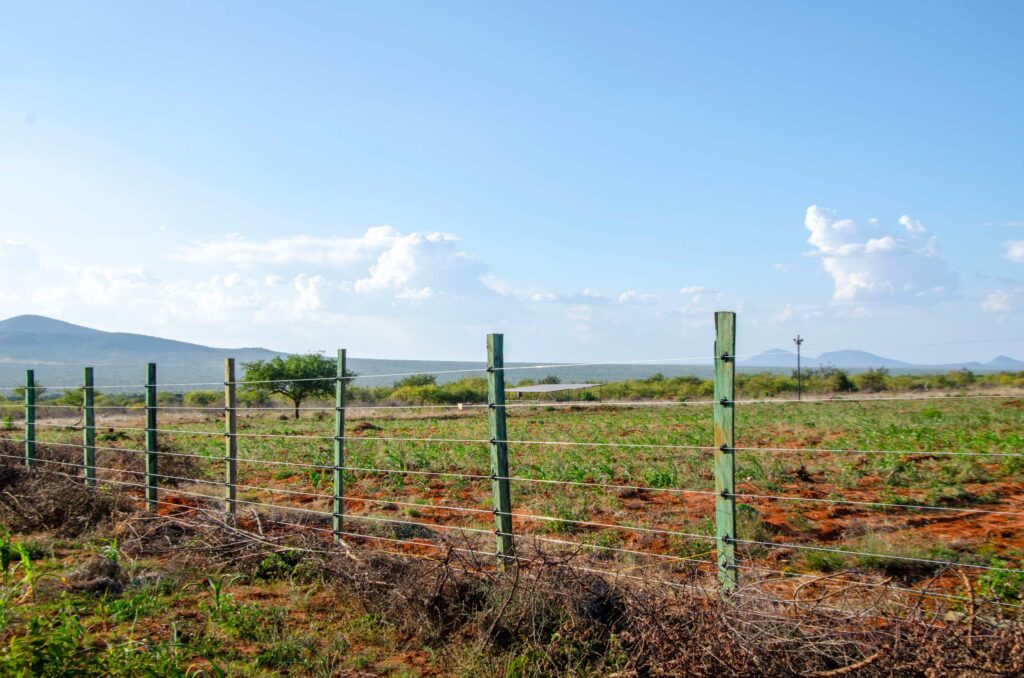
Agricultural Fencing Contractors in Kenya
Choosing experienced agricultural fencing contractors helps ensure that your fence is properly planned, installed, and suited to the conditions on your farm.
Agricultural fencing can be used for:
- Protecting crops from livestock
- Securing farm boundaries
- Creating livestock paddocks
- Protecting orchards and plantations
- Dividing grazing areas
- Securing greenhouses and farm infrastructure
- Controlling livestock movement
- Protecting water storage areas
- Improving overall farm security
Before installation, the farm should be assessed to determine the most appropriate fencing design.
What Agricultural Fence Installation Involves
A typical project may involve:
| Stage | Description |
| Site Assessment | Evaluating the farm, terrain and fencing requirements |
| Boundary Planning | Establishing the fence route |
| Post Installation | Setting strong and appropriately spaced posts |
| Wire Installation | Installing the selected fencing material |
| Gate Installation | Providing access points where required |
| Sectioning | Creating paddocks or farm zones |
| Final Inspection | Checking fence stability and alignment |
Proper preparation helps create a fence that remains functional for years with appropriate maintenance.
Farm Fence Contractors in Kenya
Professional farm fence installation contractors can help farmers select a fencing system that matches their specific needs.
There is no single fence that is suitable for every farm. A crop farm may require a different solution from a dairy farm, ranch, poultry operation, or horticultural estate.
Factors to consider include:
- Farm size
- Type of livestock
- Crop being protected
- Terrain
- Security requirements
- Fence height
- Expected lifespan
- Available budget
- Number of gates and access points
For larger agricultural properties, fencing can also be used to divide the farm into manageable sections, making livestock and pasture management easier.
Electric Farm Fence Installation
Electric farm fence installation is another effective option for farms that require livestock control or an additional layer of perimeter security.
An electric fence works by delivering a brief electrical pulse when an animal or person comes into contact with the energized wire. The system is designed to discourage crossing rather than function as a conventional physical barrier on its own.
A typical electric fencing system may include:
- Energizer
- Electric fence wires
- Insulators
- Fence posts
- Earth/grounding system
- Connectors
- Gate components
- Warning signs where appropriate
The effectiveness of an electric fence depends heavily on proper installation and grounding.
Benefits of Electric Fencing on Farms
Electric fencing can be useful for:
- Livestock containment
- Paddock management
- Protecting crops from animals
- Creating temporary grazing divisions
- Supplementing existing physical fences
- Managing large grazing areas
For livestock applications, the system should be designed according to the type and size of animals being contained.
Livestock Fencing Solutions
Livestock fencing needs to be strong enough to withstand animal pressure while providing effective control and safe movement.
Different livestock may require different fencing approaches.
| Livestock | Common Fencing Considerations |
| Cattle | Strong posts and durable wire |
| Sheep | Smaller openings to prevent escape |
| Goats | Stronger containment due to climbing behavior |
| Poultry | Appropriate mesh and smaller openings |
| Pigs | Robust lower sections and secure posts |
| Horses | Visibility and safe fence design |
The right solution depends on the farm layout, livestock numbers, terrain, and management system.
Paddock Fencing
For farms practising rotational grazing, paddock fencing can divide pasture into smaller grazing units.
This allows farmers to:
- Control grazing areas
- Manage pasture utilization
- Move livestock between paddocks
- Protect recovering pasture
- Improve farm organization
Electric fencing can be particularly useful for flexible paddock management where appropriate.
Farm Boundary Fencing
A strong boundary fence helps clearly define the limits of a farm while providing protection against unwanted access.
Boundary fencing can incorporate different materials depending on the property’s requirements, including wire fencing, chain-link systems, mesh, posts, gates, or electric fencing.
For large farms, the boundary should be surveyed and planned before installation to minimize unnecessary material and ensure that gates and access points are properly positioned.
Choosing the Right Farm Fence
When selecting a fencing solution, consider the purpose first.
| Farm Requirement | Potential Solution |
| Livestock containment | Livestock fencing |
| Rotational grazing | Paddock or electric fencing |
| Crop protection | Agricultural mesh or wire fencing |
| Property boundary | Durable perimeter fencing |
| Additional security | Electric fencing combined with physical fencing |
| Farm subdivision | Internal agricultural fencing |
A professional assessment can help determine which combination provides the best balance between durability, functionality, and cost.
Why Professional Farm Fence Installation Matters
Poorly installed fencing can lead to leaning posts, loose wires, gaps, damaged sections, and frequent repairs.
Professional installation focuses on:
- Correct post spacing
- Proper post anchoring
- Appropriate wire tension
- Suitable corner reinforcement
- Correct gate positioning
- Proper terrain adaptation
- Durable materials
- Safe livestock management
For farms covering large areas, professional installation can also help reduce material wastage and improve the overall appearance and performance of the fence.
Complete Agricultural Infrastructure Solutions
At Eunidrip Irrigation Systems, we understand that modern farming requires more than irrigation alone. Farmers need reliable infrastructure for managing water, crops, livestock, and farm operations.
Our agricultural solutions can include:
- Farm fence installation
- Agricultural fencing
- Electric fence installation
- Livestock fencing solutions
- Farm boundary fencing
- Paddock fencing
- Irrigation systems
- Greenhouse construction
- Dam excavation and lining
- Borehole water solutions
- Solar-powered irrigation
- Water storage and distribution systems
Our approach is to understand the farm’s requirements before recommending a solution.
Modernizing Agriculture
A properly designed farm fence installation can improve security, livestock management, crop protection, and overall farm organization.
Whether you need agricultural fencing contractors, electric fence installation, or experienced farm fence contractors for livestock fencing solutions, the right system should be designed around the specific needs of your property.
At Eunidrip Irrigation Systems, we are committed to providing practical agricultural infrastructure that helps farmers operate more efficiently.