

Table of Contents
Dam liner prices in Kenya usually fall between KSh 170 and KSh 650 per square metre, depending on the sheet thickness, the dam size and the ground conditions. This guide separates the membrane price from the excavation, underlay, transport and labour costs that sit around it. It also shows how the total changes as a farm dam grows.
The figures below are indicative 2026 estimates. They are a budgeting starting point, not a quotation. In practice, a site visit and a measured dam profile decide the final figure.
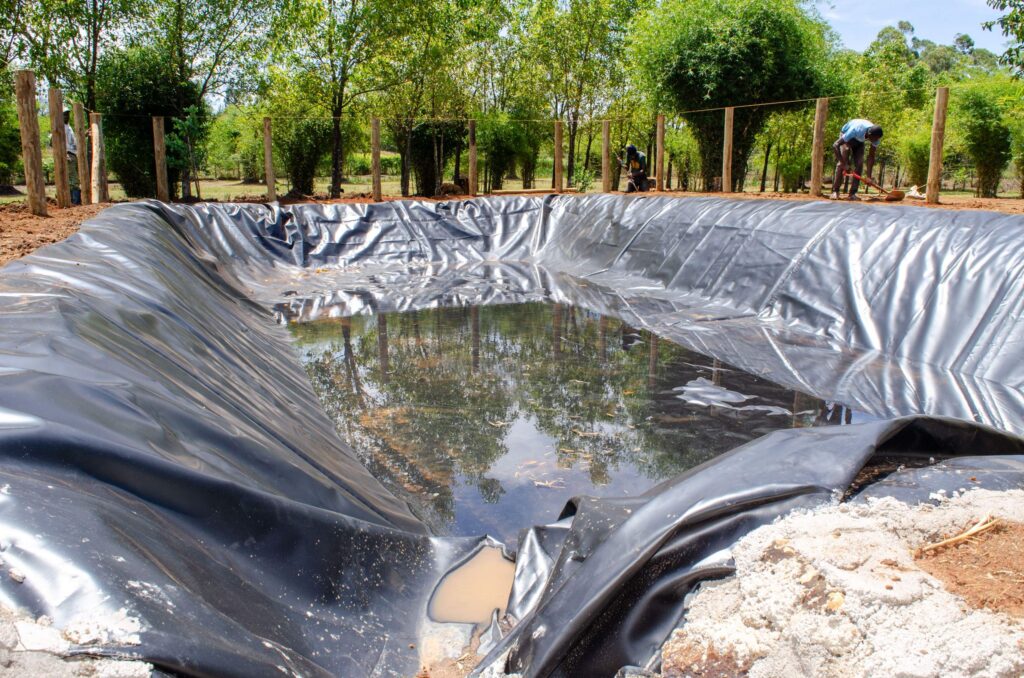
Dam Liner Prices in Kenya at a Glance
The table below summarises the membrane price for the three gauges farmers buy most often. However, the liner is only one line in the budget.
| Dam liner thickness | Indicative price per sqm (KSh) | Typical use | Durability |
|---|---|---|---|
| 0.5mm | 170 to 260 | Small irrigation dams | Standard |
| 0.75mm | 250 to 400 | Medium farm reservoirs | High |
| 1.0mm | 380 to 650 | Commercial water storage | Very high |
Also, thicker sheets cost more per square metre. Yet they often lower the total on rocky or sandy ground, because they resist punctures and need fewer repairs.
For a current quoted figure, check the dam liner product in the Eunidrip shop.
What Sits Inside Dam Liner Prices in Kenya
The dam liner prices in Kenya quoted by suppliers usually cover the membrane and its delivery. However, the installed cost carries several other lines. Excavation shapes the basin, underlay protects the sheet, and transport moves a heavy roll to the site.
| Cost component | Share of the total budget |
|---|---|
| Dam excavation | High |
| Dam liner material | High |
| Transport | Medium |
| Labour and installation | Medium |
| Site preparation | Medium |
| Testing and finishing | Low |
Because excavation often matches the membrane in cost, a cheap liner on a badly shaped dam is poor value. Dam excavation sets the smoothness that the sheet depends on.
In addition, labour and equipment change with access. A site that a lorry can reach costs less than one that needs a tractor and a long carry.
Price per Square Metre by Thickness
Thickness is the first price driver. Specifically, a 0.5mm sheet suits small dams on stable clay, while a 1.0mm sheet suits commercial reservoirs and rougher ground.
A 0.5mm liner is the lightest gauge sold for farm dams. It costs the least per square metre, and it works where the ground is smooth and well prepared. A 0.75mm liner sits in the middle. It resists punctures better and is the common choice for medium reservoirs. A 1.0mm liner is the heaviest of the three. It costs the most, but it tolerates rougher ground and lasts longer under cleaning and traffic.
Therefore, most dam liner prices in Kenya are driven by the gauge you choose, not by the brand on the roll. Choose the thinnest liner that suits your soil, not the cheapest liner on the list.
What Dam Liner Prices in Kenya Look Like by Dam Size
Dam size multiplies every cost line. For example, a dam of 300 to 500 square metres needs roughly KSh 60,000 to KSh 180,000 for the liner and basic installation.
| Dam size | Coverage area | Estimated liner cost (KSh) | Recommended thickness |
|---|---|---|---|
| Small | 300 to 500 sqm | 60,000 to 180,000 | 0.5mm |
| Medium | 500 to 1,000 sqm | 150,000 to 400,000 | 0.75mm |
| Large | 1,000 to 2,500+ sqm | 350,000 to 1,200,000+ | 1.0mm |
Meanwhile, the liner area is not the same as the water surface. The sheet must run up the side walls and over the anchor trench. As a result, order 10 to 15 percent more than the flat area.
Typically, a dam that looks small on the plan needs a larger roll than the owner expects. Dam liner prices in Kenya scale with that measured area, so the plan should carry the real dimensions.
Factors That Move Dam Liner Prices in Kenya
Seven factors move the final quote. First, the dam size sets the roll length. Second, the liner thickness sets the rate per square metre. Next, the soil decides how much underlay is needed. Then, excavation changes the shape and smoothness of the basin. Also, transport adds cost as the roll weight and distance rise. Labour and equipment change with site access. Finally, testing and finishing close the budget.
| Factor | Effect on the final price |
|---|---|
| Dam size | More area means longer rolls and more seams |
| Liner thickness | A higher gauge carries a higher rate per sqm |
| Soil | Sand and rock need more underlay or a thicker sheet |
| Excavation | Shape, depth and haul distance change the earthworks cost |
| Transport | Roll weight and distance set the delivery charge |
| Labour | Site access changes the crew days and equipment needed |
| Testing | Filling and inspection add time before handover |
Because these factors interact, two dams of the same size can carry different dam liner prices in Kenya. A rocky site with poor access can cost more than a larger dam on flat clay.
Choosing Liner Thickness for Your Soil
Soil decides how much protection the sheet needs. In practice, clay holds a smooth surface and suits a thinner liner. Sandy ground shifts and needs a thicker sheet or a sand-cement layer.
| Soil type | Recommended liner thickness |
|---|---|
| Clay | 0.5mm to 0.75mm |
| Loam | 0.75mm |
| Sandy | 0.75mm to 1.0mm |
| Rocky | 1.0mm or thicker, with underlay |
Similarly, rocky ground needs a geotextile underlay before the liner goes down. Otherwise, sharp stones puncture a thin sheet.
Rather than guessing, dig a test pit and feel the subsoil before you order. Soil also changes dam liner prices in Kenya, because the underlay and the gauge move together.
Installation Steps That Affect the Final Cost
Installation is where a budget either holds or slips. First, the site is surveyed and the dam profile is set. Then the basin is excavated and the surface is cleared of roots and stones.
Next, the underlay is laid and the liner is positioned. Finally, the edges are anchored in a trench and the dam is filled for a leak test.
Consequently, a rushed excavation shows up later as a puncture or a seam failure. For this reason, ponds and dam construction should start with a proper survey. Irrigation reservoir construction companies can handle the earthworks and the liner as one job.
Common Mistakes That Raise Dam Liner Prices
Most expensive repairs start with a shortcut at the buying stage. For example, buying on price alone often leads to a thinner sheet than the site needs.
- Choosing thickness by price instead of soil and dam size.
- Skipping the underlay on stony ground.
- Ordering the flat area without the side walls or anchor trench.
- Accepting a rough basin with roots and sharp stones left in place.
- Leaving the finished liner exposed to sun for weeks before filling.
Also, skipping the underlay saves a little today and costs much more when the liner punctures. Similarly, ordering too little material forces a second delivery and a seam that could have been avoided.
Frequently Asked Questions About Dam Liner Prices in Kenya
How much does a dam liner cost in Kenya?
Most farm dam liners fall between KSh 170 and KSh 650 per square metre. The exact figure depends on thickness, dam size and site conditions.
Is a 0.5mm liner strong enough for a farm dam?
A 0.5mm liner suits small dams on smooth clay. However, sandy or rocky ground needs 0.75mm or 1.0mm, plus a protective underlay.
Do dam liner prices in Kenya include installation?
Some quotes cover the membrane only. Others include underlay, transport and labour. Therefore, compare quotes line by line before you decide.
How long does a dam liner last?
A well-installed HDPE liner commonly lasts more than a decade. However, punctures, sun exposure and poor anchoring shorten that life.
Can a torn dam liner be repaired?
Yes. A repair tape made for dam liners seals small punctures and tears. For this reason, keep a dam liner repair tape on site.
How much extra liner should I order?
Order 10 to 15 percent more than the flat area. This allowance covers the side walls, the anchor trench and the overlap between rolls.
Get a Dam Liner Quote from Eunidrip
Eunidrip supplies dam liners in 0.5mm, 0.75mm and 1.0mm gauges. Also, the team can survey the site, estimate the liner area and quote the installed cost.
Compare the geo membrane dam liner with the standard dam liner option. Both are listed with their current prices in the shop.
Finally, measure the dam, note the soil and call the team with those two facts. That short call turns a range into a firm quote. More dam construction guides are on the blog.
For the wider design picture, the FAO manual on small earth dams covers siting, seepage and lining in more detail.