The right garden irrigation equipments turn a hose-and-bucket chore into a ten-minute evening round. A small yard does not need a farm-scale kit. It needs one clean water path from tank to root, with a part at every job along that path. This guide names each part, says what it does, and links the stocked sizes in our shop.
How Garden Irrigation Equipments Split Into Four Lines
Every garden system, however small, runs the same four lines: storage, conveyance, control and emission. Storage holds the water and the head. Conveyance moves it to the beds. Control cleans it and switches it. Emission puts it on the root zone. Therefore the shopping list is not one product but a chain. A missing link shows up as a dry row or a burst joint.
| Line | Job | Typical parts |
|---|---|---|
| Storage | Hold water and head | Tank, stand, ball cork |
| Conveyance | Move water to beds | HDPE or PVC pipe, couplings, elbows, tees |
| Control | Clean and switch flow | Screen filter, valves, adapters |
| Emission | Water the root zone | Drip tape, button drippers, rain hose, sprinklers |
The four lines every garden kit must complete, storage through emission.
Garden Irrigation Equipments at the Water Source
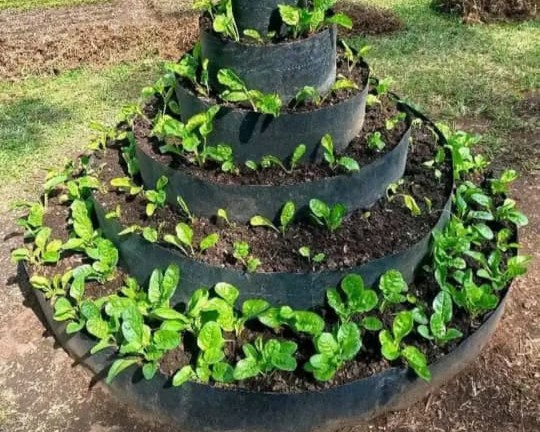
Start with storage, because gravity is the cheapest pump. A 500 litre tank on a 1 m stand gives enough head for a short drip run. A ball cork shuts the inflow before the tank overflows. For example a raised tank beside the kitchen wall saves the daily carry. It also keeps pressure steady while you water. Our kitchen garden setup guide walks through siting the tank and the beds together.
Garden Irrigation Equipments That Carry the Water
Conveyance is pipe plus the fittings that join, turn and close it. HDPE coil suits surface runs because it flexes around beds. The coil is high-density polyethylene, so sun and soil do not rust it. PVC suits a buried supply line because it stays rigid under soil. Couplings join two ends, elbows turn a corner and tees split a branch. End caps close the line so pressure holds. Meanwhile adapters convert pipe to thread wherever a filter or valve screws in.
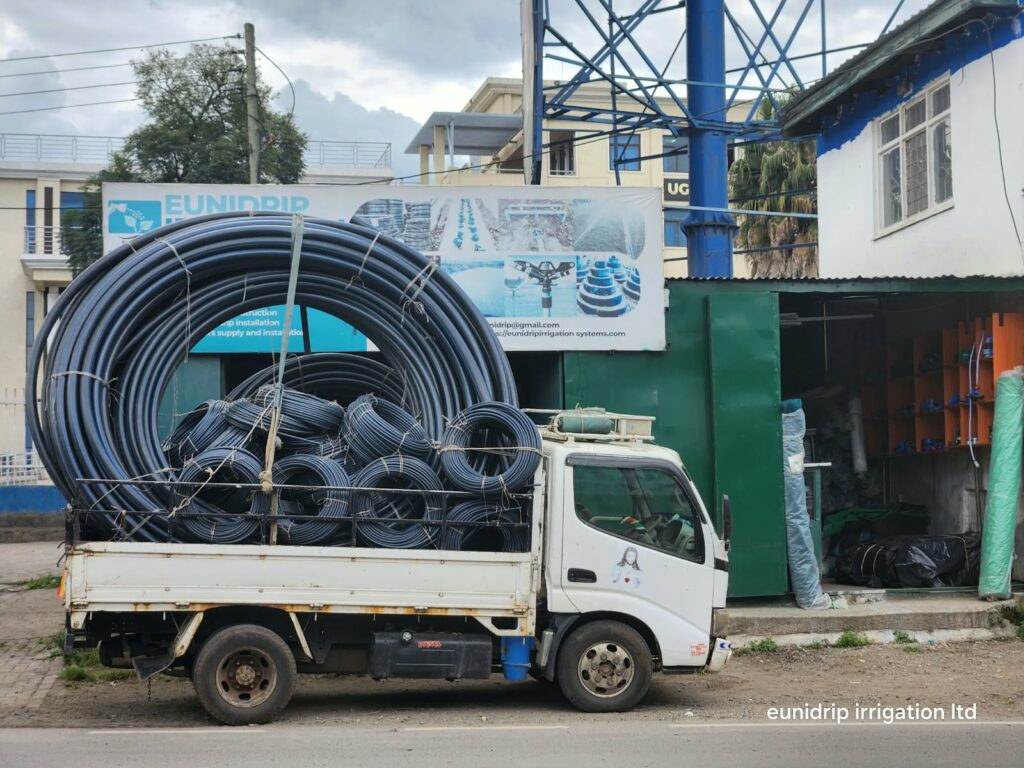
Size the mainline before the emitters. A 32 mm mainline feeds several 16 mm laterals without starving the last bed. A 16 mm mainline throttles the whole chain. Because coil arrives in 100 m rolls, one roll usually covers a yard several times over. Cut only what the layout needs and keep the offcut for repairs.
Garden Irrigation Equipments That Clean and Control Flow
Control parts are small and cheap, and skipping them is the most common beginner error. A screen filter keeps grit and algae out of emitters that cost less than the filter itself. A drip valve isolates one zone so you can water vegetables while the lawn stays dry. An air release valve vents trapped air at the high point. An air lock reads exactly like a blocked line, so the vent saves a false diagnosis. Threaded adapters seal each of these into the pipe without glue or heat.
Garden Irrigation Equipments at the Plant Row
Emission is where the water meets the plant, and the choice follows the crop. Drip tape wets a whole row from one line. Button drippers serve single plants like tomatoes or fruit trees. Rain hose sprays a narrow seedbed, while micro and pop-up sprinklers cover wider beds and lawn. For example onions and leafy greens take tape or button drippers at 30 cm spacing. A lawn block takes pop-ups on its own valve.

Match the emitter to the water source, not to the catalogue photo. Tape and button drippers need filtered water and low pressure. They follow the same slow root-zone principle as field drip irrigation. Sprinklers need more flow than a gravity tank usually gives. However a 2 m stand or a small booster pump closes that gap. Decide the source first and the emitter second. Our drip irrigation systems page compares the five system types behind these choices.
Garden Irrigation Equipments
| Equipment | Job | Shop |
|---|---|---|
| Water tank | Store water and head | – |
| Ball cork | Shut tank inflow at full level | Ball cork |
| Screen filter | Keep grit out of emitters | Screen filter |
| HDPE pipe | Surface mainline and submain | Irrigation pipes |
| PVC pipe | Buried supply line | PVC pipes |
| Coupling | Join two pipe ends | Couplings |
| HDPE elbow | Turn a corner | HDPE elbows |
| HDPE tee | Split a branch line | HDPE tees |
| Male and female adapter | Pipe to thread at filters and valves | Threaded adapters |
| HDPE end cap | Close a mainline end | HDPE end cap |
| Drip tape | Wet a whole row from one line | Drip tape |
| Starter connector | Take tape off the pipe | Starter connector |
| Button dripper | One emitter per plant | Adjustable button drippers |
| End plug | Close tape and hose ends | End plugs |
| Rain hose | Spray a narrow seedbed | Rain hose |
| Micro sprinkler | Wet a wider bed | Micro sprinkler |
| Pop-up sprinkler | Water a lawn block | Pop-up sprinklers |
| Drip valve | Isolate one zone | Drip valve |
| Air release valve | Vent trapped air at high points | Air release valve |
Where Small Systems Fail First
Failures cluster at three points, and all three are cheap to prevent. First, unfiltered water clogs emitters within weeks. Fit the filter before the first tape roll, not after the first blockage. Second, unglued or undersized joints leak at the tee, so match every fitting to the pipe bore. Third, tape left open at the end draws soil back in, so plug every end on day one. Check the filter screen every 2 days during the dry season and rinse it under a tap. A clean screen is the difference between a system that lasts 3 years and one that lasts a season.
Frequently Asked Questions About Garden Irrigation Equipments
What garden irrigation equipments does a small yard need first?
Tank, stand, ball cork, filter, mainline, one valve and the emitter line for your crop. Add sprinklers later, on their own zone, once the drip side runs clean.
Can one tank serve drip and sprinkler lines?
Yes, but not at the same time. Sprinklers demand more flow than gravity head gives. Run them on separate valves and water the lawn in its own slot.
How often should the screen filter be cleaned?
Rinse the screen every 2 days in the dry season and weekly in the rains. Dirty canal or dam water may need a daily rinse until you see how fast it loads.
Do button drippers clog faster than tape?
They clog at the same grit size, but a button dripper opens for cleaning while tape does not. Therefore mixed beds with single plants favour button drippers.
What size mainline suits a 50 m garden run?
A 32 mm mainline holds pressure over 50 m with several laterals open; 16 mm starves the far end. Keep the mainline one size above the laterals.
Is a pump part of garden irrigation equipments?
Only if the source sits below the beds or the layout needs sprinkler pressure. A raised tank covers most drip yards, so buy the pump last, not first.
Buying in the Right Order
Buy storage and conveyance first, control second, emission last. The emitter choice depends on the head and flow the first two lines deliver. The shop’s kitchen garden drip kit listing bundles these small-yard parts in one order. Our irrigation equipment suppliers page lists the nine specs to ask any seller before you pay. Start with one bed and run it for 6 to 8 weeks. Let that first bed size the rest of the garden irrigation equipments you add.