

A garden irrigation system is designed backwards: you start from the beds and the water they need, then pick the tank, the pipes and the emitters that deliver it. Most yard kits fail because they were bought forwards, part by part, with no sum behind them. This guide runs the seven design steps in order, with the numbers a small Kenyan yard actually needs.
How a Garden Irrigation System Is Sized
Start with the bed area, not the catalogue. A vegetable bed in the dry season drinks 4 to 6 litres per square metre each day. Therefore a 20 m² bed needs 80 to 120 litres daily. Multiply by the beds you actually plant, not the whole yard. For example four beds of 20 m² take 320 to 480 litres a day at peak. That single number sets the tank, the pipe and the run time of the whole garden irrigation system.
Then add a buffer. Rain fails, pumps stop, and a tank empty on Tuesday means wilted beds on Wednesday. Consequently size storage for 3 days of peak demand: 960 to 1,440 litres for the four-bed example. In practice a 1,000 litre tank on a stand covers it, while a 500 litre tank suits two beds. Write the daily litres on paper before any part is bought.
Garden Irrigation System Storage and Head
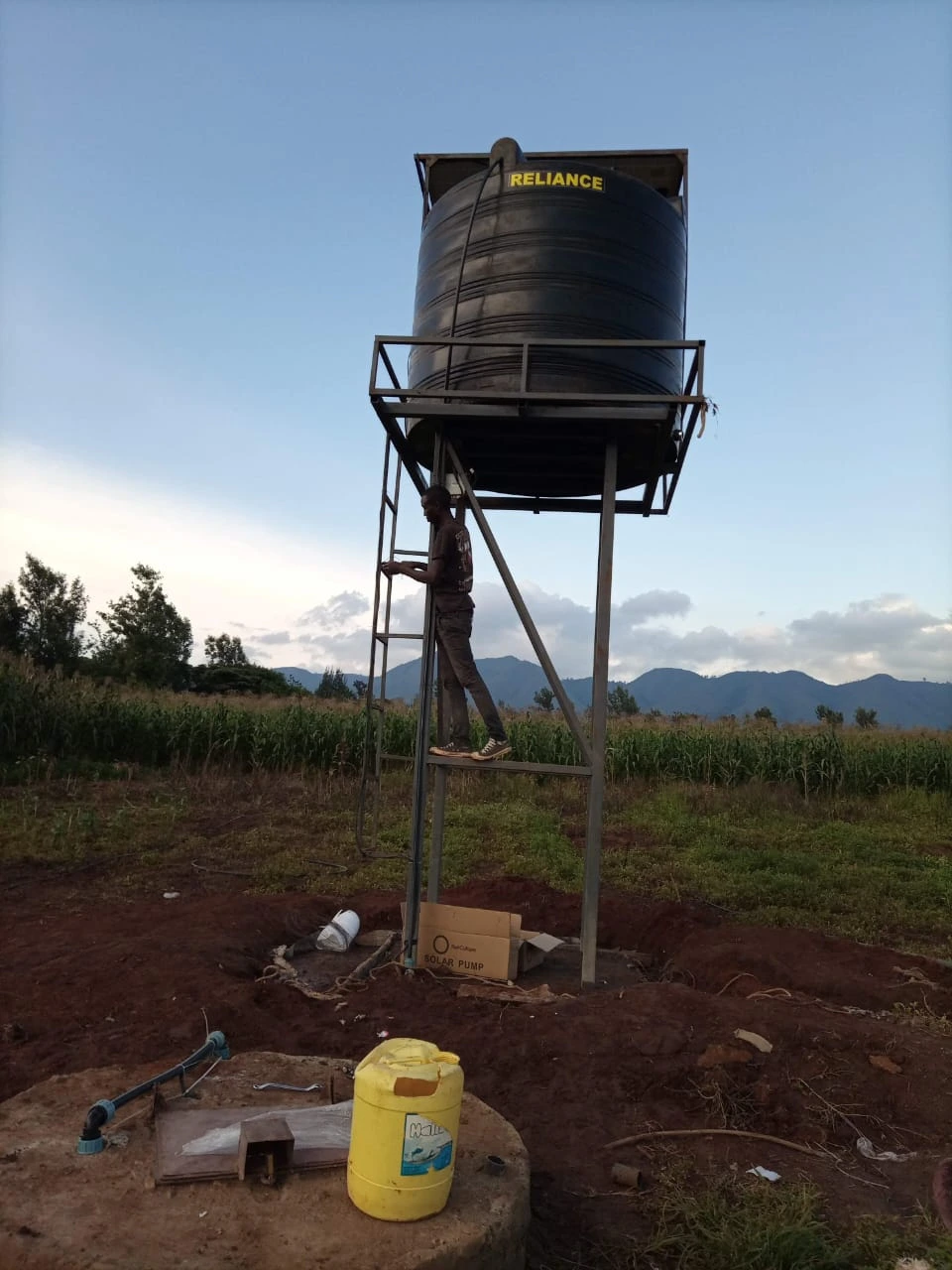
Water must arrive with push, and push comes from height or a pump. Ten metres of height equals 1 bar, so 1 m of stand gives only 0.1 bar. Gravity drip tape and low-pressure button drippers work from 1 to 2 m of stand. However rain hose, micro sprinklers and pop-up heads need 1.5 to 2 bar, which no yard stand provides. Therefore choose the emitter family first, then decide stand or pump.
Place the tank at the high end of the yard so every bed sits below it. A level yard still works: keep the stand at 2 m and the laterals short. Moreover fit a ball cork in the tank inlet so filling stops at full level, and a screen filter at the outlet so grit never reaches an emitter. The filter is the cheapest part of the garden irrigation system and the one that saves the rest.
Laying Out the Garden Irrigation System Pipes
Run one 32 mm HDPE mainline from the tank outlet along the top of the beds. Take 16 mm laterals off it with starter connectors, one per bed or per row pair. Keep each lateral under 50 m on level ground; beyond that the far end drinks less than the near end. On a slope, run laterals down the fall and keep the mainline along the contour.
Beds stay at 1 m wide or less, because you must reach the middle from either path without stepping on the soil. Close every mainline end with an end cap and every lateral with an end plug. Finally flush the mainline open-ended for 2 minutes before closing it, so swarf and grit leave the pipe instead of lodging in the first emitter.
Garden Irrigation System Zones and Valves
A tank outlet and a 32 mm pipe carry only so much flow at once. If all beds open together, the last bed starves. Therefore split the yard into zones: group beds that share a crop and a watering need, and give each zone its own drip valve on the submain. Two zones of two beds each let the four-bed example run half the beds at full flow.
Zones also cut the tank size in half, because peak flow is halved while daily litres stay the same. Open one zone at a time, morning or evening, and note the run time that wets the root zone without runoff. In practice 20 to 40 minutes per zone suits most yard soils; sandy soil takes shorter, more frequent runs.
Choosing Emitters for the Garden Irrigation System
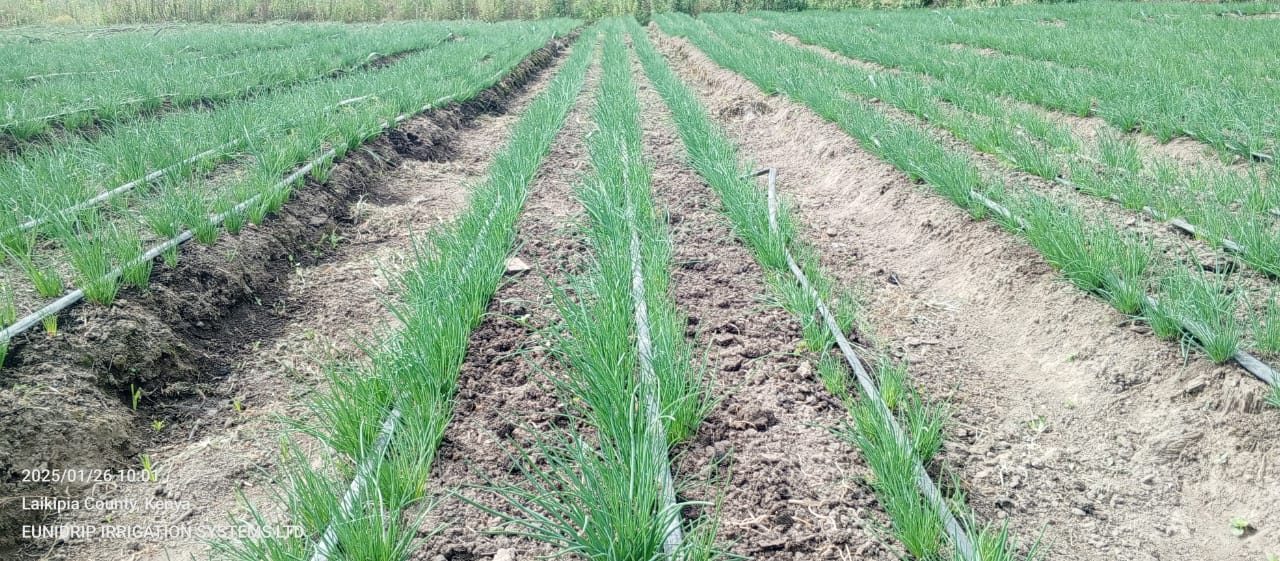
Match the emitter to the planting pattern, not to habit. Drip tape at 30 cm emitter spacing wets a whole row of onions or sukuma wiki from one line. Button drippers sit one per plant for tomatoes, capsicum and fruit trees, so each plant gets its own share. Rain hose sprays a narrow seedbed gently, and micro sprinklers cover a wider bed or a lawn block.
Check the emitter’s working pressure against your head before buying. Gravity stands suit tape and low-pressure buttons; pumped lines suit everything. Mixing families on one zone breaks uniformity, because the thirsty emitter steals flow from the gentle one. Consequently keep one emitter family per zone, and let the zones differ.
The Shop Table for a Garden Irrigation System
Each design decision above maps to a stocked part, except the stand itself. The table lists the decision, what it fixes, and the shop product that answers it. Sizes and prices sit on the product pages; this page only chooses the part.
| Design decision | What it fixes | Stocked part |
|---|---|---|
| Tank on a 2 m stand | Storage and gravity head | Stand built locally; tank bought off-site |
| Stop filling at full level | Overflow and wasted water | Ball cork |
| Keep grit out of emitters | Clogged tape and buttons | Screen filter |
| 32 mm mainline from tank | Flow to every bed | Irrigation pipes |
| 16 mm lateral per bed | Row-length wetting | Drip tape |
| Take laterals off the main | Leak-free branch joints | Starter connector |
| One emitter per plant | Spaced crops and trees | Adjustable button drippers |
| Gentle spray on seedbeds | Seed wash and crusting | Rain hose |
| One valve per zone | Flow split and scheduling | Drip valve |
| Close every line end | Pressure loss and leaks | End plugs |
Ten design decisions and the stocked part behind each; only the stand is built off-site.
Commissioning the Garden Irrigation System
Commissioning is one wet afternoon, and it catches nine faults in ten. Open one zone and walk the line: every emitter should drip or spray alike from first to last. A dry far end means the lateral is too long or the head too low. A gushing joint means a cut pipe end, not a seated connector.
Then check the soil, not the pipe. Dig 10 cm down beside a plant after a run: moisture should reach the root depth without pooling on top. Pooling means the run is too long; dry depth means too short. Adjust the zone minutes, write them on the valve, and repeat the check after 2 weeks as the crop grows. A commissioned garden irrigation system is then a ten-minute daily round, not a weekly repair.
Frequently Asked Questions About a Garden Irrigation System
What tank size suits a small garden irrigation system?
Three days of peak demand. Sum the bed areas, multiply by 4 to 6 litres per m², then by 3. Two 20 m² beds therefore sit comfortably on a 500 litre tank; four beds want 1,000 litres.
How high must the stand be?
For gravity tape and low-pressure buttons, 1 to 2 m of stand is enough. Sprinklers and rain hose at full spray need a pump instead, because they want 1.5 bar or more.
Can one zone mix tape and button drippers?
No. The two families draw different flows at the same pressure, so one starves the other. Keep one family per zone and split zones by emitter type as well as by crop.
How long should each zone run?
Start at 20 to 40 minutes, then dig and check. Sandy soil takes shorter runs more often; clay takes longer, rarer ones. The root-depth check, not the clock, sets the final minutes.
Does slope break a garden irrigation system?
Not if it is designed in. Run laterals down the slope and the mainline along the contour, and keep runs under 50 m. Pressure-compensating buttons help on falls over 2 m.
When should the system run in the dry season?
Early morning or late evening, every 1 to 2 days depending on soil and crop stage. Midday runs lose a third of the water to evaporation before it reaches the roots.
Buying and Building in the Right Order
Build in the order water moves: tank and stand, then mainline, then valves and filter, then emitters. Buy the emitters last: the head and flow delivered by the first three steps decide which family fits. For the bed plan itself, our kitchen garden guide sets layout and crops; for farm-scale numbers see drip irrigation systems in Kenya. Before paying any seller, read the nine specs on our irrigation equipment suppliers page. One order covers the small yard: the shop sells a kitchen garden drip kit that packs these parts together. Background on the method sits in the Wikipedia article on drip irrigation, and the height-to-pressure rule in the one on hydraulic head.