

The types of kitchen garden differ mainly in where the roots sit and how the plants are held. Some grow straight in the ground, some in lifted beds, some in bags or pots, and some climb upward on stakes. Each style suits a different space, budget and water supply. This guide compares nine common types of kitchen garden so you can match one to your plot before you spend on soil, frames or pipe.
In-Ground and Raised Bed Types of Kitchen Garden
Two styles share open soil.
In-ground row garden
The in-ground row garden is the simplest of the types of kitchen garden. Crops sit in straight rows dug directly into the existing soil, with bare paths between. It costs almost nothing to start because there is no frame, box or bag to buy. However, it depends on the native soil being deep and workable. Compacted or shallow ground limits roots, and walking the paths slowly presses the bed soil hard. Therefore this style fits plots with good loam and room to spare.
Raised bed garden
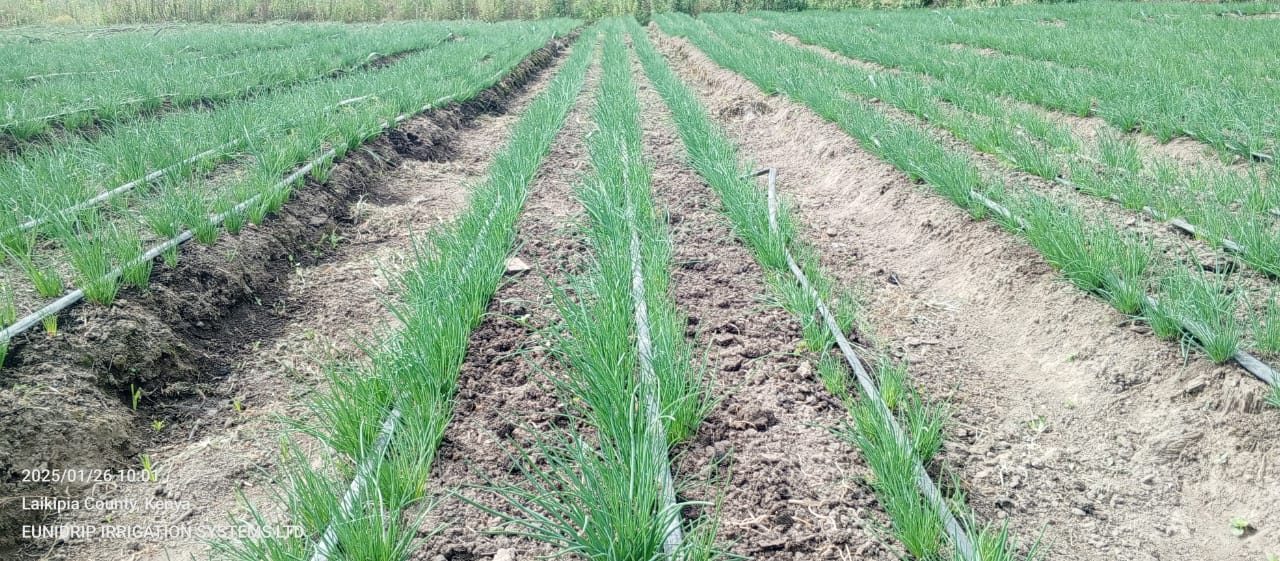
A raised bed lifts the root zone above the surrounding ground. The soil is mounded or held in a low frame of timber, block or stone, usually 15 to 30 cm high. Because the bed is never stepped on, the soil stays loose and drains freely. Roots reach air and water more easily than in a pressed open patch. Raised beds also let you build a good soil mix on top of poor ground. For the method behind lifted beds, see raised bed gardening. The photo below shows the same raised-row principle at field scale.
Container and Sack Types of Kitchen Garden
These styles hold soil off the ground.
Container or pot garden
A container garden grows vegetables in pots, buckets, crates or troughs on a balcony, patio or doorstep. It is the most portable of the types of kitchen garden, because each vessel can move with the sun or the tenant. Drainage holes and a light potting mix matter more than pot size. For example, a 10 to 20 L pot suits most leafy crops. However, small volumes dry out fast, so watering is frequent. Containers suit renters and homes with no open soil at all. Read more on container gardening for vessel and mix choices.
Sack or bag garden
The sack garden fills a tall bag with soil and plants through holes cut in its sides and top. One sack carries many plants in a footprint of about 0.5 m². Similarly, a reused 50 kg feed bag holds enough soil for a dozen plants. It is a common urban answer where land is scarce, and it doubles as a way to reuse feed or cement bags. Because the soil column is deep, roots stay cool and moist longer than in a shallow pot. Still, the centre of a wide sack can dry unevenly, so a buried watering column or a drip line helps. Sacks therefore suit tight courtyards and paved yards.
Vertical and Square-Foot Types of Kitchen Garden
Both styles pack more into less ground.
Vertical or staked garden
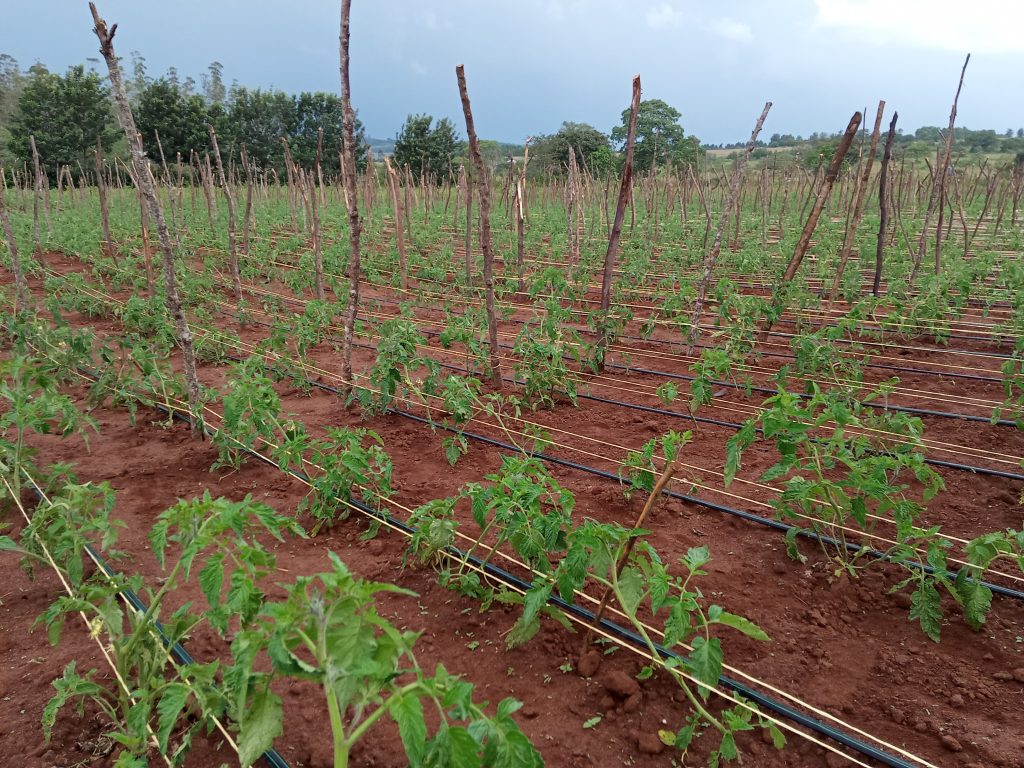
A vertical garden trains crops upward on stakes, strings, trellis or a wall frame. Tomatoes, cucumbers and climbing beans give far more fruit per square metre when lifted off the soil. Air moves through the canopy, so leaves dry faster and disease pressure falls. Harvesting also happens at hand height instead of on the knees. The trade is structure: stakes 1.5 to 2 m tall and string cost money and must be fixed firmly. The image below shows staked rows on drip at field scale.
Square-foot or intensive bed
The square-foot garden divides a raised bed into a grid of 30 cm squares, each planted at its own spacing. Instead of long rows, every square holds a set number of plants, so no ground is left bare. This intensive layout yields heavily from a tiny bed and makes succession sowing simple, because you replant one square at a time. However, it demands rich soil and steady water, since many roots share a small volume. It suits gardeners who like order and have limited space.
Keyhole, Tower and Soilless Types of Kitchen Garden
Three specialised shapes round out the list.
Keyhole garden
A keyhole garden is a raised circular bed with a wedge cut out and a compost basket at its centre. The gardener reaches every part from the notch and the path, so no soil is walked on. A bed 2 m across puts every plant within arm’s reach. Kitchen scraps dropped in the centre basket feed and water the bed from inside. Because the walls hold moisture, this style tolerates dry spells better than an open row. It suits dry regions and households that want to recycle waste into food.
Tower or conical garden
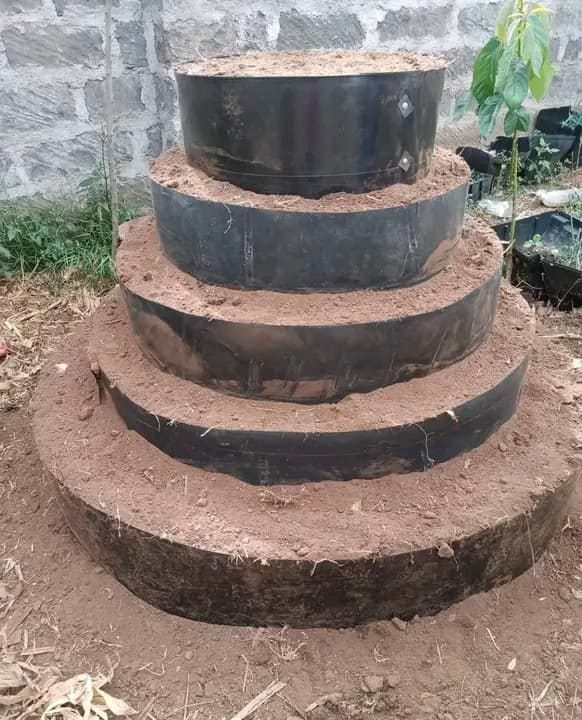
The tower or conical garden stacks plants up a narrow column or cone of soil. Like the sack, it grows many crops in a small footprint, but the shape sheds water evenly down the sides. Consequently, columns 1 to 1.5 m high keep harvest at hand height. A central watering pipe or drip line keeps the core moist. Conical and tower styles are popular where a balcony or courtyard must feed a family. They do need a stable frame and a reliable way to wet the middle, or the centre dries while the edges stay damp.
Soilless or hydroponic garden
A soilless garden grows roots in water carrying dissolved nutrients, or in an inert medium such as cocopeat. It removes soil-borne disease and gives precise control over feeding. However, it depends on pumps, power and regular monitoring, so it is the least forgiving of the types of kitchen garden. For a household wanting low upkeep, soil styles are simpler. Soilless systems suit growers with reliable electricity and time to check the solution daily.
How to Choose Between Types of Kitchen Garden
Match the style to the space first.
Start from what you actually have: open soil, a paved yard, a balcony or a dry plot. Then weigh water reliability and the hours you can give each week. A tenant with pots should not build a keyhole bed, and a family with good loam should not pay for hydroponics. Use the table below as a first filter, then read the cost and water notes that follow.
| What you have | Best-fit type | Why |
|---|---|---|
| Good open soil, room to spare | In-ground rows | Cheapest start, no frame |
| Poor or compacted ground | Raised bed | Build good soil on top |
| Balcony or patio, no soil | Container | Portable, fits small spaces |
| Tight paved courtyard | Sack or tower | Many plants, tiny footprint |
| Small bed, high yield goal | Square-foot | Intensive grid, no bare ground |
| Tomatoes, beans, cucumber | Vertical / staked | More fruit per square metre |
| Dry region, kitchen scraps | Keyhole | Holds moisture, recycles waste |
| Power plus daily time | Soilless | Precise feeding, no soil disease |
Matching Types of Kitchen Garden to Water and Budget
Water and cost separate the styles further.
Every type can run on gravity drip, but the volume and the setup cost differ. Containers and sacks dry fast and need frequent, small watering. Raised and keyhole beds hold moisture longer. Vertical and square-foot layouts concentrate roots, so a drip line per row pays for itself in saved water and fewer weeds. The comparison below gives planning bands, not quotes; actual prices depend on materials and size. Most small layouts run from a 500 L tank, while a full bed grid needs 1,000 L or more.
| Type | Setup cost band | Water need | Upkeep |
|---|---|---|---|
| In-ground rows | Very low | Moderate | Low |
| Raised bed | Low to medium | Moderate | Low |
| Container | Low | High, frequent | Medium |
| Sack / bag | Very low | Medium | Medium |
| Vertical / staked | Medium | Moderate | Medium |
| Square-foot | Medium | High, steady | Medium |
| Keyhole | Medium | Low | Low |
| Tower / conical | Medium | Medium | Medium |
| Soilless | High | Recirculated | High |
Whichever type you pick, fit a screen filter plus a shut-off valve on the tank outlet to protect the emitters. For sizing the tank, pipe and drip line to your chosen layout, read our drip irrigation systems overview. The same gravity principles apply from a single sack to a full bed grid.
Types of Kitchen Garden Frequently Asked Questions
Which type suits a balcony?
Containers and sacks fit balconies best.
They need no open soil and can move with the light. Choose pots with drainage holes and a light mix, and water little and often because small volumes dry quickly.
Which type is cheapest to start?
In-ground rows cost least of all.
There is no frame, box or bag to buy, only seed and soil preparation. Sacks are a close second where bags can be reused, though they need a watering column or drip line.
Which type saves the most water?
Keyhole and raised beds hold moisture longest.
Their walls and loose soil cut evaporation, and drip wets only the root zone. Containers lose water fastest, so they need the most frequent watering of the nine styles.
Can I mix several types in one garden?
Yes, mixing is common and sensible.
Many households run raised beds for leafy crops, a few sacks for herbs and stakes for tomatoes. Each type then sits where its space and water needs are met, and one tank can feed them all through separate valves.
Do vertical gardens need strong frames?
Yes, stakes must hold fruit weight.
A loaded tomato row pulls hard on stakes and string, so fix posts firmly and tie plants as they climb. Weak frames collapse mid-season and bruise fruit, which costs more than a sturdy start.
Is soilless worth it for a home?
Only with power and daily time.
Soilless systems give precise feeding but depend on pumps and monitoring. For most households a soil style with gravity drip is simpler, cheaper and more forgiving of a missed day.
Pick a Type, Then Plan the Beds
Choosing a type is the first decision, not the last.
Once the style is settled, the beds, crops and water budget still need a plan. Our kitchen garden setup guide walks through layout, soil and a gravity drip design for the type you choose. Ready kit sizes and prices are listed on the shop’s kitchen garden drip kit page. For the wider method behind any of these types of kitchen garden, read the irrigation in Kenya hub. Match the style to your space first, then let the plan follow.