

The importance of kitchen garden plots shows up at supper time, not in a brochure. A household that grows its own leafy vegetables eats fresher food and spends less on the daily market run. This guide sets out seven benefits, the limits of the idea, and the first steps that turn a bare yard into a working plot.
Importance of Kitchen Garden at the Family Table
Supper changes first. Leaves picked minutes before cooking keep their crunch and their vitamins, because nothing sits in a truck or a stall for a day. Therefore the family eats spinach and sukuma wiki at their best, not at their cheapest. Moreover a growing plot puts vegetables within reach of children, who snack on what they can see. In practice households with a garden beside the door serve greens more often than households without one.
Variety follows. A bed of coriander, one of spinach and a row of tomatoes mean the pot never waits for a single crop. Consequently meals rotate through the week instead of repeating the same bought basket.
Importance of Kitchen Garden for the Household Budget
Money stays home. Every bunch of greens grown is a bunch not bought, and the saving repeats each week of the season. For example 40 seedlings on a 5-tier cone bed cover a family’s greens for 3 weeks at a time. The spend sits in seed, a little compost and water, while the return arrives at every meal. Within 3 months of planting, a well-tended bed repays its seed cost.
| Line | What it replaces | Household effect |
|---|---|---|
| Leafy vegetables | daily market bunches | fewer cash trips |
| Herbs and spices | bought sachets | flavour at no extra cost |
| Surplus beds | nothing bought | small cash income |
| Watering rounds | piped top-ups | lower metered use |
Similarly the surplus sells. Neighbours buy spare seedlings and extra bunches, so a small plot earns pocket money without a shop or a stall.
Importance of Kitchen Garden in a Small Yard
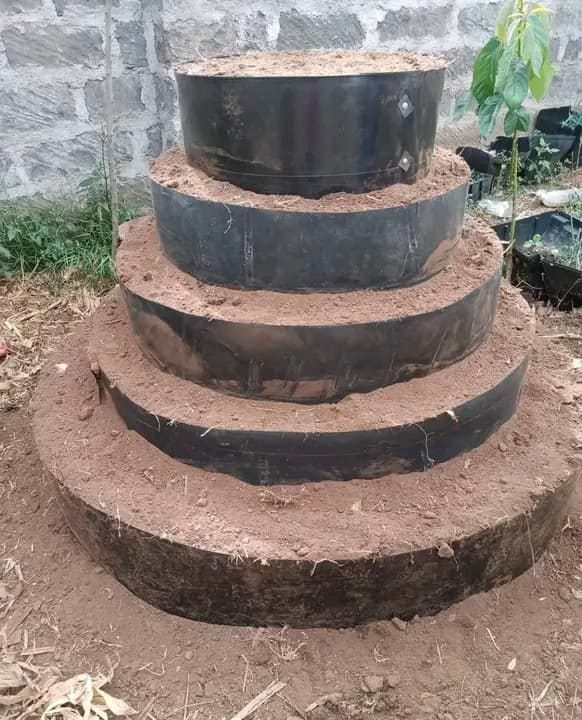
Space stops being the excuse. A cone bed stacks five planting tiers on one square metre of ground, so a balcony-sized yard still feeds a household. 40 plants fit those 5 tiers, where a flat bed of the same footprint holds 8. Therefore even a rented compound with a bare corner can carry a working plot. Moreover the tiers lift the soil to waist height, which saves the back at planting and at harvest.
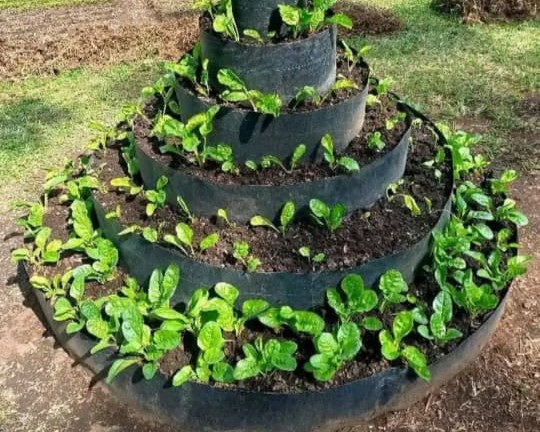
The planted cone shows the payoff. Leafy rows sit on every tier, and all of them feed from one watering point.
Importance of Kitchen Garden for Water and Soil
Water goes further here. The importance of kitchen garden watering is precision, not volume. Drip water lands at the roots, so the paths between beds stay dry and grow fewer weeds. 2 hours of evening watering covers a 50 m2 plot through a dry week. A 500 litre tank serves the plot for days. Consequently the tank empties slowly instead of feeding a flooded furrow. Likewise kitchen waste becomes compost, and the soil improves season after season without bought fertiliser.
Where the Importance of Kitchen Garden Has Limits
Honesty matters here. A small plot cannot carry a household through a dry year or a long illness, because harvests pause when care pauses. Still the limits are manageable: mulch holds moisture, a shade net cuts scorch, and a shared watering rota keeps beds alive through busy weeks. Therefore treat the garden as a steady supplement, not as the only food source. The practice is documented worldwide as the kitchen garden tradition, and smallholder food plots fall under subsistence agriculture.
Importance of Kitchen Garden Frequently Asked Questions
What is the importance of kitchen garden in towns?
In towns the value is land efficiency. Stacked beds and containers turn a balcony or a bare corner into food, without a farm or a vehicle.
Does the importance of kitchen garden depend on plot size?
No. A single cone bed already cuts the weekly greens bill, so the payoff starts small; larger plots simply add surplus for sale.
How much water does a kitchen garden need?
A 50 m2 plot on drip takes roughly one tank round every 2 days in dry weather. That is far less than furrow watering, because only the root zone is wetted.
Which crops give the fastest return?
Leafy crops lead. Spinach and sukuma wiki reach first picking in 6 to 8 weeks, while coriander follows close behind and tomatoes pay later in the season.
Can a kitchen garden replace the market entirely?
Not fully. Staples, onions and out-of-season fruit still come from the market; the garden covers the daily greens and herbs where the saving repeats.
Who maintains a kitchen garden in a busy home?
Share the rota. 10 minutes of evening watering per person keeps beds alive, and children take the picking round, which turns chores into a household habit.
Act on the Importance of Kitchen Garden This Week
Start with one bed. Mark a corner, fill a cone or a raised bed, and sow two leafy crops 30 cm apart. Then read our kitchen garden planning guide for bed layout, crop spacing and the litre budget before you scale up. For hardware, the shop’s kitchen garden drip kit page lists the stocked sizes and what each costs, while our drip irrigation systems page explains the wider method. Households new to the idea can start from irrigation in Kenya for the national picture.
Finally, keep the first season small. One working bed teaches more than four abandoned ones, and the habit is the real harvest.