

Table of Contents
Borehole electrical works are the part of a borehole project that decides whether the pump runs for a decade or fails in its first season. The drilling crew leaves with its rig and its compressor. What stays behind is a panel, a cable down the hole, an earth connection and a supply that has to match the motor. This guide follows that installation from the supply point to the test sheet.
A farm usually keeps its supply at the homestead, while the borehole sits out in a field. Because of that, the distance between the two is the first number that matters. It sets the cable size, the voltage that reaches the motor and much of the cost. In practice the same run also decides where most faults will show up.
The drilling sequence is covered in step 15 of the borehole drilling sequence, which names the electrical works in five lines. This page treats borehole electrical works as the single job those five lines describe. It covers the panel, the cable, the earthing, the dry-run control and the tests worth witnessing before you pay.
What Borehole Electrical Works Cover on a Farm
Six pieces of work sit under this heading, and each one has its own failure mode. First comes the supply: a transformer, a service cable or an array. Second comes the main cable from that point to the pump house. Third is the control panel. Fourth is the drop cable that follows the riser down the borehole. Fifth is the earthing and surge protection. Sixth is the testing, and the record of it.
Most owners plan the first item and forget the rest. Yet the pump is only as reliable as the weakest of the six. A correctly sized pump on an undersized cable will run hot and trip. Therefore the cable deserves the same attention as the pump.
It helps to separate borehole electrical works from the power the drilling crew uses. The rig arrives with its own engine-driven compressor and its own control station. Consequently everything on that rig is temporary by design. Nothing on it is wired into your farm, and nothing on it stays when the rig leaves.
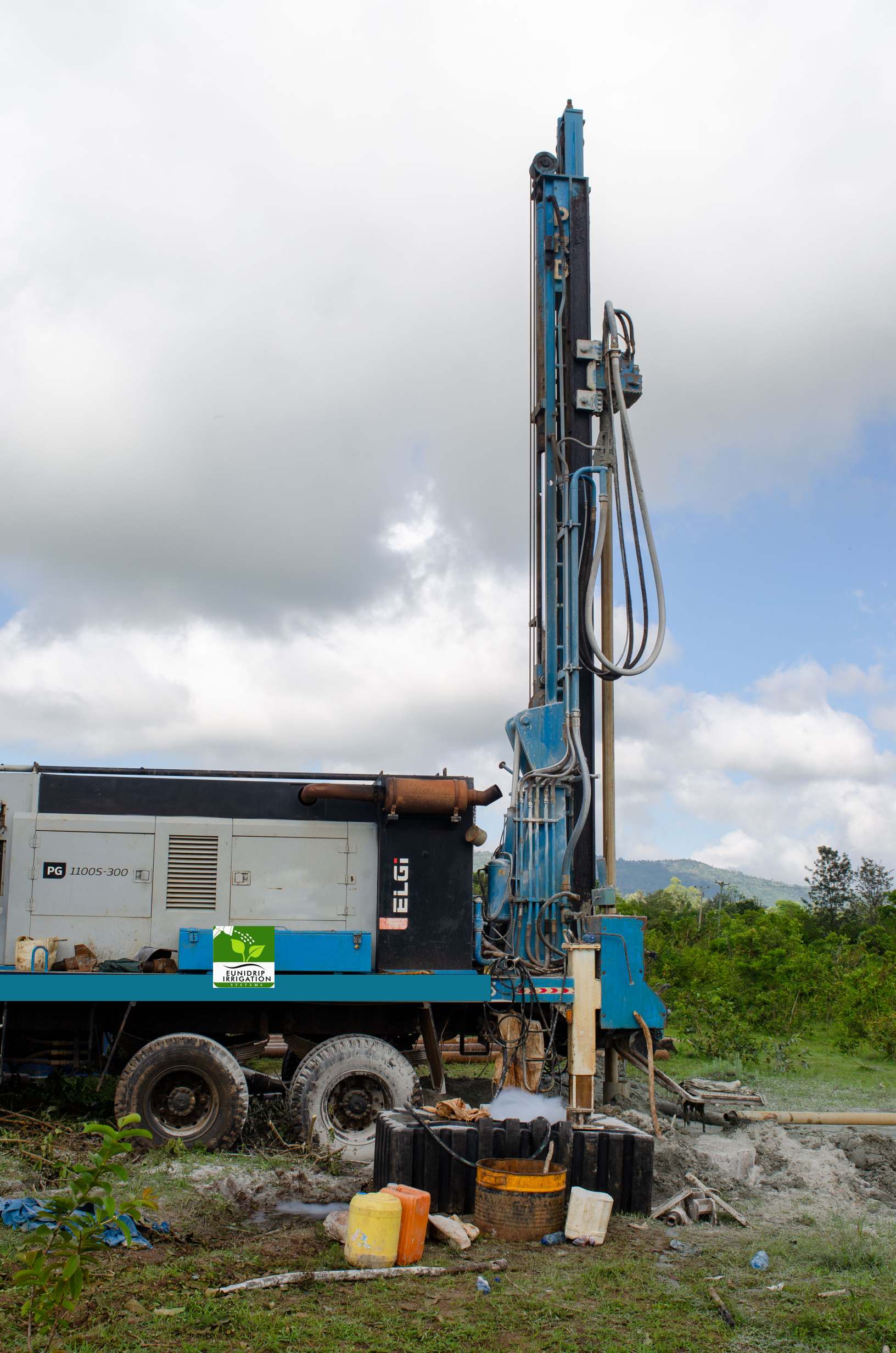
Also, the work begins before the pump goes down the hole. The cable is measured, jointed and tested on the surface first. Then it is lowered with the riser and tested again. A joint made at the wellhead in the rain is the start of a second visit.
What Borehole Electrical Works Need From the Supply
The supply has to do three things at once. It has to carry the running current of the motor. It has to survive the starting current, which is several times the running figure on a direct-on-line start. And it has to hold its voltage at the far end of the cable, where the motor sits.
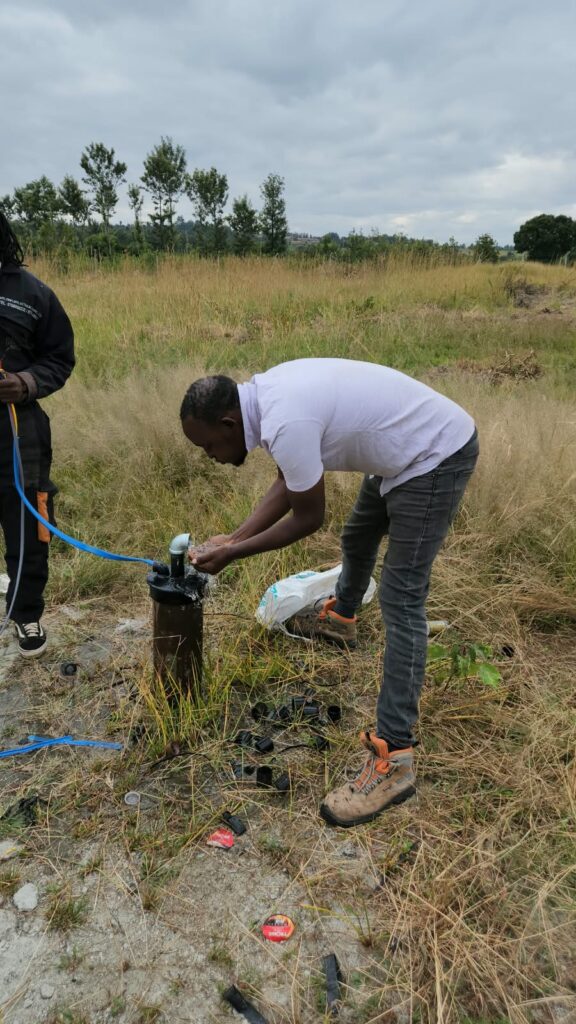
Voltage is the part that gets overlooked. A pump nameplate is written at a nominal voltage, and the motor expects to see something close to it. Because of that, a long run with a thin cable produces a pump that turns slowly, draws high current and heats up. The fault looks like a pump problem and is really a cable problem.
| Supply option | What it brings to the panel | Where it fits | Main risk |
|---|---|---|---|
| Mains, single phase | Two wires and an earth, a starter box and a capacitor | Small pumps on a plot already connected to the grid | Voltage sag at the end of a long rural run |
| Mains, three phase | Four wires, a contactor starter and a phase-failure relay | Larger pump sets and multi-pump stations | Phase loss and single-phasing, which burns a winding |
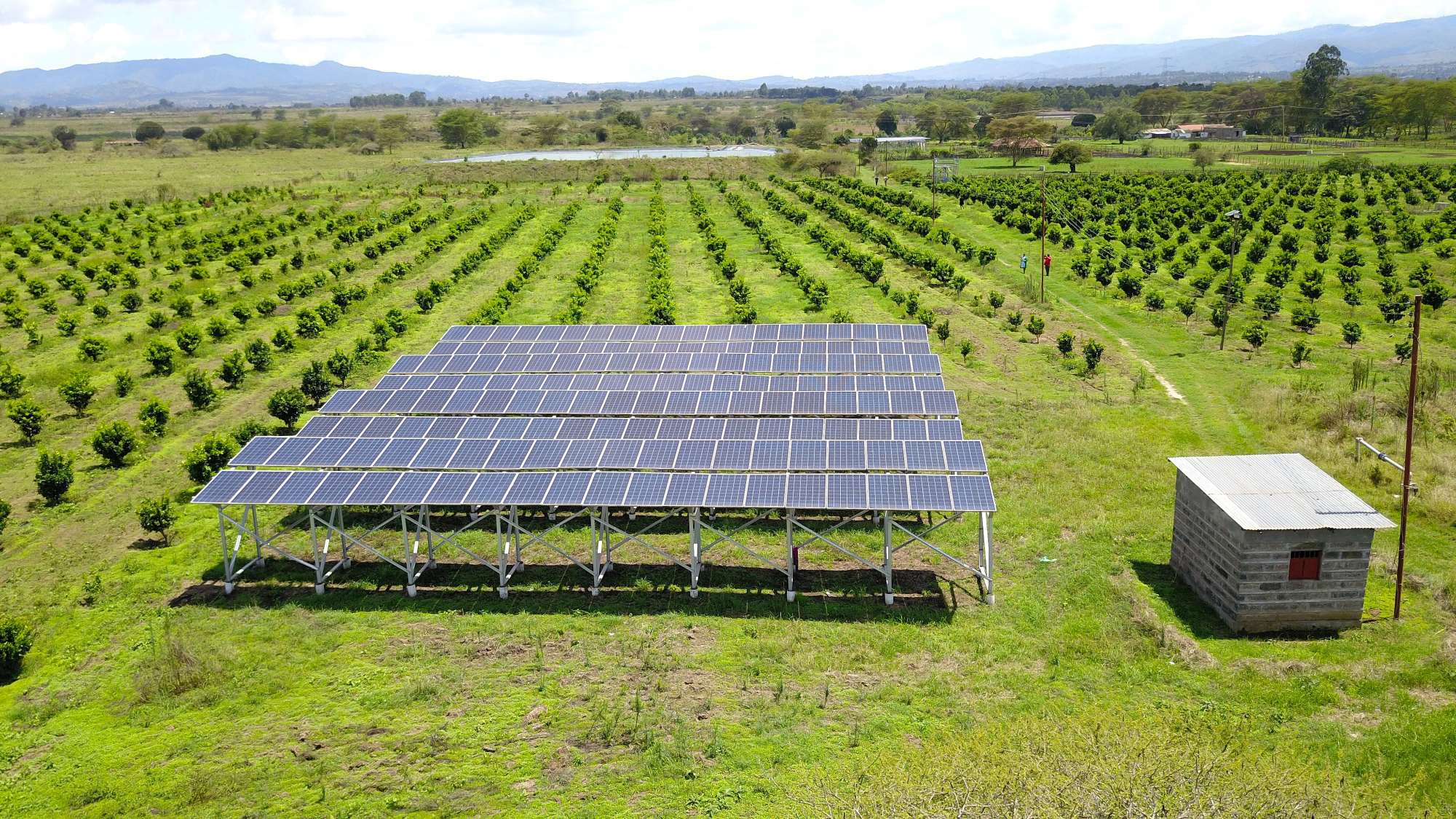
| Solar array and controller | Direct current, a controller and a matched pump end | Sites with no line and a reliable daily demand | Output falls on cloudy days, and the array is theft-prone |
| Diesel generator | An engine, an alternator and a changeover switch | Standby power, or a site waiting for a connection | Starting current browning out the generator, plus fuel and servicing |
For a smallholding, borehole electrical works usually follow the house connection, with a separate cable run out to the field. In addition, many sites end up with two sources and a changeover switch between them. That switch becomes part of the work, and it has to be rated for the starting current rather than the running load.
The pump selection and total dynamic head guide covers how the duty point is chosen. The electrical side begins once that duty is known, because motor size follows from it. Similarly, a solar irrigation design fixes the array and controller before any cable is ordered.
How Borehole Electrical Works Begin: Sizing the Run to the Motor
Borehole electrical works are sized from three figures, not from a catalogue. Take the current the motor draws, the length of the run and the voltage drop you are willing to accept. First measure the route from the panel to the pump, including the vertical drop. Then add the cable coiled at the head as a service loop.
The accepted limit is tighter than most owners expect. Franklin Electric’s application book for submersible motors asks that the voltage drop across the drop cable does not exceed 5% of rated voltage. It then works the sum the other way, calculating the maximum cable length that keeps the drop inside that limit.
In practice a deep borehole with a long surface run fails that test on the obvious cable size. The answer is not a bigger pump or a smaller one. It is the next cross-section up, and often a heavier cable than the one shipped as standard.
The drop cable also has to survive where it sits. Because it hangs in water for years, it needs a jacket rated for continuous immersion. Also, it has to pass the casing without chafing. A household cable will carry the current on day one and fail at the water line later.
Next comes the joint. In most installations the drop cable is joined to the motor lead with a heat-shrink kit, and the joint is staggered so the conductors cannot touch. Then, when the pump is lowered, the cable is tied to the riser at intervals and supported separately from its weight. Consequently the cable carries no load of its own.
What Sits Inside the Pump Control Panel
The panel has one job and several parts that serve it. Its job is to connect the motor to the supply, protect the cable and the winding, and give someone a way to isolate the pump. Everything inside earns its place against that job.
First comes an isolator, so the panel can be made dead and locked off. Then the circuit protection, sized for the cable, not the pump. After that comes the starter, whether a direct-on-line contactor, a soft starter or a variable-frequency drive. Finally the overload, set to the motor’s nameplate current.
Franklin Electric describes the starter box as the place where the motor is connected to the grid, offering short-circuit protection for the motor and the drop cable. Its more advanced designs, in its words, also protect against overload, transient overvoltage and dry run. That description is a fair checklist for what a farm panel should contain.
For a three-phase motor, the panel also needs a phase-failure or phase-sequence relay. Because a lost phase on a rural line is common, the relay is not an extra. It is the device that stops a pump from cooking itself overnight.
An ammeter and a voltmeter are worth the small extra cost. In addition, they let the operator see a change before it becomes a failure. A current that creeps up over a season tells you the pump is wearing or the screen is silting. A voltage that sags at midday tells you the supply is the problem.
On a site with several pumps, the panel logic becomes a control question rather than a wiring one. The starters and variable-frequency drives on a multi-pump station guide covers the sequencing and protection for that arrangement.
Earthing, Surge and Lightning Protection
Earthing is the cheapest part of borehole electrical works and the one most often skipped. Its purpose is to give fault current a path that is not a person. Therefore the panel enclosure, the motor frame and any metal around the pump house all connect to the same earth.
Franklin Electric makes the point twice in its application book. It asks that all metal plumbing and electrical enclosures be connected to the power supply ground to prevent shock hazard. It also asks that above-ground arrestors be grounded with copper wire directly to the motor frame.
Lightning matters more in Kenya than in most markets where these pumps are designed. A highland farm can take strikes through the incoming line, through the array or through the ground. As a result, a surge arrester at the panel is standard practice, not an upgrade. So is a second one at the array, on the direct-current side.
The earth electrode then needs a reading, not a gesture. A rod in dry soil may read far higher than the same rod in the rains. Hence the resistance is measured at commissioning and recorded, so a later change is visible.
Dry-Run Protection and Level Control
A pump that runs without water destroys itself quickly. The water in the borehole also cools the motor, so a dry run is not a harmless event. Because of that, no set of borehole electrical works is complete without a device that stops the pump when the water goes away.
There are three common ways to detect it. First, a level probe hung in the borehole below the pump intake. Second, a float switch or electrode in the storage tank, which stops the pump when the tank is full. Third, the controller’s own electronics, which read current and voltage and infer a dry condition.
Of the three, the probe in the borehole protects the pump from the borehole’s side. Typically it is set at a depth that leaves the motor covered when the pump stops. In practice this setting is where many dry-run failures begin, because a probe left at its factory length sits too deep to help in a dry season.
The tank side matters for a different reason. Without a tank control, a pump filling one tank will run until someone notices. Also, a tank that overflows silently wastes both water and power.
Commissioning Tests Before You Accept the Borehole
Commissioning is where borehole electrical works are proved, not assumed. Ask for the readings in writing, and watch the tests being done. A panel that is closed, working and undocumented is a panel you cannot compare against next year.
The insulation test comes first, and it is done twice. Once on the surface before the pump is lowered, and once after it is in place. Franklin Electric asks for a 500 volt direct-current insulation tester, with the reading taken from each lead to the motor and to ground.
Its table gives the numbers to compare against. A new motor on its own reads 200 megohms or more. A motor sitting in the well with its lead attached reads 2 megohms or more. Anything below 0.5 megohm points to damaged insulation, in the motor or the cable.
| Condition of motor and lead | Reading at 500 volts DC |
|---|---|
| New motor, no drop cable attached | 200 megohms or more |
| Motor in the well with its lead attached | 2 megohms or more |
| Damaged motor insulation or cable | Below 0.5 megohm |
After the insulation test comes rotation. On a three-phase motor the direction is checked by briefly starting the pump and watching the flow, then swapping two phases if it is wrong. Meanwhile the current on each phase is measured and compared. A wide spread points to a supply problem or a damaged winding.
Then the protection is tested rather than trusted. Specifically, the overload setting is compared with the nameplate current. The dry-run device is tripped on purpose, by lifting the probe or closing a valve. Finally, the pump is run against the system and its flow is compared with the duty point it was sold on.
Because these tests take an hour, they are the first thing dropped when a site runs late. In contrast, they are the only record you will have when something fails two years on.
Who May Carry Out Borehole Electrical Works in Kenya
Electrical installation work in Kenya is regulated, and the borehole is no exception. The Energy Act 2019 is explicit on the point. A person who wishes to carry out electrical installation work must be licensed as an electrical contractor by the Authority.
That requirement sits with the contractor, not with the farm. Consequently the question is not whether the installer is a good electrician. It is whether the firm is licensed for installation work and whether the person on site holds the matching certificate.
This matters for more than compliance. A licensed contractor issues the test record, and that record is what an insurer or a buyer will ask for. Also, an unlicensed installation that later causes a fire leaves the owner with no paperwork and no recourse.
Ask for the licence before work starts, and note the number on the quotation. Then check it against the Authority’s register, not a photocopy. The drilling side has its own permits and water charges, which the nine checks before you pay for a borehole sets out in order.
What Drives the Cost of Borehole Electrical Works
No two quotes for borehole electrical works look alike, and the differences are usually structural. Because the scope runs from a transformer to a test sheet, one phrase can describe a small job and a large one.
Distance is the first driver. A borehole 40 metres from the meter and one 400 metres away need different cable, and the second may need a transformer. Next is the motor size, because the cable, the starter and the protection all scale with it.
Third is the level of protection chosen. A basic starter and an isolator cost far less than a panel with a variable-frequency drive, phase monitoring, surge arresters and a level controller. Fourth is the earthing and the surge kit, which depends on the site and its exposure.
Fifth is the civil work around the installation. Specifically, that covers the trench for the supply cable, the plinth or cage for the panel, and the security around it. A panel left in the open on a farm is a target, and a stolen array or cable is the most expensive fault of all.
A solar supply changes the shape of the cost, not its principle. The starter and the service cable are replaced by an array, a mounting structure and a controller, and the cable run now starts at the array. In addition, the array has to be fenced or roof-mounted for security.
Five Faults That Show Up in the First Season
Most failures in the first year are faults in the borehole electrical works rather than equipment faults. Each one is visible at handover if someone looks for it. Therefore the list below doubles as a set of questions for the installing team.
First, the cable chafes where it passes the casing at the head. This happens when it is tied too tightly to the riser, or when no guide keeps it off the steel. Second, water gets into the panel, usually through a gland that was not sealed. Third, a cable joint fails, because it was made in the wrong conditions or not staggered.
Fourth, lightning takes the controller. This is the fault owners describe as bad luck and that a surge arrester usually prevents. Fifth, the pump runs dry in the first dry season, because the probe was set too deep to sense the falling water level.
Also, two smaller faults account for a share of callouts. A contactor chatters on a sagging supply until its contacts burn. A pump trips on overload because the setting was left at the factory value, not the nameplate current.
A Borehole Electrical Works Checklist Before the Rig Leaves
The rig leaving is the last moment when the site is open and the crew is still on it. Use that moment to settle the electrical side, even though the drilling job is what the invoice describes. The items below take an afternoon and prevent most of the faults above.
- The supply is measured at the panel, and the reading is written down.
- The cable size is checked against the run and the motor current, not against the pump box.
- Insulation resistance is tested on the surface and again in the hole, with both figures recorded.
- The overload is set to the nameplate current, and the setting is photographed.
- Rotation is confirmed on a three-phase motor, and current is measured on every phase.
- The dry-run probe is set at a depth that leaves the motor covered, and the trip is tested.
- The earth electrode is measured, and the reading is entered on the sheet.
- Surge arresters are fitted at the panel and at the array, where there is one.
- The panel is locked, labelled and mounted above the flood level of the site.
- The contractor’s name, licence number and test record are handed over.
If any line is missing, the work is not finished. Consequently it is fair to hold the final payment until the sheet is complete. A pump that runs on the day is not proof of an installation that will run in a dry season.
Frequently Asked Questions About Borehole Electrical Works
Who should do the electrical work on a borehole?
A licensed electrical contractor, working with the pump installer. The drilling company may offer the whole package, but the licence belongs to the contractor who signs the test record. Check that firm’s licence before the pump is lowered.
Can I run a borehole pump from a single-phase supply?
Yes, for smaller motors, with a starter box that includes a capacitor. Above a certain size the motor is three-phase, and a single-phase farm supply then needs a converter or a variable-frequency drive. That decision changes the panel and the cable.
How deep can a pump cable run be?
There is no fixed depth limit, only a voltage-drop limit. Franklin Electric works to 5% of rated voltage across the drop cable, then calculates the maximum length for a given size. Because of that, a deep hole with a small cable may fail where a shallow one passes.
What insulation reading is acceptable?
Two megohms or more for a motor in the well with its lead attached, read at 500 volts DC. A new motor on its own should read 200 megohms or more. Anything below 0.5 megohm means the insulation is damaged and the pump should not be started.
Do I need surge protection in Kenya?
Yes, and on both sides if the site has an array. Lightning reaches the installation through the incoming line, through the panels and through the ground. A surge arrester at the panel and another on the direct-current side costs less than one controller.
How often should the panel be checked?
At least twice a year, before and after the long rains. Check the gland seals and the earth connection, read the ammeter against the commissioning figure, and test the dry-run trip. Also, clear any nest or dust from the enclosure vents.
Borehole electrical works are the least visible part of a borehole project and the part that decides its life. A farm that gets the cable, the earth and the test sheet right spends its money once. One that does not spends it again every dry season. Where the ground still has to be drilled, the borehole drilling in Nakuru page shows how the site and the water decide the rest.