

10 Hectare Greenhouse Costs
A 10 hectare greenhouse covers 100,000 m² of land, and that figure alone explains why small-house price lists mislead project owners. The covered structure may occupy less than half the plot once roads, reservoirs, drainage, packhouse and utility strips are drawn. Therefore a credible budget must capture the full investment, not the frame and covering film alone. This guide sets out the cost categories, the surveys that precede them, and the reporting format that makes bids comparable.
Contents
Table of Contents
Main Cost Categories
Ten cost blocks carry a commercial project. Each has its own driver, and each is priced on a different unit. First, read the table as a checklist of what a bid must answer. Then use it to reject any quotation that cannot name a figure for a row.
| Cost category | Scope and key drivers |
|---|---|
| Land topography and earthworks. | Survey, slope, level differences, cut and fill, soil compaction, terraces, stormwater drains, retaining structures. |
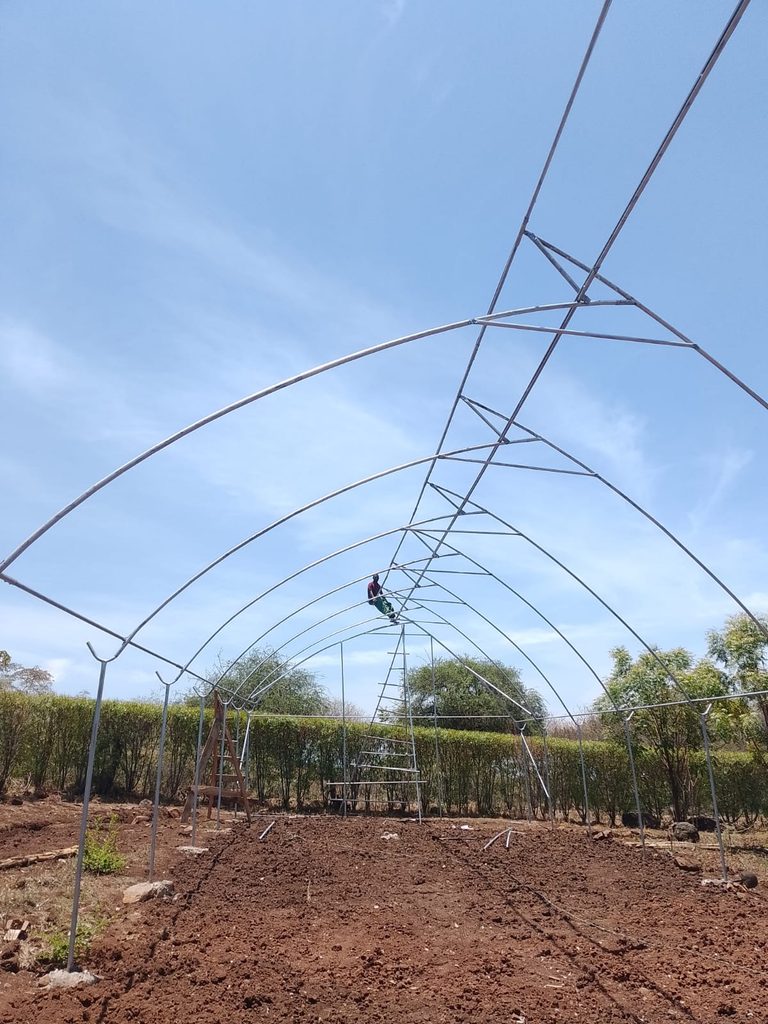
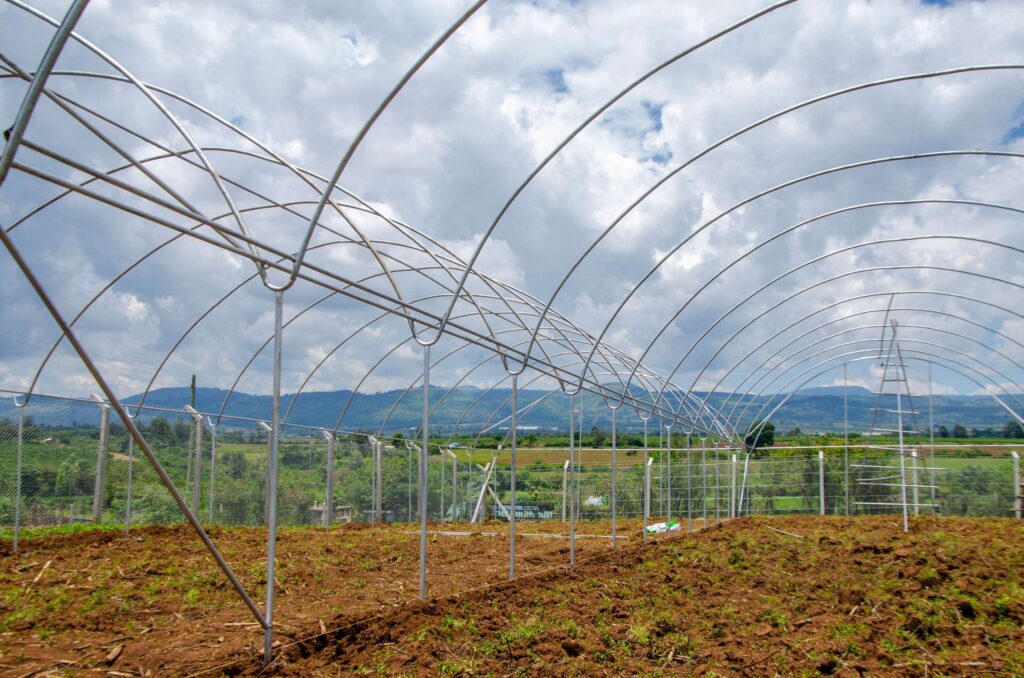
| Greenhouse superstructure. | Frame geometry, galvanised steel, foundations, covering film, vents, insect nets, wind design. |
| Professional services. | Surveying, structural, civil, irrigation and electrical design, agronomy, quantity surveying, project management. |
| Procurement and transport. | Freight, inland trucking, containers, cranes, unloading, temporary storage, cargo insurance. |
| Taxes and approvals. | Tariff-specific customs duty, VAT, applicable levies, permits, approvals, clearance charges. |
| Water and electrical systems. | Source development, storage, pumping, filtration, irrigation, fertigation, power, controls. |
| Environment and community. | Screening and assessment, mitigation, consultations, access agreements, grievance handling. |
| Security and documentation. | Guards, fencing, CCTV, drone photography, internet monitoring, cloud storage. |
| Labour and site preliminaries. | Site offices, welfare, accommodation, machinery, temporary utilities, safety, insurance. |
| Commissioning and risk. | Quality tests, system trials, spare parts, training, contingency, escalation, finance costs. |
Land Topography and Earthworks for a 10 Hectare Greenhouse
Commission a boundary and topographic survey with contours and a digital terrain model before you fix greenhouse orientation or block levels. Establish permanent reference benchmarks. Then quantify earthworks in cubic metres, not in areas.
Slope decides geometry. Compare stepped greenhouse blocks against extensive levelling, and account for drainage gradients and access gradients as you go. Cut and fill is a priced activity in itself: measure excavation, material haulage, imported fill, disposal and compaction separately. Specifically, do not price earthworks by area alone, because a 10 hectare greenhouse on a uniform 2 percent slope behaves very differently from the same plot with a 9 percent fall across one gully.
Soil conditions set foundation cost. Perform geotechnical tests to determine foundation depth, bearing capacity, settlement risk and groundwater conditions. Stormwater comes next. Consequently, size drains, culverts, erosion protection and outfalls for the design rainfall and for upstream catchment contributions, not only for the plot. Finally, include permanent internal roads, turning space for container trucks and safe equipment access. Typically a contractor prices thin slab work on a poorly graded site twice: once in the tender and once in the variation.
Professional and Technical Fees
Professional fees are small in isolation and material in total. Also, an omitted consultant is usually discovered after the money is committed. Define each scope, the number of site visits, the statutory submissions and the construction supervision separately, so gaps and duplicated fees cannot hide. Moreover, name who signs each drawing, because an unsigned set is worthless at approval.
| Expert or service | Deliverable |
|---|---|
| Licensed surveyor. | Boundaries, contours, setting out and as-built survey. |
| Geotechnical specialist. | Ground investigations and a foundation report. |
| Structural engineer. | Wind-load assessment, frames, connections, foundations. |
| Civil engineer. | Earthworks, roads, drainage and water storage. |
| Irrigation engineer. | Water balance, hydraulic design, filtration, fertigation, pumping. |
| Electrical engineer. | Power distribution, protection, backup, automation. |
| Environmental expert. | Screening, assessment and an environmental management plan. |
| Quantity surveyor. | Bill of quantities, tender pricing, valuations, change control. |
| Project manager and agronomist. | Programme, reporting, crop and climate requirements, operational readiness. |
Transport, Customs and Taxes
Imported components must be costed on a landed-at-site basis. First, price international freight: origin to port logistics, packing, cargo insurance, demurrage and port handling. Next, verify customs clearance item by item using current Kenyan rules — HS codes, valuation, duty and VAT treatment, applicable import levies and any exemption. Then allow for inland haulage from port to site, oversized load permits, road access restrictions and delay.
Handling is a separate line. Cranes, forklifts, rigging, unloading teams, laydown yards and weatherproof storage all cost money and all get forgotten. Consequently, do not apply one generic tax rate to all greenhouse materials, and do not double-count taxes a supplier has already included in a quotation. Finally, hold a provision for foreign-exchange movement between quotation and final supplier payment; a schedule running months can lose several percent on currency alone.
Water and Power Systems on the Plot
Water is the constraint that most often reshapes a 10 hectare greenhouse layout. Develop the source, then size storage, pumping, filtration, irrigation, fertigation, power and controls against the confirmed crop programme. For instance, a borehole supply with low yield forces larger reservoirs and a different irrigation schedule than a river intake. The hydraulic design of these blocks follows the same rules as any high volume low pressure irrigation scheme, where reservoir sizing and mainline bore decide the pump duty.
Power follows demand. Price distribution, protection, backup generation and automation for the whole site rather than for one house. Meanwhile, confirm the connection terms with the utility before the electrical engineer fixes cable sizes, because a late upgrade order moves both the budget and the programme.
Environmental Compliance and Community Relations
Budget for NEMA screening and the environmental assessment route it directs, including agency submissions, expert fees and the management measures that follow. Account for water abstraction and other sector-specific authorisations where they apply. Hold recorded consultations that address runoff, dust, traffic, access and water-use effects. In addition, provide for lawful boundary verification, access agreements, complaints handling and dispute resolution.
Use documented community liaison and procurement procedures. Rather than absorbing informal requests, publish a supplier register and a single point of contact. This protects the programme, and it protects the people running it.
Site Security, Photography and Remote Monitoring
A dispersed 10 hectare greenhouse site holds valuable, easily removed material. For that reason, security and documentation are budget lines, not afterthoughts.
| Item | One-time and recurring costs |
|---|---|
| Physical security. | Perimeter fence, gates, day and night guards, patrols, lighting, secure stores. |
| CCTV. | Cameras, poles, cabling, solar power or UPS, recorder, installation, maintenance. |
| Site photography. | Initial condition records, drone flights, periodic progress images, handover images. |
| Online project monitoring. | Connectivity, data bundles, remote camera access, cloud subscriptions, dashboards. |
| Asset control. | Delivery registers, tagged inventories, access logging, theft insurance. |
Set the inspection and photography frequency inside the works programme. Typically that means weekly internal progress photos and monthly, independently documented drone surveys, where lawful and practical.
Additional Project Allowances
- Temporary infrastructure. Site offices, toilets, worker welfare, first aid, water, power, generators.
- Machinery. Excavators, graders, concrete mixers, welding plants, cranes, scaffolding, standby equipment.
- Insurance and guarantees. Contractors all-risk, public liability, employee cover, bonds, warranties.
- Health, safety and quality. Protective equipment, safety supervision, concrete testing, weld and coating inspection.
- Weather and programme delay. For example, rain protection, rework, extended security, equipment stand-by.
- Working capital. Deposits, payment timing, financing interest, possible retention periods.
- Handover, and these are not optional. Testing, irrigation pressure and flow verification, staff training, manuals, spares, maintenance setup.
Illustrative Allocation of a 10 Hectare Greenhouse Budget
The shares below are planning illustrations. They are not a supplier quotation and not validated Kenyan market rates. In addition, the allocation moves substantially with greenhouse technology, actual covered area, slope, water source, imported equipment and tax treatment. Therefore, include applicable taxes inside the line items or in a separate tax schedule, but never twice.
| Budget section | Illustrative share |
|---|---|
| Greenhouse structure and covering. | 43 percent. |
| Water supply, irrigation and fertigation. | 16 percent. |
| Earthworks and civil works. | 11 percent. |
| Power, controls and automation. | 8 percent. |
| Professional and statutory costs. | 5 percent. |
| Transport and logistics. | 5 percent. |
| Site preliminaries, monitoring, security. | 4 percent. |
| Contingency. | 8 percent. |
| Total. | 100 percent. |
Recommended Estimating Procedure
Work the estimate in this order. First, confirm feasibility: site, crop, greenhouse technology, covered footprint, supporting facilities, water source and power availability. Second, complete the topographic, geotechnical, water and environmental investigations. Then produce coordinated structural, civil, irrigation, electrical and site drawings.
Next, prepare a measured bill of quantities with quantities, units, rates, material and labour split, and stated currency assumptions. After that, request comparable itemised supplier bids and build a landed-cost schedule for imports. Price the construction programme, preliminaries, security and remote documentation across the full project duration. Add statutory charges, insurance, financing, quantified risk contingency and price escalation. Finally, set up variation control, procurement tracking, payment certification and monthly cost-to-complete reporting.
Comparing bids on a per-square-metre figure alone hides the earthworks and civil scope. Instead, read our step by step guide to greenhouse construction in Kenya alongside the bill, so the sequence and the money are checked against each other. Likewise, hold the risk register next to the contingency line, because one justifies the other.
Cost Reporting Metrics
Report five numbers, always in Kenyan shillings: total approved investment, direct works cost, indirect and statutory cost, contingency, and cost per square metre of actual covered greenhouse area. Show reservoirs, access roads, packhouse and other external facilities separately, because that is the only way two contractors become comparable. Therefore, take the per-metre figure with the external works listed beside it. For house-level prices against local quotations, the cost of greenhouse construction in Kenya breakdown states small-house figures that this project-scale page deliberately does not repeat.
Frequently Asked Questions about 10 Hectare Greenhouse Cost
How many square metres is a 10 hectare greenhouse plot? One hundred thousand square metres. The covered area is smaller once roads, reservoirs, drainage, packhouse and utilities are set out, so always quote both figures.
Should earthworks be priced by area? No. Measure excavation, haulage, fill, disposal and compaction in cubic metres. A per-area rate is a guess, because it cannot see a gully.
What professional fees are unavoidable? Survey, geotechnical, structural, civil, irrigation, electrical, environmental and quantity surveying work. In practice, define each scope and supervision obligation before tender.
Is one tax rate enough for imported greenhouse material? It is not. Duty and levy treatment follows the tariff classification of each item, so price customs line by line and check any exemption on the specific goods.
How much contingency should a 10 hectare greenhouse project hold? Hold a quantified sum against a risk register rather than a habit. Typically the 8 percent share above is only a starting illustration, and the register decides the real figure.
Why do bids that look cheap cost more later? Because preliminaries, security, escalation and logistics usually sit outside the frame price. For this reason, a bill of quantities with 20 to 25 work sections forces every bidder to answer the same questions.
Where to Have a 10 Hectare Greenhouse Built in Kenya
Large-span work is a sequencing problem before it is a construction problem. Eunidrip delivers survey support, greenhouse frames, irrigation design and fertigation for commercial plots, and the installation stages are documented in our green house installation stages in Kenya guide. Call 0728 163 329 or send the site survey and your crop plan on WhatsApp, and we will price the works section by section rather than as one area rate.