

Table of Contents
At the Nakuru Mkulima Digital Awards 2024, the best irrigation technology award went to Eunidrip Irrigation Systems. The ceremony filled the Kingdom International Premier School in Nakuru County on 14 December 2024.
This page records what that recognition covered, and then does the part an awards article usually skips. It lists the irrigation technology the shop sells, with the flow rates, pressures, sizes and prices each product page carries. Read the six checks near the end before you commit to any system.
What the Nakuru Mkulima Digital Awards recognised
The awards are an annual event. Moreover they honour agricultural innovation inside Nakuru County, and the stated emphasis falls on sustainability and digital tools.
First, the room. Two chief guests set the tone for the evening. Dr. Catherine Changwony gave the keynote and argued for integrating ICT and digital communication so that farmers get the information themselves. Hon. Dr. Michael Cheruiyot spoke on advances in livestock and fisheries management.
Charis Farm took a mention for its work with vertical growing systems. Therefore the night covered two halves of the same problem. One half is how food is grown, and the other is how that knowledge reaches the farmer who has to buy the equipment.
Also, the photographs on this page were taken by Joe Photography, who covered the ceremony.


The irrigation technology Eunidrip was recognised for
The citation named irrigation. Specifically, the company was honoured for drip and sprinkler systems built for Kenyan conditions, and for the design work that sits in front of both.
First, three commitments sit behind that recognition, in the company’s own words. They are modern solutions across drip and sprinkler irrigation, farmer empowerment through tailored designs, and a sustainability focus on water conservation and climate-smart practice.
In practice, that means the irrigation technology is chosen field by field. A steep block, a shallow topsoil and a borehole carrying iron in solution each pull the design in a different direction. Consequently the same kit list will not serve two neighbouring farms.
For this reason the award was also tied to a place. Nakuru County runs from irrigated horticulture near the lake to dryland ranching on the eastern side. A supplier working across that spread meets more water problems in one season than a catalogue can hold.


Drip tape, the irrigation technology that cuts water use
Typically, drip tape is the emitter line most small farms start with. Water exits through small emitters placed along the tape, so the soil wets in a band under the row instead of across the whole field. For a general background on the method, see the drip irrigation overview.
Specifically, the published figures matter more than the brand. The shop lists tape with a discharge of 1.5 to 3 litres per hour per emitter. Operating pressure runs from 1 bar to 3 bar. Emitter spacing ranges from 10 mm to 600 mm, which covers 5 to 25 inches.
Typically the tape is black with a yellow, blue or white strip, and the roll is priced at KSh 8,000. Next, check the wall. Thicker wall tape is used for permanent subsurface lines, while thinner wall tape suits temporary systems on high value crops.
The drip tape listing carries the current stock status and the roll price.

Sprinkler irrigation technology, four heads and four jobs
First, overhead systems differ by how the head breaks the stream and how far it throws. The table below lists what the shop publishes for each head.
| Head | What it suits | Published figures | Price |
|---|---|---|---|
| Impact rain gun, 35 m radius. | Large open blocks and field crops. | 10,000 to 25,000 litres per hour at 4 to 5 bar, which is 58 to 80 PSI. | KSh 4,000. |
| Gun sprinkler. | Forestry seedlings, pasture, hedge plants, leafy vegetables. | Same impact family in a heavier build. | KSh 8,500. |
| Impulse sprinkler. | Small plots and nurseries. | A spring loaded arm rotates the head on a pivot. | KSh 450. |
| Micro sprinkler. | Hydroponics, seedbeds and tree rows. | A full 360 degree circle, and some heads narrow to an arc between 30 and 330 degrees. | KSh 100. |
| Pop-up sprinkler. | Lawns, gardens, sports fields and landscaped areas. | Installs below ground and rises when pressure enters. | KSh 1,200. |
Sprinkler irrigation technology on the shop shelf, with the published duty figures.
In practice, a rain gun and a micro sprinkler are not competitors. The gun moves thousands of litres an hour and needs a mainline sized to match. Conversely, the micro sprinkler runs on small bore pipe and suits a nursery bench.
For the wider family of low flow overhead devices, the microirrigation reference explains how emitter types differ. Then decide the head last, after the water source and the filter are settled.
Filtration, the irrigation technology that fails first
In practice, emitters clog before pipes do. A filter sized to the flow keeps the tape working, and the shop sells disc and screen housings from 25 mm to 110 mm.
Additionally, screen units start at KSh 900 and combined disc or screen filters at KSh 1,400. Match the inlet and outlet to the mainline diameter, not to the pipe offcut left on the farm.
However, the water source decides the type. Borehole water carrying iron or manganese will block drippers when the concentration is high, so a hydrogeological survey belongs before the filter purchase. Meanwhile surface water brings algae and grit, which is where a disc filter earns its keep.
For example, a dam fed by runoff in the Rift Valley catchment will carry silt after every storm. A screen alone will not clear that load, and the grower ends up cleaning by hand each morning.
Valves and fittings, the small irrigation technology that decides control
Typically, fittings are where a budget slips away. The shop prices each part separately, so a grower can shut off one bed without stopping the whole block.
| Part | Published detail | Price |
|---|---|---|
| Drip valve. | Turns sections on and off and directs flow to chosen lines. | KSh 60. |
| Rain hose valve, wing handle and barb ends. | Fits 32 mm, 40 mm and 50 mm rain hose. | KSh 200. |
| Drip tape connector. | Joins two tape sections, rated to a 16 bar working pressure. | KSh 15. |
| Air release valve. | 3/4 inch at KSh 950, 1½ inch at KSh 2,000, 2 inch at KSh 4,500. | From KSh 950. |
| HDPE elbow. | Redirects flow at bends in a pipe run. | KSh 180. |
The control parts behind any irrigation technology, at published prices.
Note the pressure gap in that table. The connector is rated to 16 bar, yet most drip systems work best at 3 bar or below. The rating is the fitting limit, not the operating point.
Air release valves are the item growers skip. Trapped air in a mainline reduces the effective bore, pushes pressure losses up and can burst a hose at a low point. Therefore the cost of one valve is small next to one failed mainline run.
Fertigation and automation, irrigation technology that saves labour
For instance, fertigation puts soluble fertiliser into the irrigation line, so the crop receives nutrients with the water instead of as a top dressing.
For example, the shop sells an automatic fertigation machine. Its own listing says the unit is simple to operate, needs no premixed stock solution, is easy to install and takes little maintenance. No price is published, so it is quoted on request.
Automation fits the theme of the awards night. Digital tools were the thread running through both keynotes, and metering water is where a farm stops guessing. For a full install that carries sensors and section valves, see drip irrigation installation across East Africa.
As a result, the labour saving arrives before the fertiliser saving. One operator runs several blocks, and the nutrient schedule is set once instead of carried out by hand each week.
Solar pumping, the irrigation technology that changes the running cost
Meanwhile the shop sells solar pumps for sale in Kenya as a matched set of pump, panels, controller and mounting, sized to daily volume and head. No price is published, and the listing asks for four figures before it quotes.
Sizing on the panel alone is the common mistake. Daily volume and total head decide the set. Consequently a matched quote beats a catalogue price, and a pump bought on watts alone usually underperforms at the end of the day.
Similarly, storage changes the answer. A reservoir charged during the sun hours lets a smaller pump irrigate a longer window. For that reason the solar irrigation page treats the tank as part of the pump set.
Pipe and hose, the irrigation technology nobody sees
Finally, under every system sits the conveyance. HDPE irrigation pipe runs from 16 mm to 250 mm on 100 m rolls, priced from KSh 1,800. PVC pipe starts at KSh 400. Rain hose, which acts as both pipe and sprinkler line, starts at KSh 2,500.
First choose the diameter from the design flow, then confirm the pressure rating. A mainline that is too small starves the last lateral on the block, and the farmer blames the emitter. For the wider picture on how these parts combine, read the guide to irrigation in Kenya and the drip irrigation service page.
How this irrigation technology lands on a Nakuru block
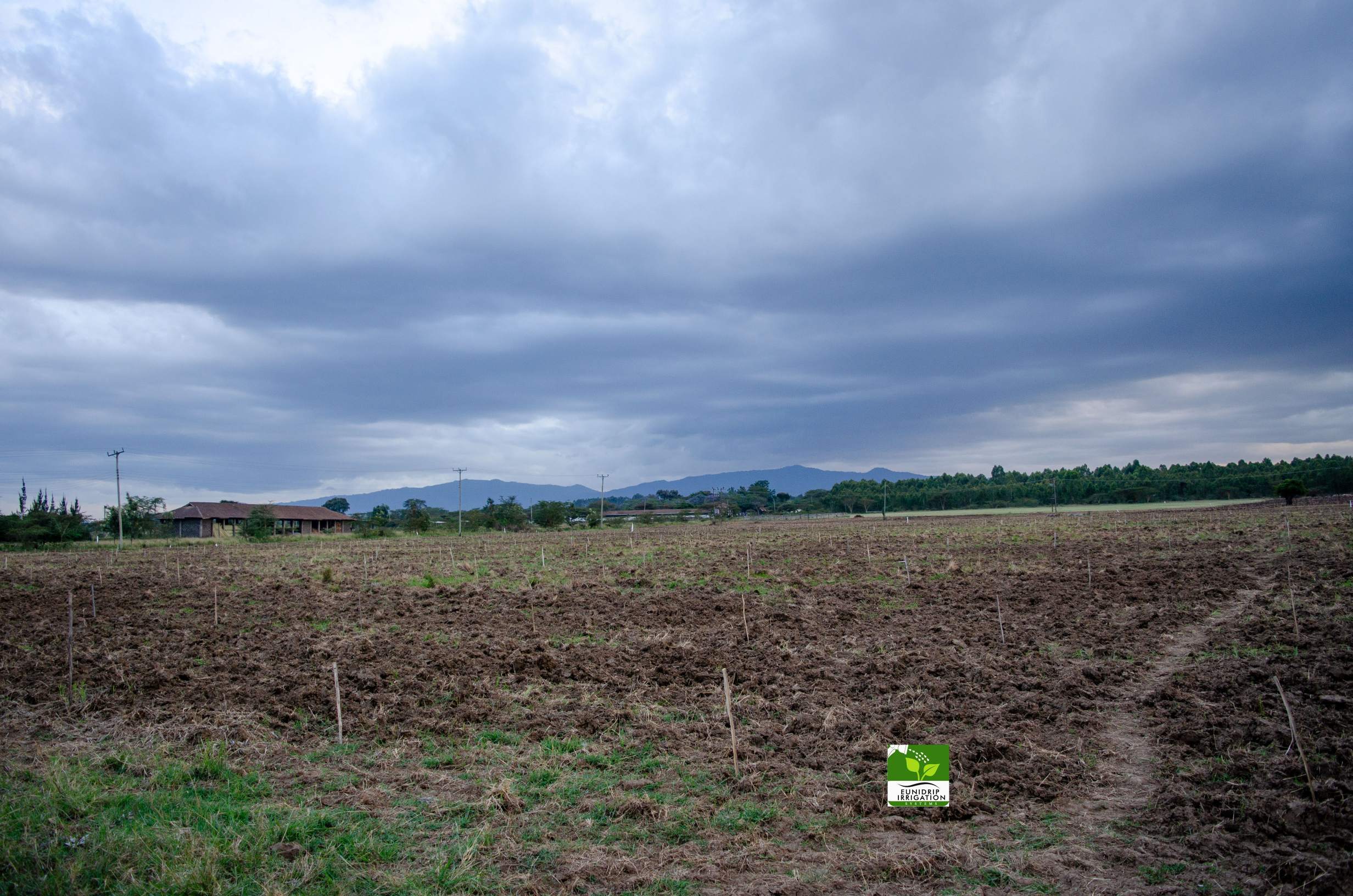
However, an award names a company, and a farm judges a supplier by one project. The pixie oranges irrigation project in Nakuru shows the pattern. A perennial crop, lines run along established rows, and the schedule built around the trees instead of the other way round.
Field crops follow the same logic at a different scale. The maize irrigation system page works through the application rate and the shift length that a cereal block needs. That is where lateral spacing stops being a guess.
Likewise, an overhead layout for a lawn or a sports field is a different buying list again. The sprinkler irrigation service page covers that ground, and the pop-up head in the table above is the device most often bought for it.
Six checks before you buy irrigation technology
First, these six questions are the ones a supplier cannot answer with a brochure. Ask them in this order, because each one narrows the next list.
- Ask for the flow rate per emitter and the operating pressure, not a promise of a strong spray. Then check both against the pump you already have.
- Ask which filter suits your water source. Use a disc filter for algae and a screen for grit, and run a survey first if the water comes from a borehole.
- Ask for the wall thickness and state the unit. Mil and millimetre are not the same purchase.
- Ask for the emitter spacing that matches your row, and confirm it in millimetres before the roll is cut.
- Ask which valve sizes fit the hose on your list, because a 32 mm valve will not seat on a 50 mm line.
- Ask for a matched pump set built on daily volume and total head, not on panel watts alone.
In addition, ask what happens when a part fails. Stock availability is a specification, and a fitting that takes six weeks to import is not a saving.
What the award changes for a farmer
Nevertheless, recognition does not lower a price. It does put a name on record, and it gives a farmer one more way to compare suppliers who claim the same results.
The claims made on the night are the ones that matter on the ground. Mitigating water scarcity through efficient irrigation. Raising productivity on both small and large blocks. Promoting practices that hold as rainfall becomes less predictable.
However, a farmer should treat an award as a starting point. Therefore compare the figures above with what a second supplier offers, and ask each for the same three numbers. Those are emitter flow, filter size and pump duty point.


Irrigation technology price list and stock status
Specifically, prices move and stock status changes without notice, so confirm the current figure on the product page before you plan a budget. The table below covers the irrigation technology most growers ask about first.
| Item | Published price | Stock |
|---|---|---|
| Drip tape, roll. | KSh 8,000. | In stock. |
| Impact rain gun, 35 m radius. | KSh 4,000. | In stock. |
| Gun sprinkler. | KSh 8,500. | In stock. |
| Impulse sprinkler. | KSh 450. | In stock. |
| Micro sprinkler. | KSh 100. | In stock. |
| Pop-up sprinkler. | KSh 1,200. | In stock. |
| Disc or screen filter. | KSh 1,400. | In stock. |
| Screen filter. | KSh 900. | In stock. |
| HDPE irrigation pipe, 100 m roll. | From KSh 1,800. | In stock. |
| PVC pipe. | From KSh 400. | In stock. |
| Rain hose. | From KSh 2,500. | In stock. |
| Automatic fertigation machine. | Quote on request. | Listed. |
| Solar pump set. | Quote on request. | Listed. |
Irrigation technology price list with the published stock status for each line.
Meanwhile the small parts carry the least risk in a quote. A drip valve at KSh 60, a connector at KSh 15 and an elbow at KSh 180 are prices that rarely move. Therefore they are a useful check on whether a supplier is quoting from the same shelf.
Frequently asked questions about irrigation technology
What is the Nakuru Mkulima Digital Awards? It is an annual ceremony honouring farming innovation inside Nakuru County, with sustainability and digital adoption as its stated themes.
What award did Eunidrip Irrigation Systems win? The company received the Best Irrigation Technology Award at the 2024 ceremony, for contributions to efficient and modern irrigation.
Why was Eunidrip recognised at the awards? The recognition covered sustainable farming practice, drip and sprinkler systems, and work that helps farmers improve water efficiency.
Who were the chief guests at the Nakuru ceremony? The keynote came from Dr. Catherine Changwony, who made the case for digital communication reaching the farmer. Hon. Dr. Michael Cheruiyot addressed advances in livestock and fisheries.
How can farmers benefit from these services? Farmers can access irrigation systems, tailored water management designs and installation guidance. The team answers on +254 728 163329, and on the second line +254 724 775516.
Which irrigation technology uses the least water? Band wetting systems lead the list. Drip tape delivers 1.5 to 3 litres per hour per emitter straight to the root zone, while overhead heads lose more to evaporation on a hot and windy day.
Is an award a reason to choose one supplier? No. Treat it as one signal, then compare emitter flow, filter size and pump duty point across two or three quotes before you commit.
Where to ask about a system
Therefore send the block size, the water source and the crop before asking for a price. Those three figures let a designer quote the pump, the filter and the lateral spacing in one pass.
Call +254 728 163329, or the second line +254 724 775516, write to info@eunidripirrigationsystems.com, or reach the team on WhatsApp. More background on the company sits on the about us page.