

Animal Feed Mixer for Sale in Kenya
Start with the ration, not the machine. An animal feed mixer for sale in Kenya has to match the weight you mix each day, the ingredients you use and the power on your farm. This guide covers what the machine does and how horizontal and vertical mixers differ. It also explains what drives the price and the six quality checks to make before you order. The current listing for the machines we supply sits in our online shop.
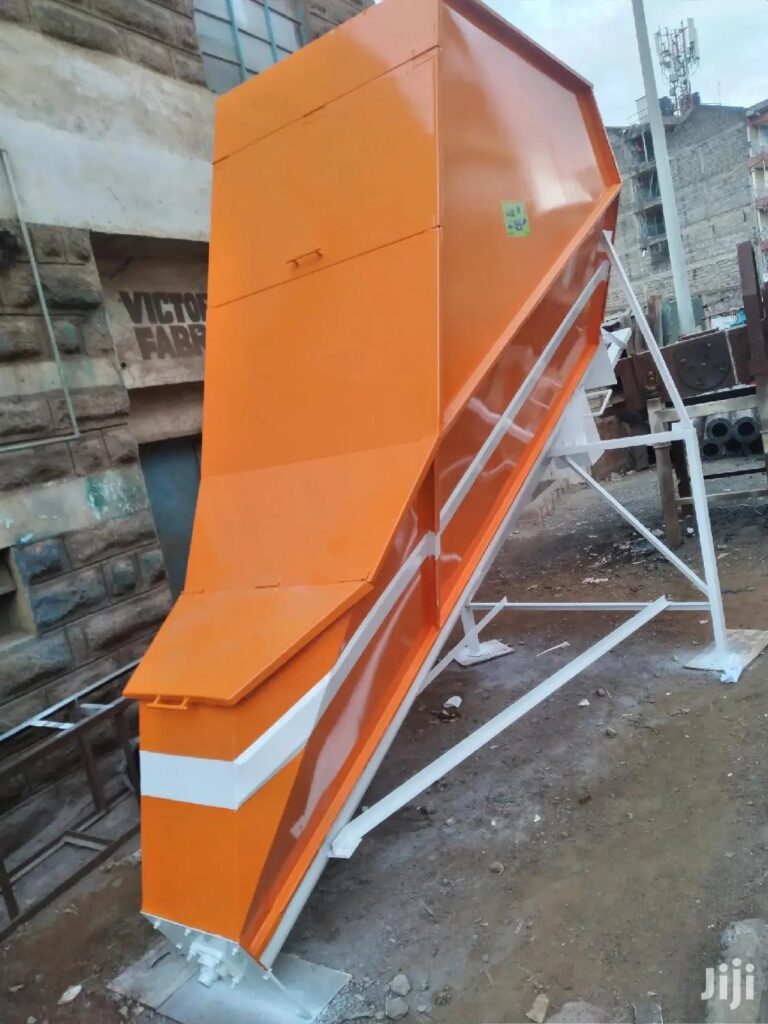
What an Animal Feed Mixer Does
The machine turns separate ingredients into one ration. For example, it blends grain, cake, minerals and premix into a homogenous mix, so every animal receives the same nutrients.
When the mix is uneven, the feed that reaches the trough varies from scoop to scoop. Animals at the far end of the pen then get a different ration from those at the front.
In practice, mixing is the last step in feed preparation, not the first. Fodder is chopped and grain is milled before anything enters the drum. As a result, the particle size that reaches the mixer is already set. Our feed chopper guide covers the chopping side and the hammer mill guide covers grinding. A total mixed ration depends on both steps being done before the mixer runs.
Horizontal or Vertical Animal Feed Mixer?
The two designs move feed in different directions. That difference decides which rations each one handles well.
A horizontal mixer holds a tub with a central shaft and augers that turn against each other. The action folds the feed along the length of the drum. This shreds bales and carries molasses and fats through the batch.
The horizontal units we list are rated for uniform mixes of up to 99.5%. That figure applies to medium to coarse dry material below 15% moisture. They run on motors from 1.5 to 15 kW and hold batches from 500 to 2,000 kg.
In contrast, a vertical mixer lifts feed from the bottom of the tub to the top with one or two screws. It then lets the feed fall back. The cycle is gentler and the frame is smaller, which suits a compact shed and a dry ration. Vertical units reach about 90% uniformity and are not suitable for wet ingredients.
| Feature | Horizontal mixer | Vertical mixer |
|---|---|---|
| Mixing action | Augers fold feed along the drum | Screw lifts feed from bottom to top |
| Uniformity | Up to 99.5% on dry material below 15% moisture | Up to 90% |
| Molasses and fats | Yes, the drum carries wet ingredients | Not suitable for wet ingredients |
| Footprint | Larger floor space | Compact, suits a small shed |
| Batch range | 500 to 2,000 kg | Up to 2,000 kg |
Choose horizontal when molasses, fats or bales are part of the ration. Choose it when the batch is large enough to justify the floor space. Choose vertical when the ration is dry, the shed is tight and the daily volume is modest.
Matching Animal Feed Mixer Capacity to Your Herd
Start with weight, not head count. Weigh the ration you mix in one session, then compare that figure with the batch capacity of the drum. A horizontal unit rated from 500 to 2,000 kg per batch covers a small dairy unit. The same frame size also suits a commercial feed shed that runs the right number of batches.
Hourly output is a second check, not the first. The horizontal mixers in this range are quoted at 250 to 2,000 kg per hour. Larger units are available on order up to 10,000 kg per hour. However, the hourly figure assumes a steady supply of prepared material. A farm that chops and mills in the same shed rarely reaches it.
Fill the drum to its effective volume. An overloaded mixer strains the drive and mixes poorly. A drum that is barely covered also fails to fold the feed. The middle of the rated range is where the machine does its best work.
Powering an Animal Feed Mixer in Kenya
Mixers in this class run on electric motors. Motor sizes run from 1.5 to 15 kW, and the size follows the batch rather than the other way round. Specifically, confirm whether the motor is single-phase or three-phase before you buy. A three-phase unit will not run on a domestic supply without a converter.
Therefore, match the supply to the starting load, not just the running load. A belt drive absorbs some of the shock at start-up and runs quietly. A chain drive is compact and does not slip. Both are common on horizontal mixers, and both need guards that stay in place.
A stationary mixer needs a shed with a level floor and a supply that can carry the motor. If the farm already runs a tractor, a PTO driven feed chopper can prepare fodder off-grid. The mixer itself will usually stay where the power is.
What an Animal Feed Mixer Costs in Kenya
Price follows four things. They are the batch capacity, the motor and drive, the build of the drum and gate, and the extras. A larger drum needs more steel and a bigger motor, so capacity is the first driver. A hydraulic discharge gate and a heavier frame add cost, but they also decide how long the machine lasts.
We do not publish a single figure. Two farms asking for the same capacity can need different motors, discharge heights and site preparation. Send the batch size, the power supply and the ration type, and the shop can quote against those details. The animal feed mixer listing carries the current machines.
Compare quotes on the same basis: batch capacity, motor rating, drum steel, gate type and warranty. Thus, a low price on a thin drum with a small motor is not the same machine. Check the build behind the nominal capacity.
Six Quality Checks Before You Buy an Animal Feed Mixer
These six checks matter. A good mixer holds its uniformity for years. A weak one drifts out of balance after a few seasons. Run them on any machine before money changes hands.
- Frame and base. The base carries the drum, the drive and the load. Look for continuous welds, no cracks at the corners, and feet that sit flat on the floor. A frame that rocks will flex every time the drum is loaded.
- Auger and blades. Next, check the auger flights for wear, bends and cracks. Then look at the gap between the auger edge and the drum shell. That gap grows with use. Once it is wide, the feed slides past instead of folding, so uniformity drops.
- Drum walls. The inner wall should be smooth and inclined. Feed then falls back into the mix instead of sticking to the side. Run a hand over the welds and look for pockets where damp material can collect.
- Discharge gate. The gate must close fully and open smoothly. Dust and grit lodge in the slides, and a gate that does not seal lets feed leak during mixing. Ask how the gate is operated and check that the control moves freely.
- Drive and guards. A gearbox, chain or belt transfers power to the auger. Check the oil level in a gearbox, the tension and alignment of a chain, and the condition of a belt. Every moving part should have a guard that can be removed only with a tool.
- Motor rating. Confirm the motor plate matches the quoted output. A machine advertised at a high hourly rate with an undersized motor will run hot and slow. The rating should be stated in kW and matched to the batch size you intend to run.
A supplier who can answer these six questions in detail can usually support the machine after the sale.
Mixing Molasses and Wet Ingredients
Molasses and fats expose a weak mixer. A horizontal drum with counter-rotating augers carries a sticky ingredient through the batch. It does not let the ingredient ball up in one corner. A vertical mixer is not suitable for wet ingredients. The screw lifts material from the bottom, and a wet batch can bridge above it.
The 99.5% uniformity figure applies to dry material below 15% moisture, so treat a molasses ration as a different job. Similarly, add the liquid gradually while the augers turn, and do not exceed the moisture level the maker allows. If the ration is consistently wet, specify a horizontal machine from the start. Do not try to make a vertical one cope.
Maintaining an Animal Feed Mixer
A mixer wears in predictable places. Maintenance is mostly a routine rather than a repair. The first rule is never to leave a loaded drum standing overnight. Feed left in the machine sets around the auger and the gate. The next start then pulls against a solid load.
Also clean the drum and the gate after each session. Dirt and grease on the drive act as an abrasive. A gate that cannot close because of lodged material leaks feed and loses its seal. Grease the points the maker lists, usually the drive bearings and the gate linkages.
Once a week, check the auger clearance, the chain tension or belt condition, and the gate travel. After every start, confirm the auger turns in the correct direction before loading. A mixer run in reverse will not mix and can damage the flights. Keep a log of greasing and part changes, because the pattern of wear tells you when a replacement is due.
Frequently Asked Questions About Animal Feed Mixers
How much does an animal feed mixer cost in Kenya? The price depends on batch capacity, motor and drive, drum build and the discharge gate. There is no single figure. Send the shop your batch size and power supply for a quote against your own ration.
What size of animal feed mixer do I need? Weigh the largest batch you mix in one session and compare it with the drum’s rated capacity. Use hourly output as a second check. Plan to run the drum near the middle of its range rather than at the top.
Can a vertical mixer handle molasses? No. Vertical mixers are not suitable for wet ingredients. Choose a horizontal mixer for molasses, fats and any ration that carries liquid.
Do I need a chaff cutter and a hammer mill as well? For a mixed ration, yes. Fodder is chopped and grain is milled before it reaches the drum. The mixer only blends what it is given. Our feed chopper and hammer mill guides cover those two steps.
How often should an animal feed mixer be serviced? Clean the drum and gate after every session. Grease the listed points on the maker’s schedule, and check the auger clearance, drive and gate weekly. A loaded drum should never stand overnight.
Where to Buy an Animal Feed Mixer in Kenya
The mixers sit in our online shop. You will find them in the farm machinery category. The animal feed mixer for sale in Kenya listing shows the current machines. The shop can confirm what is in stock before you travel.
Finally, send the batch size, the ration type and the power supply through the contact page, or call +254 728 163329. The team works from George Morara Road in Nakuru. They can advise on the drum size and motor that fit your feed.
If the ration also needs a chaff cutter, the chaff cutter for sale in Kenya is the companion machine. Buy the preparation equipment first, then size the mixer to the weight that reaches it.