

Table of Contents
Large scale ploughing contractors prepare broad farm blocks with the right tractor, plough, depth and field sequence. Our large scale ploughing contractors begin with soil, moisture, acreage, access and the crop plan before scheduling a pass. That preparation protects structure, limits compaction and gives the owner a measurable result.
Large-scale work is not simply a small job repeated across a bigger field. Travel time, turning space, fuel, soil variation and weather can change the practical output. This guide explains seven checks for comparing a contractor and planning the next irrigation or planting stage.
For a large block, the key question is how many hectares the plough can finish to an agreed depth within the workable weather window. Therefore, implement width, travel speed, turning losses and inspection points matter as much as the tractor’s nameplate power.
1. Large scale ploughing contractors: define the scope
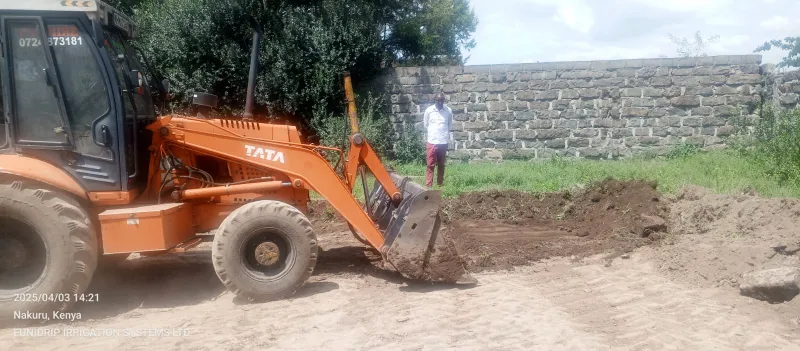
Record the workable acreage, crop, planting date, vegetation, residue, soil concerns, slope and access. State the target depth, number of passes, acceptable finish and whether clearing, ripping, harrowing, grading or ridging is included. Therefore, the owner and contractor price the same measurable operation. In practice, the scope should also identify who supplies fuel, survey control and residue handling.
2. Large scale ploughing contractors: inspect soil and moisture
Our large scale ploughing contractors inspect texture, compaction, hardpans, stones, wet pockets and surface drainage. Ploughing saturated soil can smear the profile and create a hard layer. Ploughing very dry soil can produce large clods and extra finishing passes. Consequently, the quote should state the workable moisture window and the weather-delay procedure. As a result, a rain pause protects the field rather than creating a dispute.
At the test strip, lift a slice from the intended working depth. If it smears into a shiny surface or the tractor leaves deep ruts, pause that block and check it again later. If the slice breaks into hard lumps, discuss whether a different implement or timing will give the seedbed the crop needs. The FAO’s tillage working paper examines how moisture, ploughing depth and implement sequence affect soil condition. Site conditions determine the decision; that research does not supply one moisture threshold for every Kenyan soil.
3. Large scale ploughing contractors: select the plough and tractor
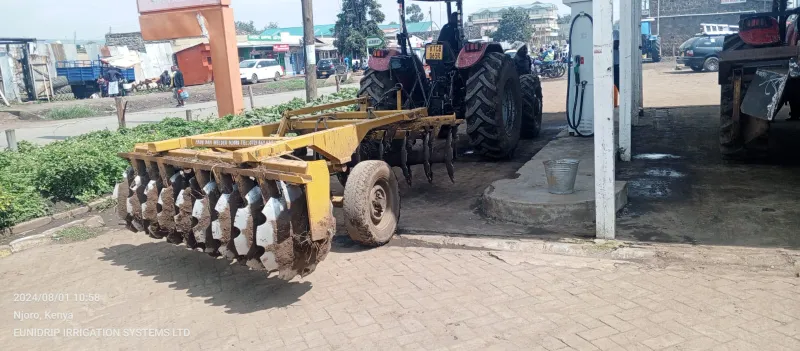
Choose a mouldboard, disc, chisel or subsoiler according to depth, residue and soil resistance. Check tractor horsepower, hitch, ballast, tyre width and turning space. Our Zoomlion tractor can be considered when its power and attachment match the approved work plan. In contrast, an oversized combination can increase wheel traffic and compaction.
A mouldboard turns the furrow and buries more surface material. A disc plough can work where residue or difficult ground affects a mouldboard, but its finish still needs a field trial. A chisel loosens soil with less inversion. A subsoiler is a separate decision for a confirmed deeper restriction. The FAO’s account of commercial ploughing discusses disc ploughing and its soil effects. Specify the implement in the contract; “tractor ploughing” alone cannot define the result.
4. Plan the large scale ploughing sequence
Clear wire, stones and stumps before the plough enters. Work headlands deliberately and keep traffic on planned lanes. Start at the agreed depth, inspect a test strip, then adjust the implement before covering the whole block. Meanwhile, record machine hours, fuel, working width, completed acreage and any wet area left for later. The test strip also gives the owner a physical reference for the finish.
For a commercial block, divide the work into practical zones rather than assuming the entire field has one soil condition. A heavier patch may need a different speed or depth. A wet corner may need drainage work before the plough returns. This staged approach makes the schedule easier to adjust without losing the original quality standard.
Estimate time from effective field capacity: width in metres × speed in kilometres per hour × field efficiency ÷ 10 gives hectares per hour. For illustration, a 2.4 m implement at 6 km/h and 75% field efficiency covers about 1.08 ha/h. A 100 ha block would then require about 93 working hours for one pass, before weather stoppages, transport or repairs. These are planning inputs, not a promised machine output. Measure actual progress on the first block and update the schedule.
5. Large scale ploughing contractors: coordinate irrigation and drainage
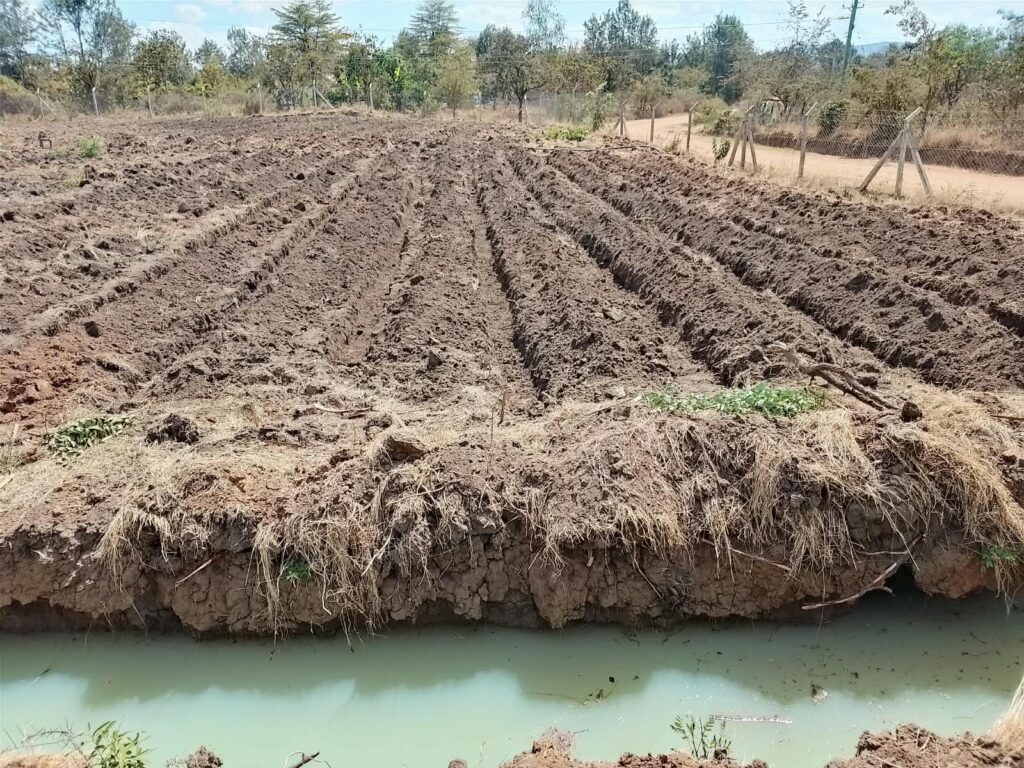
Mark reservoirs, mainlines, submains, valves, drains and access routes before final grading. Our irrigation solutions team can coordinate water routes with the field plan. Protect planned irrigation pipes from heavy traffic and leave room for flushing and maintenance. Mark the locations of existing buried lines on the operator’s map before the first furrow.
6. Large scale ploughing contractors: protect soil and manage residues
Retain suitable residues where they protect soil and add organic matter, but remove material that blocks the plough or irrigation. Avoid repeated turns on the same wet headland. Keep stable vegetation near waterways and do not push soil into drains. As a result, the finished block is easier to grade, plant and irrigate. In addition, mark excluded areas on the handover plan.
7. Inspect and hand over the ploughed field
Walk the finished acreage with the owner. Check depth, furrow or inversion quality, clods, stones, headlands, drainage and access. Record completed acreage, passes, implement settings, fuel and outstanding work. In addition, photograph the test strip so future harrowing or bed forming follows the approved finish.
Sample the depth in several places across each zone rather than at the field entrance alone. Next, compare the first, middle and last furrows for missed strips and uneven inversion. Note any unworked wet patches separately from completed acreage. Consequently, the signed handover shows what was actually ploughed and what still needs a later pass.
Large scale ploughing quotation checklist
Ask large scale ploughing contractors to list acreage, plough type, depth, pass count, production assumptions, operator, fuel, mobilisation, weather terms, residue handling and handover. A clear scope prevents a low daily rate from hiding extra passes or transport.
For a large project, ask how the quoted work hours were calculated. State whether headland turns, refuelling, implement adjustment and movement between separated blocks count as paid time. Agree who measures completed hectares and how a rejected test strip will be corrected. Those terms make the quote specific to ploughing at scale.
| Requirement | check |
|---|---|
| Implement and depth | Plough type, working width and measured depth from the test strip. |
| Output plan | Assumed speed, field efficiency, hectares per hour and weather allowance. |
| Field protection | Wet areas, headland traffic and buried lines marked on the operator map. |
| Handover | Sampled furrows, completed hectares and unworked patches recorded. |
A measurable scope makes large scale ploughing contractors easier to compare.
Eunidrip equipment for the project
Select equipment after the implement and field duty are agreed. Our tractor and irrigation products support different stages of the work.
| Product | check |
|---|---|
| Zoomlion tractor | Confirm the selected model’s horsepower, hitch, ballast and compatibility with the specified plough. |
| Irrigation pipes | Select diameter and pressure rating from the later irrigation design; mark routes before heavy field traffic. |
Check the chosen model and pipe specification against the project plan.
Frequently asked questions
What does large scale ploughing include? It may include primary tillage, residue incorporation, depth control and field finishing, depending on the written scope.
How deep should a contractor plough? Depth depends on crop, soil, residue and compaction. Confirm it from the field inspection rather than using one fixed depth.
Can ploughing damage soil? Yes. Wet traffic, excessive depth and repeated passes can compact or smear soil.
Should irrigation routes be marked first? Yes. Mark routes and protect components before heavy equipment enters the block.
How do I compare contractor quotations? Compare acreage, plough, depth, passes, fuel, mobilisation, exclusions and handover—not only a daily rate.
Share the farm location, acreage, crop, soil condition, access and target date with our team. Our large scale ploughing contractors can turn those details into a measured field plan for planting and irrigation.