

Hammer Mill for Sale in Kenya
Table of Contents
A hammer mill for sale in Kenya turns grain and oil cake into meal for livestock feed. Unlike a roller mill, it grinds by impact, so it handles mixed material and small batches well. This page explains how the machine works, the three ways to drive it, and what to check before you buy one.
What a Hammer Mill Does
The mill reduces grain to a meal of a chosen fineness. Feed mills use it on maize, sorghum, millet, wheat and oil cake. A farmer may use it for one ingredient, while a feed mixer uses it for a whole ration.
Because the machine grinds by impact rather than by crushing between rollers, it tolerates a mixed load. For example, it will take whole maize and a softer cake in the same batch. That flexibility is why feed mills keep a hammer mill on site.
How the Mill Turns Grain into Meal
Grain enters through a hopper and falls into a grinding chamber. Inside, steel hammers swing on a spinning rotor and strike the grain. The broken pieces stay in the chamber until they are small enough to pass through a screen.
Air moving through the mill carries the meal out. It then drops into a cyclone, a bag, or a collection bin. Therefore the screen and the airflow together decide how fine the final meal will be. The hammer mill article describes the same rotor-and-screen principle in more detail.
Three Drive Types: Electric, Diesel and PTO
There are three common ways to power a mill, and the choice is mostly about where it stands. An electric motor is quiet and needs little attention, but it depends on a steady supply. A diesel engine works off-grid, yet it costs more to service. A PTO mill runs from a tractor, so it carries no engine of its own.
| Drive | Power source | Best for | Watch for |
|---|---|---|---|
| Electric motor | Single or three-phase mains | A fixed shed with a steady supply | Motor size must match the quoted output |
| Diesel engine | Its own fuel tank | Sites with no reliable grid power | Higher service cost and fuel storage |
| PTO | Tractor power take-off | A farm that already runs a tractor | Mill output cannot exceed the tractor’s PTO rating |
Check the drive before you compare anything else. Then confirm the mill’s rated output was measured with that same drive, because a small motor will not reach a large machine’s quoted output.
What Drives the Price
Price follows four things, not one. The first is the drive, because an engine costs more than a motor of the same output. The second is the size of the grinding chamber and the rotor. The third is the screen and the build of the hammers. The fourth is what comes with the unit, such as a cyclone, a stand or a dust filter.
Ask for those four details on any quote. A cheap mill with a thin rotor and one screen will cost more over five years than a heavier unit that came with spare screens.
Screen Size and Feed Fineness
The screen is the part that sets fineness. A small hole gives a fine meal, while a large hole gives a coarse grind. However, a finer screen also slows the mill down, because material leaves the chamber more slowly.
For poultry mash, most mills run a fine screen. For cattle feed, a coarser screen is enough. Specifically, keep two screens and change them when the ration changes, rather than forcing one screen to do both jobs.
Hammer Mill or Chaff Cutter With a Mill?
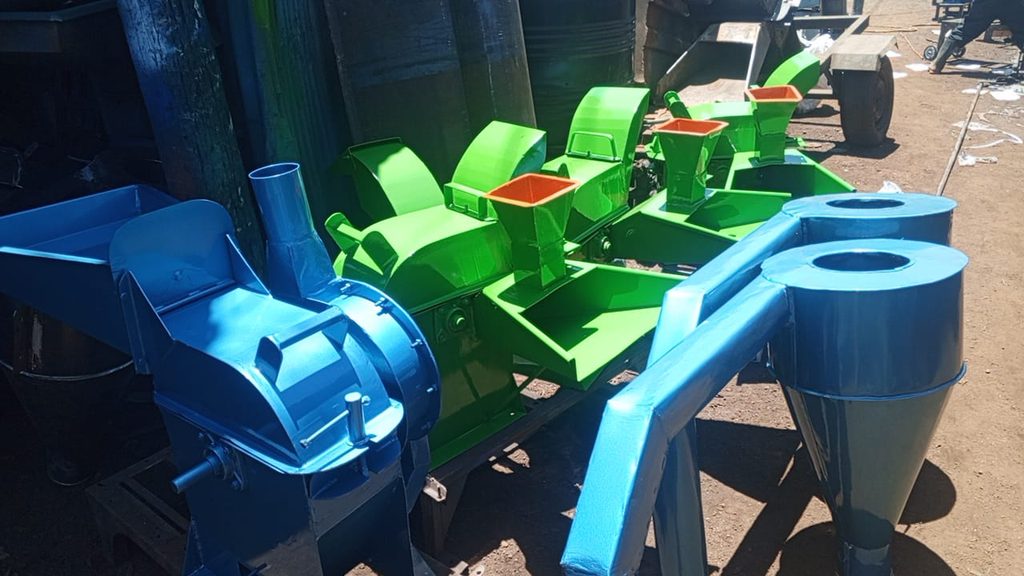
Some machines combine the two jobs. Our chaff cutters for sale in Eldoret include a chaff cutter cum grain grinder. It uses hammers to mill grain and blades to chop fodder.
One limit matters here. On that combined machine, the two operations cannot run at the same time. Therefore a farm that mills daily should buy a separate mill, while a small unit that mills twice a week can share one frame.
Match Capacity to Your Feed Volume
Start from the weight you grind in a week. A dairy unit may mill a few bags, while a feed mixer may run for hours each day. Match the mill to the busy week, not the quiet one.
Then add a margin for wear. A worn hammer set slows the mill, so a unit that is only just big enough becomes too small within a season. A little headroom costs less than a second machine.
Dust, Noise and Safety Guards
Grinding makes dust and noise, so the site matters. Place the mill where air moves, and wear a mask and eye protection. Keep a fire extinguisher nearby, because grain dust can ignite.
Check the guards before you buy. The belt, pulley and rotor shaft should be covered, and the hopper should stop a hand from reaching the hammers. Also confirm the machine has a clear way to cut power before you clear a blockage. Then practise that step once, while the mill is empty.
Hammer Mill Maintenance Routine
Maintenance is simple if it is regular. After each session, empty the chamber and brush out the screen. Then check the hammers for chips and cracks, and turn or replace them as a balanced set.
Grease the bearings on the schedule the maker gives you. Finally, check the belt tension every week, and listen for a new rattle. A loose hammer makes a noise before it breaks, so act on the sound.
Where to Buy a Hammer Mill in Kenya
Eunidrip supplies farm machinery from our Nakuru base. For a mill enquiry, tell us the grain, the fineness you want and your power source. We will then quote a hammer mill or the combined chaff cutter and grain grinder, whichever fits your feed volume.
Call +254 728 163329, or send the details through our contact page. You can also read how to make agricultural orders online before you start, and check the chaff cutter listing for the machine that shares parts with the grinder. Our chaff cutter operations guide adds the pricing table and the blade details, and the chaff cutter category collects the related pages.
Frequently Asked Questions About Hammer Mills
What does a hammer mill do? It grinds grain and cake into meal by impact. Hammers on a rotor strike the material until it passes through a screen.
Can one mill grind both maize and oil cake? Yes. The mill handles mixed loads, though very oily cake should be blended with grain so it does not clog the screen.
How do I change the fineness? Change the screen. A smaller hole gives finer meal and a slower throughput, so keep a spare screen for each ration.
Do I need a cyclone? It helps with dust and keeps the meal in one place. In a small shed, a bag or bin will also work.
How often are hammers replaced? It depends on the material and the hours. Inspect them after each session, and replace them as a full set so the rotor stays balanced.
Can a chaff cutter mill grain? Only a combined unit can. On that machine, the mill and the chopper run one at a time, not together.