

Table of Contents
A locally made feed chopper is judged at the workshop, not in the brochure. The frame is cut and welded from steel, the hopper and chute are folded, and an engine is bolted on. Nothing about that process is hidden, which is both the advantage and the risk. You can inspect every weld before you pay, and you can also see a bad one.
This guide covers the seven checks that decide whether a locally made feed chopper is worth the money, whether it was welded in a jua kali yard or in a named workshop. They are frame steel, blades, shaft and bearings, feed rollers, engine coupling, guarding, and the workshop behind the machine. Price comes last, because a thin frame costs more in repairs than a heavy one costs at the start.
- Check 1 – the frame steel and the welds
- Check 2 – blade grade and balance
- Check 3 – shaft runout and bearing fit
- Check 4 – feed roller grip and cut length
- Check 5 – engine size and pulley ratio
- Check 6 – guarding around the flywheel and belt
- Check 7 – the workshop that will repair it
What a Locally Made Feed Chopper Really Is
Most choppers sold in Kenya are a mix rather than one thing. The frame, hopper, chute and guard are fabricated in a workshop. The engine, and often the blade set, arrive in a crate and are fitted to that frame. In practice, the assembly is the local part, and the moving parts are not.
That mix is not a defect. It is the reason a local machine can be back at work in a week. The frame can be re-welded, and the engine is a standard unit. Therefore the useful question is not whether a machine is local. It is which parts were made where, and whether the workshop stands behind the assembly.
What a Jua Kali Workshop Builds Well
Jua kali is the name Kenya gives its informal fabrication sector, and most chopper workshops belong to it. What these workshops do well is steel work: cut plate, folded hoppers, welded frames and guards. A jua kali workshop can copy a frame quickly, and repair one faster than an import chain can ship a spare.
Where they cut corners is in the parts they buy. Blade steel, bearing grade and pulley size are chosen on price, because every workshop buys from the same market. Therefore ask a jua kali workshop the same questions you would ask an importer, and judge the answers rather than the size of the yard.
What the Seven Checks Cover
| Check | What to inspect | What a bad one looks like |
|---|---|---|
| 1 Frame | Steel gauge, weld penetration | Thin tube, tack welds, flex under load |
| 2 Blades | Steel grade, hardening, balance | Blades that fold, flywheel that vibrates |
| 3 Shaft | Runout, bearing fit, grease points | Play in the shaft, sealed bearings in dust |
| 4 Feed rollers | Clearance, spring tension, gearing | Fodder dragged in unevenly or jammed |
| 5 Engine | Power, pulley sizes, blade speed | Engine that stalls on wet fodder |
| 6 Guarding | Flywheel cover, chute depth, discharge | Open flywheel, short chute |
| 7 Workshop | Years trading, spares, warranty | No address, no spare blades, no paper |
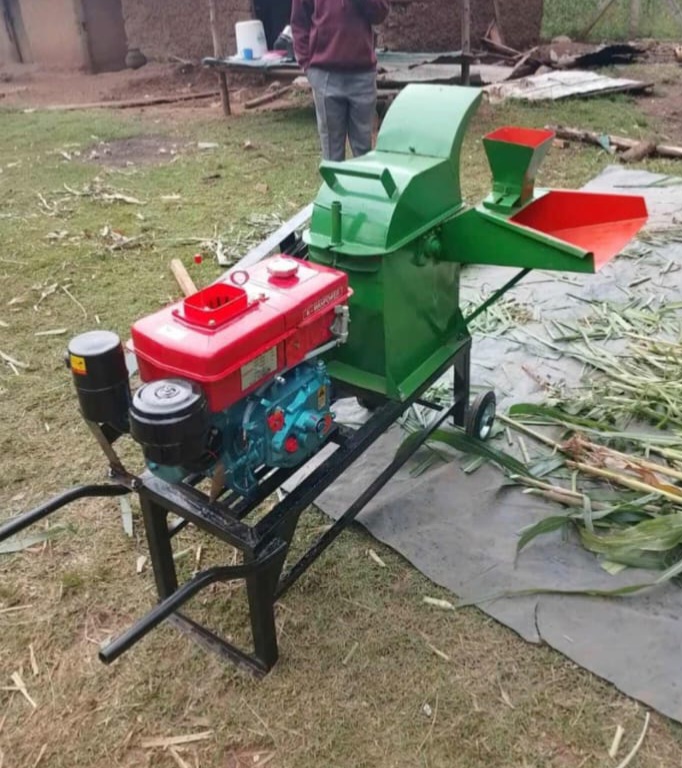
Check 1 – The Frame of a Locally Made Feed Chopper
The frame of a locally made feed chopper carries everything else, so its steel decides how long the rest lasts. Ask for the gauge of the angle iron or the square tube. A heavier section resists the vibration that shakes bearings loose, and vibration is what kills a cheap build.
Then look at the welds. A sound weld runs along the joint with even ripples and full penetration. A weak one is a row of tacks with slag trapped between them. Therefore run a hand along every joint and look for gaps, undercut and spatter. Then stand on the frame if the seller allows it. A frame that flexes under a person will flex under a flywheel.
Paint hides most of this. Ask to see a unit before primer, or look at an unpainted frame in the workshop. A workshop that will not show you one is telling you something.
Check 2 – Blades, Steel and Balance
Blades do the cutting, and they are the part most often made badly. A blade cut from mild steel folds at the first stone or length of wire. A blade hardened too far chips along the edge instead. The correct steel sits between those two, and the workshop should be able to name the grade it uses. Because most jua kali workshops buy blade steel from the same market, the grade is worth asking about by name.
Balance matters as much as steel. A flywheel carrying three blades of different weight will vibrate at speed. That vibration travels into the bearings and the frame. Therefore ask how a set is balanced after sharpening. Then ask whether blades are sold as a matched set, not one at a time.
Also ask who sharpens them and on what. A blade ground by eye loses its angle and cuts unevenly. A blade ground on a jig keeps the angle the manufacturer intended.
Check 3 – Shaft, Bearings and Alignment
The shaft is where cheap builds fail first. Ask whether it is turned from solid bar or welded up from pipe. A welded shaft can run out of true. A shaft that wobbles destroys its own bearings in weeks rather than seasons.
Bearings should be a standard size that a local supplier stocks. Grease nipples are a good sign, because they show the bearing is meant to be serviced. Sealed bearings are cheaper to fit and harder to keep alive in chaff dust. Therefore ask which type is fitted, and why.
Finally, turn the machine by hand before you buy. Listen for a rumble, feel for a tight spot, and watch the pulley for wobble. For maintenance intervals and drive types, the chaff cutter operations in Kenya guide covers the day-to-day side.
Check 4 – Feed Rollers and Cut Length
A chopper that will not feed evenly produces a mix of dust and long stalks. The feed roller pulls the fodder in, and its clearance plus spring tension decide how hard it grips. Ask whether the roller is toothed or smooth, and whether the tension can be adjusted as it wears.
Cut length comes from the gearing and the number of blades. A locally made feed chopper that offers one fixed cut length limits you to one class of fodder. Therefore ask for the blade count, the roller speed and the cut lengths the machine can hold. Get all three in writing.
Then test it with wet material, not dry. Wet Napier is the honest test of feed roller grip, and most demonstrations use dry stover because it is easier.
Check 5 – Engine and Drive
The engine is usually the imported part, and it is usually the most reliable one. The coupling around it is where local builds vary. A belt drive with the wrong pulley ratio turns the flywheel too slowly. A slow flywheel smears the fodder instead of cutting it.
Ask for the engine power, the pulley diameters and the blade speed at the flywheel. Then compare those figures with the output the seller claims. If the numbers do not agree, the output claim is the one to doubt.
Also ask whether the mounting plate can take a diesel engine later. If you already run a tractor, the PTO driven feed chopper in Kenya article covers the alternative to buying an engine at all.
Check 6 – Guarding and the Feed Chute
A chopper is a flywheel with knives on it, and the guard is the only thing keeping hands out of it. The Health and Safety Executive is blunt on this point. Do not remove or defeat guards, and do not run the machine with a guard taken off. Replace every guard before a test run.
Look at three places. First the flywheel cover, which should be bolted down rather than hinged open for convenience. Second the feed chute, which should be deep enough that a hand cannot reach the blades. Third the discharge, which should throw the chop clear of the operator’s legs.
Then check the belt and pulley guard, and ask whether it is included in the quoted price or sold as an extra. A guard offered as an optional extra tells you how the workshop thinks about the machine.
Check 7 – The Workshop Behind the Machine
The last check is the workshop, because a locally made feed chopper is only as good as the person who will repair it. Ask how long the workshop has traded and where it is based. Visit it if you can, and look at what is on the floor. A jua kali outfit with a fixed address and a shelf of spares beats a bigger name with neither.
Ask the price of a spare blade set, a bearing and a belt, and ask how long each takes to arrive. Then ask which of the three are on the shelf today. A workshop that stocks nothing will order your repair only after the machine has stopped. The wait then starts on the day you need it.
Finally, ask for the warranty in writing, with the period, what it covers, and where the machine must go for repair. For the prices other machines carry in this market, compare against the chaff cutter machine price in Kenya table before you agree a figure.
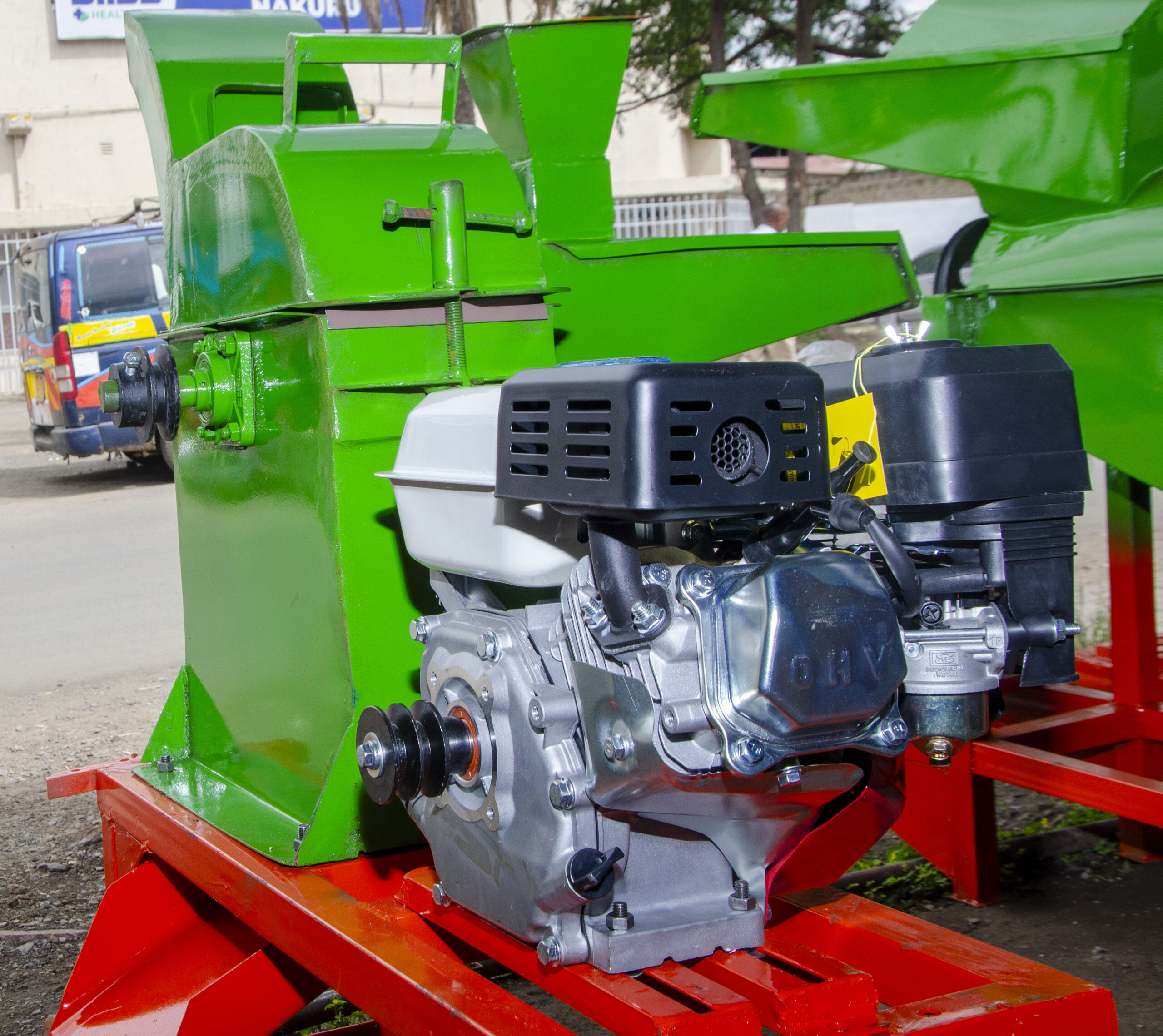
Locally Made Feed Chopper vs a Fully Imported One
The comparison only works on four numbers: purchase price, repair time, finish and spare parts. Everything else is opinion.
A full import wins on finish and consistency. Panels fit, paint lasts, and every unit is identical to the next. A local build wins on repair time. The frame can be re-welded, and the engine is a standard unit that any mechanic has seen before.
Cost is closer than it looks. A local machine carries no freight, no duty and no clearing, but it carries the workshop’s margin on labour. An imported machine carries all three of those costs, plus a longer wait when a part fails.
Choose local when the machine will run hard, break, and need to be back at work quickly. Choose the import when the machine will run lightly and stay clean, and when a consistent finish matters more than a fast repair.
Our feed chopper for sale in Kenya guide lists the models we hold. On the shop side, the chaff cutter for sale in Kenya listing carries the current specifications.
Frequently Asked Questions About Locally Made Feed Choppers
Is a locally made feed chopper cheaper than an imported one? Usually at the point of sale, because there is no freight, duty or clearing to pay. The gap narrows over time, when repair time and the cost of blades matter more than the sticker price.
Are the parts local or imported? Mostly a mix. The frame, hopper and guard are fabricated locally, while the engine and often the blade set are imported. Ask which is which before you pay, and get the answer in writing.
Is a jua kali made feed chopper as good as a branded one? It can be. The frame and guards are the easy part, and most workshops weld them well. The difference sits in blade steel, bearing grade and pulley ratio, so ask for those three in writing.
Can a local workshop match the cut quality of an imported machine? Yes, when the blades are hardened, balanced and sharpened on a jig. Cut quality comes from blade condition and flywheel speed, not from where the frame was welded.
How long should a locally made feed chopper last? With a heavy frame, greased bearings and regular sharpening, a decade is reasonable. With a light frame and sealed bearings, expect to replace bearings within the first few seasons.
What should I ask for in writing? Frame gauge, blade grade and count, cut lengths, engine power, pulley sizes and the warranty period. A seller who will not put those six lines on paper is selling a machine you cannot compare.
If you are buying a locally made feed chopper, send us the frame and blade specifications before you pay a deposit. We supply choppers in Kenya, and we will tell you which of the seven checks matter most for the fodder you cut.