

Chaff Cutter Machine Price in Kenya
Table of Contents
The chaff cutter machine price in Kenya starts at about KSh 38,000 for a petrol feed chopper and reaches KSh 175,000 for a diesel silage chopper with a blower and an 18 hp engine. Those are the figures the Eunidrip catalogue publishes for ten models. The machine currently listed online sells at KSh 42,000, down from a regular KSh 45,000. This guide breaks the range down by model and power source. In addition, it shows which costs sit outside the sticker price, so that one quote can be compared fairly with another.
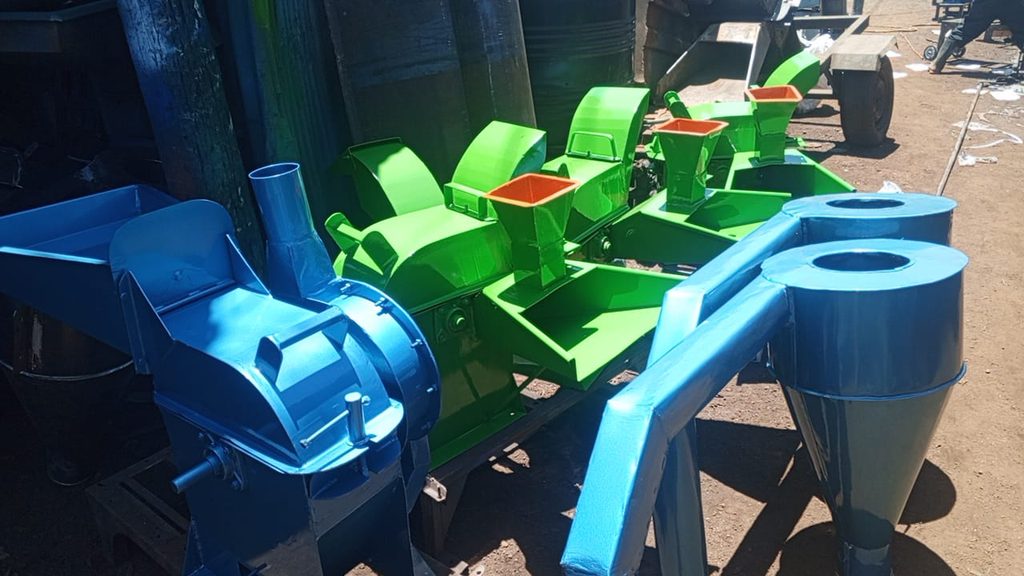
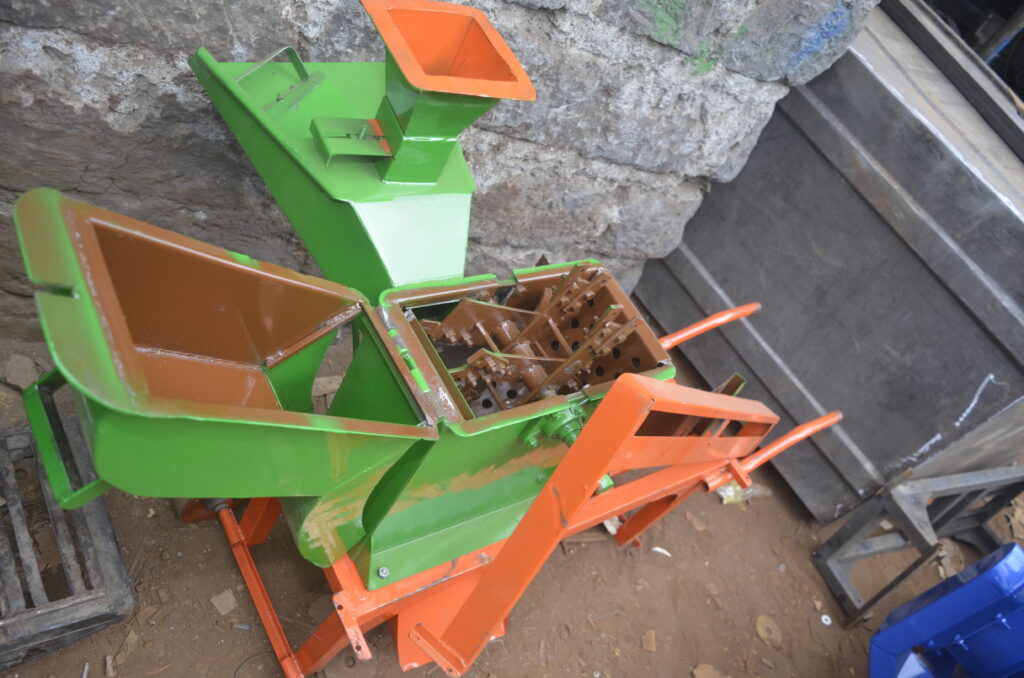
What the Chaff Cutter Machine Price in Kenya Covers
A quote for a chaff cutter is the price of a set of parts, not a single object. The frame carries the load. The housing holds the cutting blades, and it also protects the operator from them. Two or three feed rollers pull the fodder into the blades. The drive turns the shaft, and the discharge throws the cut material clear of the machine.
Therefore, the parts list explains most of the gap between one quote and another. A machine with a heavier frame and a geared drive will outlast a light unit with a belt alone. In practice, the difference shows in the second and third season, not on the first day. Ask which parts change hands at that price before you compare two figures.
The chaff cutter machine price in Kenya usually covers the assembled unit and its blades. It rarely covers transport to your farm, a spare blade set or the fuel the engine will burn. Those items are real costs. Consequently, a cheap quote in town can end up more expensive than a higher quote delivered to the gate.
Chaff Cutter Machine Price in Kenya by Model
The table below is the current catalogue, taken from the chaff cutter listing on 2026-10-28. Each row is a model the supplier sells, with its drive, its rated power and its published price.
| Model | Published price (KSh) | Drive | Power |
|---|---|---|---|
| Petrol feed chopper | 38,000 | Petrol engine | 7.5 hp |
| Electric feed chopper (standard) | 40,000 | Electric motor | 3 hp |
| Petrol chaff cutter | 45,000 | Petrol engine | 7.5 hp |
| Electric feed chopper (high capacity) | 45,000 | Electric motor | 5 hp |
| High-speed feed chopper (petrol) | 45,000 | Petrol engine | 7.5 hp |
| Electric chaff cutter (standard) | 46,000 | Electric motor | 2 hp |
| High-speed feed chopper (electric) | 48,000 | Electric motor | 3 hp |
| Electric chaff cutter (heavy duty) | 49,000 | Electric motor | 3 hp |
| Diesel feed chopper (heavy duty) | 65,000 | Diesel engine | 7.5 hp |
| Diesel silage chopper (professional) | 175,000 | Diesel engine | 18 hp |
For example, the bottom of the range buys a petrol unit that cuts green fodder and silage for a small herd. It needs no mains supply, so it suits a farm without reliable power. The top of the range buys an 18 hp diesel machine with a blower, built for silage work at scale.
Notice how tightly the middle of the table is packed. Seven of the ten models sit between KSh 40,000 and KSh 49,000. That band is where the chaff cutter machine price in Kenya is hardest to judge, because the figures look alike and the machines are not. A 2 hp electric unit lists at KSh 46,000, and a 7.5 hp petrol unit at KSh 45,000. Meanwhile, their running costs and their daily output do not match at all.
How the Drive Changes the Chaff Cutter Machine Price in Kenya
The drive is the first thing to settle, because it decides both the price and the way you work. An electric motor is the cheapest per hour where the grid is steady. A petrol engine costs more to run, yet it works anywhere. A diesel engine carries the heaviest duty. A tractor-driven unit uses the tractor you already own.
Electric. Models from 2 hp to 5 hp cover most farm work. They run quietly and need little service. However, they need a supply that can start the motor, and a long cable to the feed shed. Confirm the supply before you buy, because a motor that trips is a wasted purchase.
Petrol. A 7.5 hp engine is the common choice. It is portable, so it moves between sheds and fields. As a result, it suits a farm that cuts fodder in more than one place. Fuel and oil add a running cost the electric units do not carry.
Diesel. Diesel models in the catalogue run from KSh 65,000 to KSh 175,000. The upper figure buys an 18 hp machine with a blower, and blowers matter in silage work. They throw the cut crop into a heap or a trailer without a second person.
Tractor-driven. A PTO chaff cutter uses the tractor shaft, so it carries no engine cost of its own. It only makes sense where a tractor is already on the farm. Otherwise, the tractor becomes part of the price. Our guide to the PTO driven feed chopper covers that trade-off in detail.
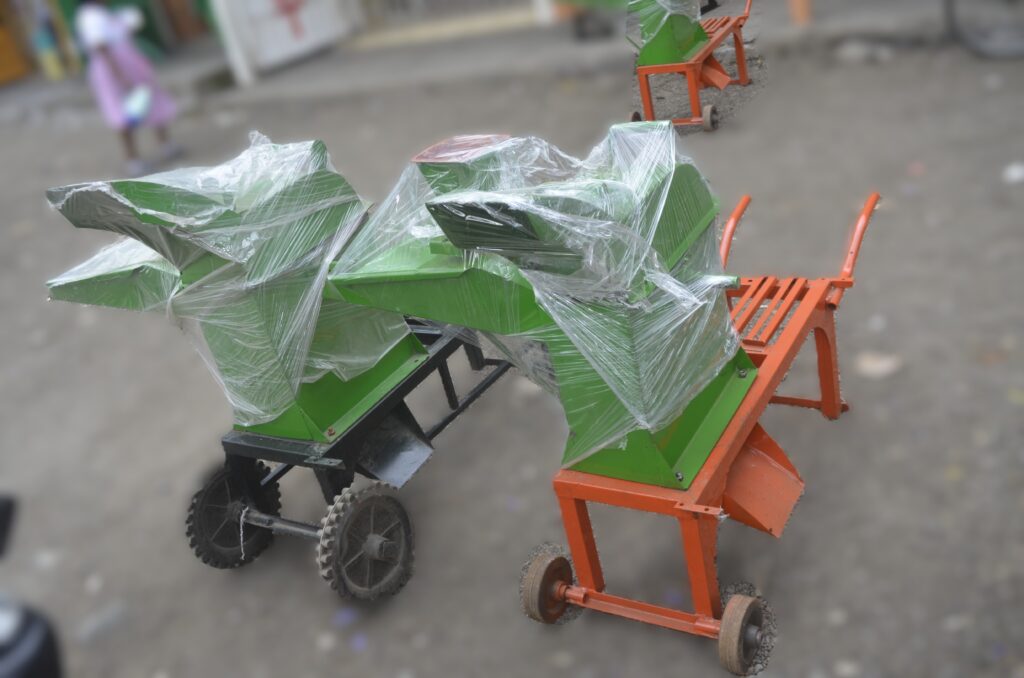
What Moves the Chaff Cutter Machine Price in Kenya
Five things move the figure between one quotation and the next. The power rating is the first: a bigger motor or engine costs more at the factory. The blade count and the steel are the second, because hardened blades last longer and cost more to make.
Throughput is the third. A machine rated at 2,500 kg per hour carries a heavier shaft and a stronger frame than one rated at 1,000 kg per hour. The fourth is the attachment. A blower or a pulverizer adds a part and adds a price.
Import cost is the fifth, and it is the one nobody controls. Engines and bearings are imported, so the exchange rate and the freight rate feed straight into the chaff cutter machine price in Kenya. For this reason, a figure quoted last season is not a quote today. Ask for the price in writing, with the date on it.
Demand adds a short-term push. Prices firm up when fodder is harvested and many farmers buy at once. If your purchase can wait a few weeks, a calmer market may save a little. Do not delay a machine you need now for that reason alone.
Costs Beyond the Purchase Price
The sticker price is not the cost of chopping fodder. Specifically, transport is the first extra. A chaff cutter is heavy and awkward, so moving it from Nakuru to a distant farm needs a vehicle that can carry it. Ask for the freight figure before you commit.
Spares are the second. In practice, blades wear, and a spare set keeps the machine working while the old one is sharpened. Bearings and belts are cheap parts that stop a batch when they fail. Therefore, buy a spare blade set with the machine, not after the first breakdown.
Similarly, the running cost is the third. Petrol and diesel units burn fuel every hour they work. Electric units draw power, and a three-phase supply may need a connection the farm does not yet have.
Finally, there is the shed. The machine needs a level floor and a dry place to stand. A wet floor rusts the frame and ruins the belts. In practice, a simple concrete slab is enough, and it protects the machine for years.
How to Read a Chaff Cutter Quote
Five checks turn a quotation into a comparison. Run them in order, and the cheapest quote stops being the obvious choice.
- Model and power. Ask for the model name, the blade count and the motor or engine rating in writing. A quote that says only “chaff cutter” is not a quote.
- Throughput claim. Ask what the kg per hour figure assumes. Green fodder cuts differently from dry straw, so the rating must say which one it means.
- What is included. Confirm blades, belt, guards and manual. Then confirm what is excluded: freight, fuel, installation and spares.
- Warranty and spares. Ask how long the warranty runs and what it covers. Ask the price of a blade set and a bearing while you are still comparing.
- Price validity. Ask how long the figure holds. Because import costs move, a quote without a date is only a rumour with numbers.
Match the Machine to Your Herd and Fodder
In practice, output should follow the fodder you cut in a day, not the biggest machine you can afford. A dairy unit with a few cows needs a few hundred kilograms a day. A commercial unit with a silage pit needs tonnes.
Estimate the daily weight first. Then add headroom for the days when you cut for storage. A machine run at its rated output for an hour a day will last longer than a small unit pushed to its limit for three hours.
Meanwhile, bale size matters as well. Round bales and long maize stalks need a feed roller that grips them. A light machine will stall on a bale it cannot pull. Specifically, ask the supplier to demonstrate the machine on the fodder you actually use, not on dry straw alone.
Labour is the other half of the sum. A chaff cutter replaces a team of workers with knives, and the saving shows up weekly. Therefore, the chaff cutter machine price in Kenya should be weighed against the wage bill it removes, not against the price of a hand tool.
Paying for and Collecting a Chaff Cutter
Typically, most buyers collect from Nakuru or arrange delivery. Confirm both the collection point and the delivery charge in the same message, so the two figures arrive together. Delivery to a distant county can change the total by a noticeable amount.
Payment terms belong in the quote as well. Ask what deposit is required, when the balance falls due and what document you receive. For a machine bought against a farm budget, an invoice matters as much as the receipt.
Finally, the order process is short: confirm the model, confirm the price date, pay the deposit and agree a collection or delivery window. Our page on how to order items online sets out the same steps for a buyer working at a distance.
Chaff Cutter, Feed Chopper and Hammer Mill
Three machines share the feed shed, and buyers often confuse them. A chaff cutter takes its name from the chaff it produces, the short stalks left after threshing. It cuts long fodder into short lengths. A feed chopper does the same job and often adds a mixing or blowing action. A hammer mill grinds grain and cake into meal.
So the names overlap in the market, and so do the prices. The catalogue above lists both chaff cutters and feed choppers, because many buyers use the words for the same machine. Read the specification, not the label. Our guide to the feed chopper for sale in Kenya explains the chopper side of that range.
If your ration also needs grinding, the hammer mill for sale in Kenya covers the next step in the line. Both machines then feed a mixer, and the animal feed mixer guide explains how the three fit together.
Frequently Asked Questions About the Chaff Cutter Machine Price in Kenya
What is the chaff cutter machine price in Kenya today? The catalogue runs from KSh 38,000 for a 7.5 hp petrol feed chopper to KSh 175,000 for an 18 hp diesel silage chopper with a blower. Seven of the ten models sit between KSh 40,000 and KSh 49,000.
Why do two machines at the same price differ so much? Because price follows the parts, not the label. Blade steel, frame weight, the drive and the attachment all vary between models that look alike in a photograph.
Is petrol cheaper than electric? Petrol costs less to buy at the entry level and more to run. Electric costs less per hour where the supply is steady, but it needs a supply that can start the motor.
Does the price include delivery? Usually not. Confirm freight, collection point and payment terms in the same quotation, because the delivered figure is the one that matters.
Can I buy the machine from the online shop? The chaff cutter listing carries the model now sold online, at KSh 42,000 against a regular KSh 45,000. You can also call for the other models in the table.
How long does a price last? Treat a quote as current for the period the supplier names. Imported engines and freight both move, so an undated figure can be out of date within weeks.
Get a Chaff Cutter Machine Price in Kenya Today
Tell us the fodder you cut, the daily weight and whether you have single-phase or three-phase power. We will then confirm the model and give you the chaff cutter machine price in Kenya for that machine. Call 0728 163329 with those three details, or send them through our contact page.
The chaff cutter category lists the models now on offer. Compare two or three quotes on the same specification, and ask each supplier for the date on the figure. That habit is what keeps a price comparison honest.