Table of Contents
This page lists what to demand from irrigation equipment suppliers in Kenya before you pay anyone. Then it puts a live shop price beside each item, so a quote has something to be compared against.
Rains have become the unreliable part of a Kenyan season, and dry spells now reach counties that used to count on them. So most buyers here are not choosing whether to irrigate. They are choosing who to buy from, and on what terms.
Nine checks cover the spec sheets. Two more sections cover the method and the questions a good supplier asks before quoting. Then come the per item prices and the parts a quote normally leaves out. The red flags come last.
How this irrigation equipment suppliers list works
Every figure here is read off a live product page or a published standard, not from a brochure. Also, several items are sold per piece, per roll or per metre. So the unit matters more than the number.
Where a price is quoted it is the lowest amount the shop currently lists for that product. Prices move, and one page can hold a 20 mm fitting and a 110 mm fitting. Because the shop page is linked, you can check the figure in one click.
Two pages near this one do different jobs. Our page on irrigation in Kenya compares the methods and who installs what. The advantage of a drip irrigation system article weighs one method against the rest. This page is the buyer’s side: what a supplier should put on the invoice, and what they should ask you first.
Nine checks irrigation equipment suppliers should pass
Ask each question in writing. First, a supplier who stocks the item answers with a number.
- Does the pipe carry a pressure rating, not the phrase heavy duty? HDPE is sold by PN. Our irrigation pipes carry PN 6, PN 8, PN 10, PN 12.5 and PN 16. Ten diameters are listed, from 16 mm to 110 mm.
- Is the diameter stated as outside diameter in millimetres? Plastic pipe confuses people because a 32 mm pipe is not a 32 mm bore. For a pressure line the pairing that matters is diameter plus SDR. The PE100+ SDR and MOP calculator is published for that conversion.
- Is the drip tape measured in mil, with the emitter spacing on the label? Tape here is sold at 12 mil and 16 mil, punched at 10, 15, 20, 30, 40 or 50 cm. Because spacing sets the water per metre, two rolls of the same length are not the same product.
- Is the roll length one you can actually lay? The same tape comes in 1000 m, 1500 m and 2000 m rolls. Next, confirm your run length before choosing. A long single run loses pressure, and a shorter run cut from a longer roll loses nothing.
- Does each emitter colour have a stated flow rate? Pressure compensating button drippers are listed at 2, 4, 8 and 16 L/H, and each flow is a colour. Rather than guessing from a photo, match the colour to the crop.
- Is filtration sized by port? The screen filter and the disc filter are both sold in four ports. Each is offered at 3/4, 1, 1 1/2 and 2 inch, priced at KSh 900 and KSh 1,400. Therefore a supplier who sells you a pump and no line filter has sold you an incomplete system.
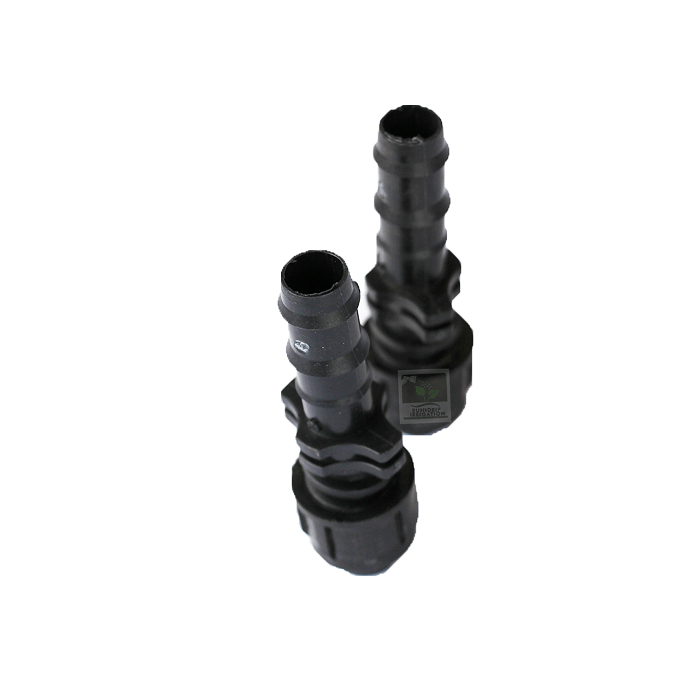
- Are the fittings the right joint type for the pipe? HDPE line fittings here are compression type. Elbows run from 20 mm to 110 mm at KSh 180. Also, tees are listed in inch sizes from 1/2 to 4 inch, male and female, at KSh 130 each, and end plugs KSh 15.
- Is the sprinkler radius stated as a number? The impact rain gun is sold as a 35 m radius unit. It comes in 1, 1 1/2 and 2 inch, at KSh 4,000. Similarly, micro sprinklers are listed at KSh 100.
- Can the supplier tell you what is in stock today? Ask about the HDPE puncher. Our shop lists it at KSh 700 and shows it out of stock today. That is the honest answer a good supplier gives.
HDPE pipe: sizes, pressure ratings and listed price
Two of the nine checks live on the pipe alone.
| What the shop publishes | Values listed today |
|---|---|
| Outside diameter sizes | 16 mm, 20 mm, 25 mm, 32 mm, 40 mm, 50 mm, 63 mm, 75 mm, 90 mm, 110 mm |
| Pressure ratings | PN 6, PN 8, PN 10, PN 12.5, PN 16 |
| Lowest listed price | KSh 1,800 |
| Material | High density polyethylene, compression fittings |
Both columns are choices, and a quote should state each one.
A size and a rating are two separate choices. The same 32 mm pipe can be bought at PN 6 or at PN 16. Because the rating sets the working pressure, a pipe price is only comparable when both are written down. This is where irrigation equipment suppliers separate themselves. One side quotes 32 mm. The other quotes 32 mm at PN 10.

For the material behind the rating, the PE100+ page on pressure pipe compounds explains why a grade is chosen. Similarly, the HDPE reference article gives the density range that puts the material in context.
Drip tape: wall thickness, spacing and roll length
Tape is where a cheap quote becomes a ruined season. Mil is wall thickness, and thickness decides whether a line is lifted and stored or ploughed in.
The drip tape on this shop is listed at 12 mil and 16 mil. In practice the 16 mil roll is the one for a second season of use. The 12 mil suits a single crop you intend to finish with.
Spacing is the second number. A dense narrow-row crop wants 10 or 15 cm. Conversely a wider row is served at 30 cm and above. Few irrigation equipment suppliers print the spacing on the roll, so ask before the tape is cut.

Clogging, not splitting, ends most tape. So ask how a seller expects you to flush the lines. We set that out on our page about unblocking clogged drip tape emitters. That maintenance answer tells you whether a seller has ever run a field.
Irrigation equipment suppliers quote by method
Ask five sellers for a quote on the same acre and you will get five different pieces of paper. That is not confusion. Each method moves water differently, so each one needs a different bill of material.
| Method | What goes on the invoice | The number that changes the list |
|---|---|---|
| Drip irrigation on drip tape | Tape rolls, take offs, end plugs, a filter, a puncher | Wall thickness in mil and emitter spacing |
| Drip on hard line | HDPE pipe, button drippers, valves, flush ends | Pressure rating and flow per emitter |
| Overhead sprinklers | Rain guns or micro sprinklers, lay flat hose, risers | Wetted radius and the pressure that makes it |
| Surface and furrow | Lay flat hose, gates, channels cut into the field | Slope and the length of each run |
| Big spans and pivots | Laterals, spans, a point source, a power supply | Flow per minute and how long the unit runs |
The same field under three methods gives you three different bills of material.
Tape and hard line are the two lists most buyers compare. They share the pump, the filter and the mainline. They differ on everything downstream, and our page on drip tape vs drip line sets that split out.

A pivot, a terrace or a furrow field is a different job. Few irrigation equipment suppliers sell those as parts. Typically they are quoted as a project, because the ground work is half the bill. Our page on land preparation for drip irrigation covers what a crew prices before a single metre of pipe arrives.
Wind and slope take their share too. An overhead method loses water to a hot afternoon, and a steep field loses pressure along the run. Where a low pressure design is the cheaper answer, our high volume low pressure irrigation article explains how it is sized.
Emitters, sprinklers and filters in current stock
Emitter choice is a pressure question, not a taste question. Pressure compensating buttons hold one flow across a range. Therefore they suit a long run or a sloped field.
Adjustable button drippers let you change flow per emitter, and are listed at KSh 10 each. Barbed take offs and starter connectors sit at the same KSh 15. Because of that, a fitting budget is a count question, not a price one.
Under a tree canopy a micro sprinkler at KSh 100 covers a small wetted disc. For lawns and beds the pop up sprinkler is listed at KSh 1,200 per piece. A hose reel sprinkler is a larger purchase and is quoted per project rather than per piece.

Filters come last and are sized by the port they sit in. So pipe diameter decides the filter before the mesh count does. Definitions for the surface drip method are in the drip irrigation reference article.
Six questions irrigation equipment suppliers should ask you
A seller who quotes without asking has sold you a catalogue, not a design. Six questions come before a good bill of material.
The slope of your land
Pressure drops with every metre downhill, so the slope decides the run length before the pipe size does. A flat plot takes one mainline. Conversely a sloped plot takes a manifold, more valves and often pressure compensating emitters.
Your soil type
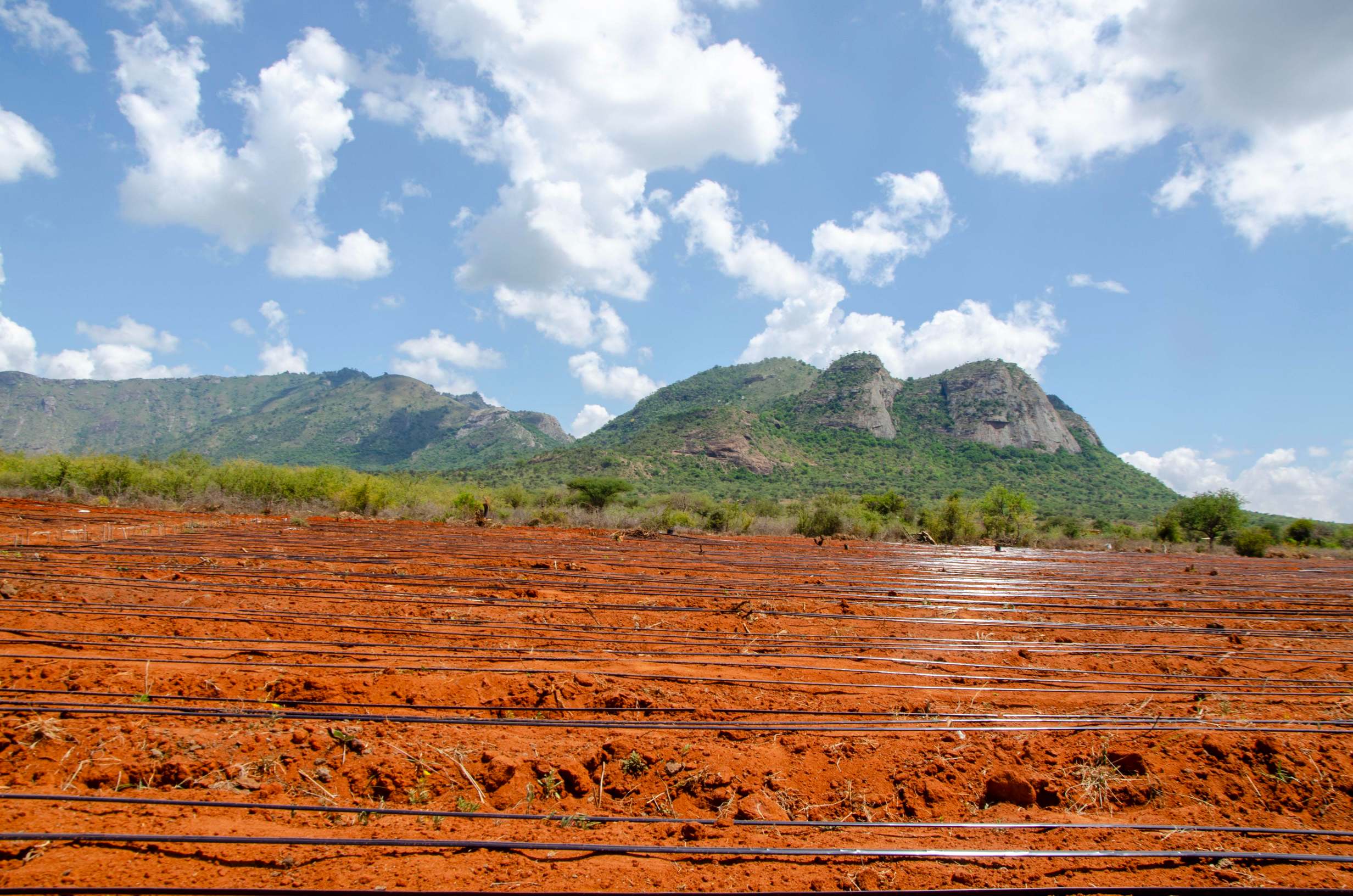
Heavy soil spreads water sideways in a wide wetted disc. Sandy soil pushes it down instead. In practice the same crop on two soils takes two different emitter spacings, and a seller who never asked about yours guessed.
How much water, and how salty
A borehole, a dam and a river give different volumes and different salts. Because a low yield forces shorter runs and smaller zones, the water test belongs on the quote. Likewise a salty source changes what you leave on the lines.
What you grow, and at what spacing
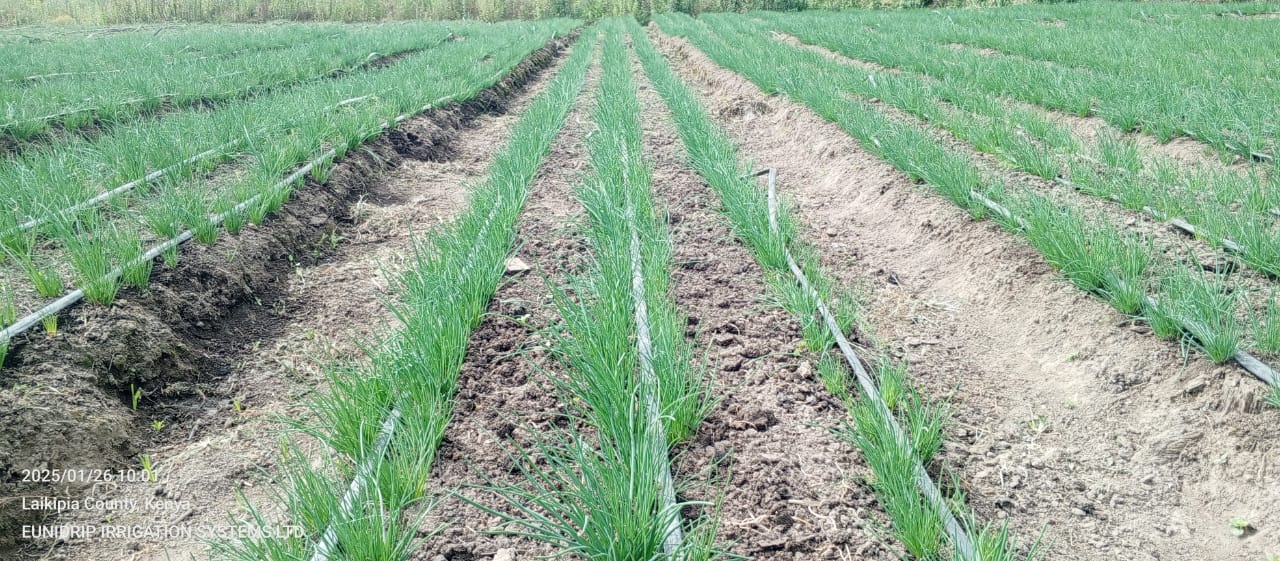
Row crops, trees and nursery beds are three layouts. Onion rows at 30 cm and avocado trees at five metres are two systems. So give the spacing before you ask the price, and the list gets shorter.
Who runs the system after installation
A system left to an untrained worker fails at the filter, not the pipe. Ask what flushing and cleaning the seller expects, and how often. We put that routine on our page about unblocking clogged drip tape emitters.
What your season and your market look like
A grower feeding a weekly market needs a different span from one harvesting once a season. Therefore the pump and the storage come from your calendar, not from the size of the plot. Typically that answer changes the bill before the tape does.
What irrigation equipment suppliers charge per item
Each row below is a live product page. Prices are the lowest amount listed today, and the spec column is what the shop publishes.
| Item | Published spec | Lowest listed price |
|---|---|---|
| HDPE irrigation pipe | 16 mm to 110 mm, PN 6 to PN 16 | KSh 1,800 |
| Drip tape | 12 mil and 16 mil, 1000 m to 2000 m, 10 to 50 cm spacing | KSh 8,000 |
| Adjustable button drippers | Five colours, adjustable flow | KSh 10 |
| Pressure compensating button drippers | 2, 4, 8 and 16 L/H | KSh 10 |
| Arrow drippers | Pegged, single outlet | KSh 60 |
| Screen filter | 3/4, 1, 1 1/2 and 2 inch ports | KSh 900 |
| Disc filter | 3/4, 1, 1 1/2 and 2 inch ports | KSh 1,400 |
| HDPE elbows | 20 mm to 110 mm | KSh 180 |
| HDPE tees | 1/2 to 4 inch, male and female | KSh 130 |
| HDPE compression couplings | Straight joiner, 20 mm to 110 mm | KSh 130 |
| Tape end plugs | 16 mm to 110 mm, SKU EU00030 | KSh 15 |
| Take off connectors | Barbed, 16 mm, lateral to sub main | KSh 15 |
| Impact rain gun | 35 m radius, 1, 1 1/2 and 2 inch | KSh 4,000 |
| Micro sprinkler | 1/2 and 3/4 inch, black and red, SKU EU0001 | KSh 100 |
| Pop up sprinkler | 1/2 and 3/4 inch, sold per piece | KSh 1,200 |
| Air release valve | 25 mm, 50 mm, 63 mm | KSh 950 |
| Water meter | In line, single jet, 1/2 inch | KSh 2,500 |
| PVC lay flat hose | Folding delivery hose | KSh 10,000 |
| HDPE puncher | Sizes from 3-4 mm to 40 mm, currently out of stock | KSh 700 |
Every figure is our own listed price. Compare it against any written quote you hold.
For a whole plot, our drip irrigation kit for sale in Kenya page prices the assembled package. The cost of a drip irrigation system in Kenya breakdown adds the field, the water and the labour.
Kits, connectors and the parts nobody quotes
A per item list is not a system. The items that sink a budget are the ones a buyer never thought to price. Irrigation equipment suppliers rarely quote these five, and they are the first items a crew runs out of.
- End plugs. A tape run without a plug is an open tap on every line. First, count your runs, then buy twice that number.
- Take offs and starter connectors. At KSh 15 each they look trivial. Then a five acre field needs four hundred of them.
- Air release valves. Listed at KSh 950 in 25, 50 and 63 mm. An empty line fills with air before it fills with water. Because of that, this part stops a morning of no flow.
- A water meter. At KSh 2,500 it is the cheapest way to check your abstraction. Also it shows whether the volume matches the crop.
- The puncher. 12 mm tape needs one, and a supplier who is out of stock should say so. Instead of substituting, they should name a date.
Pumps, tanks and fertigation units are a narrower trade. So ask which items ship from stock and which are ordered in. Our guide to buying a pump for drip irrigation lists what to ask for. The shop’s counter terms and order process are on the irrigation equipment supplier page for the storefront.
Red flags when comparing irrigation equipment suppliers
Six of these end a comparison for us. None of them are about price. Serious irrigation equipment suppliers answer all six without being asked twice.
- No pressure rating and no wall thickness anywhere in the quote. Then you are buying two unknowns at once.
- A price per metre with no run length, because the run decides the fitting count more than the tape does.
- A catalogue image instead of a photo of what is on the shelf. However attractive the file, it is not stock.
- The word universal applied to HDPE fittings, which is a joint type error dressed up as a saving.
- A quote that never mentions filtration. A drip line without a filter is a season with an expiry date.
- Nobody asked about your slope, your soil or your water. Then the design was copied from another farm.
Frequently asked questions about irrigation equipment suppliers
What do irrigation equipment suppliers in Kenya actually stock? Most stock the consumables: pipe, tape, emitters, fittings and filters. Pumps, tanks and fertigation units are a narrower trade. So ask which items ship from stock and which are ordered in.
Do suppliers install what they sell? Some do and some do not. Instead of assuming, ask for the last three installations in your county. Then check one of them in the field.
Which irrigation method should I buy from a supplier? No one list fits every field. The slope, the soil, the water and the crop decide it, and each method has its own bill of material. Ask the seller to name the method first, then price it line by line.
Can a system be sized to my plot and crop? Yes, and this is the main reason to buy from a technical seller rather than a general store. Spacing, run length and pressure rating all change with the crop. Because of that, a sized list is shorter and cheaper than a kit.
Is delivery available outside the big towns? Typically yes, with a lead time that depends on the item. Therefore confirm the terms for the specific part, not for the company. Get the date in writing.
What should a written quote include? Six numbers: pressure rating, outside diameter, wall thickness in mil, emitter spacing, flow per emitter and filter port size. Likewise it should state which lines are in stock today.
Sources for the specifications on this page
The four references below cover the definitions only. Everything with a price on it is a live product page.
- PE100+ SDR pipe and MOP calculator.
- PE100+ guidance on polyethylene compounds for pressure pipe.
- High density polyethylene, material reference.
- Drip irrigation, method reference.
Every money figure on this page is our own listed price. That is a limitation, and it is the reason every one of them is linked.
What to ask for before you pay
Ask for six numbers and a stock date. Pressure rating, outside diameter, wall thickness in mil, emitter spacing, flow per emitter, filter port size. Then compare that list against the table above.
Some of the irrigation equipment suppliers you compare cannot give you those six. In that case you are buying their guess, not a spec. We publish the same figures on our own product pages. A wrong fitting costs a season, not a KSh 130 tee.
If you want the list written against your field, send the crop, the area, the slope and the water source. Then use our contact page and we will price it line by line.