Table of Contents
Large-scale irrigation system design and installation is a multidisciplinary engineering process. It combines surveying, hydrology, agronomy, soil science, hydraulics, civil works, electrical work and farm management. A properly designed scheme delivers the required water to every crop at the right pressure, within the available irrigation hours, while reducing energy, labour and operating costs. This large-scale irrigation system design and installation sequence keeps those decisions connected.
Whether the project covers 50, 100, 300 or 1,000 acres, our team starts with measured site data and a clear operating plan. The guide below follows the engineering sequence we use before selecting pumps, pipes, filters, fertigation equipment and controls.
1. Large-Scale Irrigation System Design and Installation: establish requirements
Start by defining the production objective and project scope. Record the total farm acreage and the acreage to irrigate. Also record crops, the cropping calendar, crop spacing and plant population. Finally, capture the capital and operating budget, preferred method, water and energy sources, automation level, expansion plans and irrigation hours per day. Therefore, this brief becomes the design basis and prevents a pump or pipe network being sized around an assumption.
2. Large-Scale Irrigation System Design and Installation: survey the site
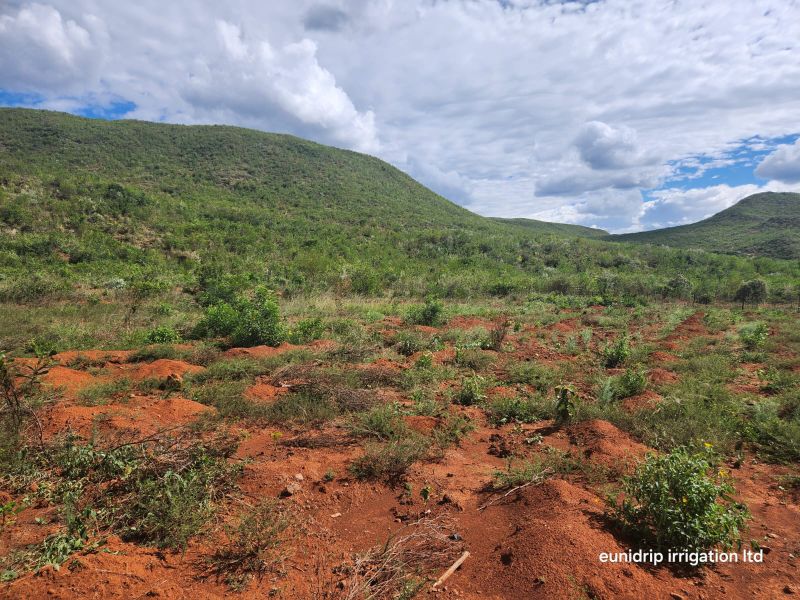
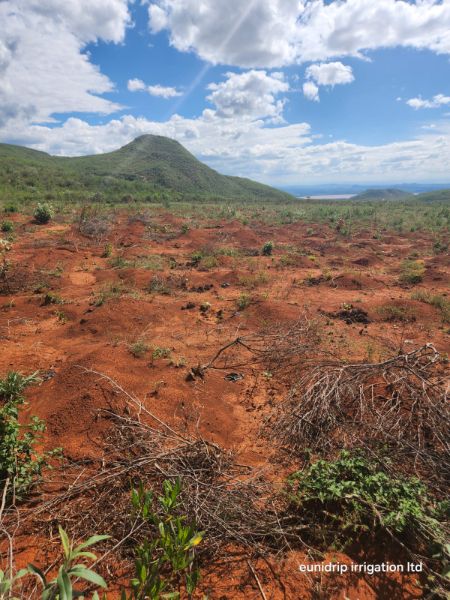
Use RTK GPS, total stations, drones and GIS mapping where appropriate. Map farm boundaries, coordinates, high and low points, contours, slopes and drainage. Then map roads, existing infrastructure, water sources, reservoir sites, pump-station locations and possible pipeline routes. Elevation changes directly affect operating pressure, pumping head and energy use. As a planning rule, about 10.2 metres of elevation difference creates or consumes one bar of hydraulic pressure. Consequently, the final design must use surveyed levels and calculated losses.
3. Large-Scale Irrigation System Design and Installation: analyse the soil
Collect representative samples across management zones. Test texture, structure, water-holding capacity, infiltration rate, field capacity, permanent wilting point, rooting depth, salinity and drainage. The application rate must stay within the soil infiltration rate. Otherwise water runs off, erodes the field or remains long enough to waterlog roots. Soil results also guide emitter spacing, irrigation frequency and the number of zones.
4. Large-Scale Irrigation System Design and Installation: assess water
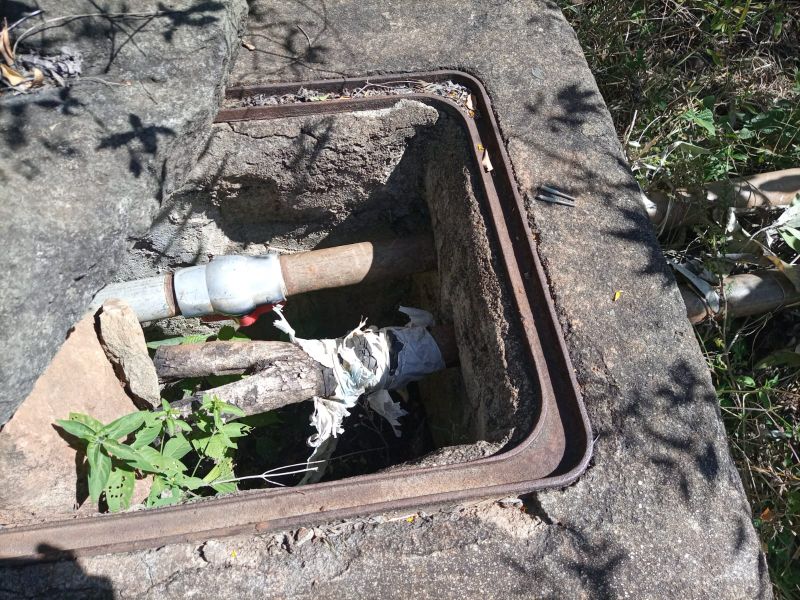
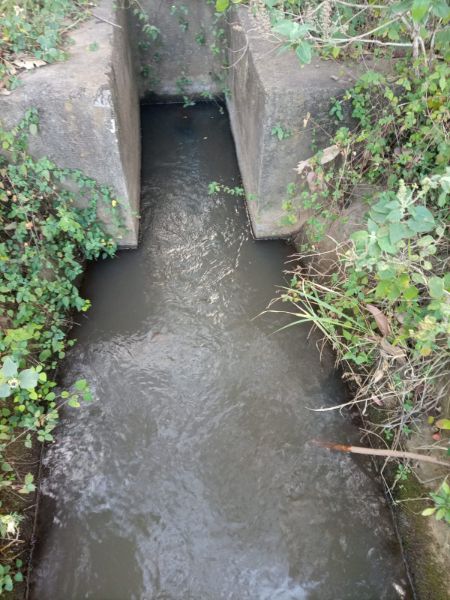
Evaluate boreholes, rivers, streams, dams, water pans, springs, rainwater harvesting and suitably treated recycled water. Meanwhile, a borehole pumping test should establish sustainable yield, static and dynamic water levels, drawdown and recovery. For surface water, allow for seasonal flow, drought and permitted abstraction volumes. Therefore, the source must meet peak crop demand, not only the average demand in a wet month.
5. Test water quality
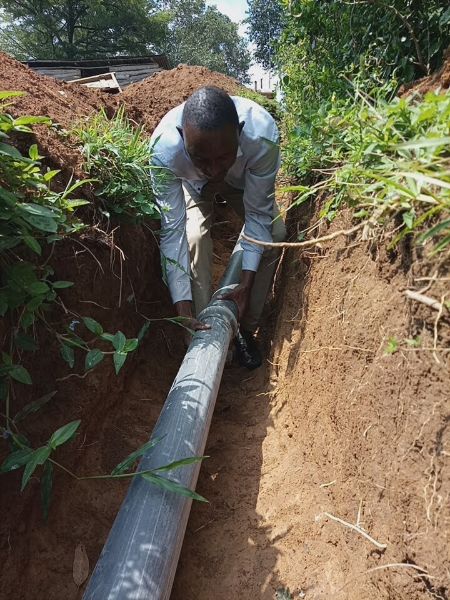
Send samples to a qualified laboratory. Check pH, electrical conductivity, total dissolved solids and suspended solids. Also test iron, manganese, calcium, magnesium, sodium adsorption ratio, chlorides, bicarbonates and biological contamination. Results determine crop suitability, filter media and mesh, chemical treatment, fertigation compatibility and pipe materials. In addition, re-test when the source changes or a borehole shows a new water-quality trend.
6. Calculate crop water requirements
Use local climate data, crop coefficients and evapotranspiration.
The standard relationship is
ETc = ETo × Kc.
Where :
- ETc is crop evapotranspiration
- ETo is reference evapotranspiration
- Kc is the crop coefficient.
- Then subtract effective rainfall and account for efficiency, leaching and peak growth. The FAO-56 crop evapotranspiration method explains the calculation. Finally, convert peak daily depth into volume and then into design flow for each irrigation shift.
7. Select the method and divide the farm into zones
Choose drip, sprinkler, centre pivot, rain hose or a combination according to crop, soil, slope, wind, labour and energy. For example, drip suits precise root-zone delivery and fertigation. Sprinklers suit crops and soils that need broader wetting. A centre pivot can automate a large, relatively uniform block. Divide the farm into hydraulic zones with similar elevation, crop demand and emitter or sprinkler duty. As a result, a shift schedule lets one pump serve more acreage without being sized for the whole farm at once.
8. Large-Scale Irrigation System Design and Installation: size hydraulics
Calculate design flow from peak zone demand and selected irrigation hours. Select mainlines, submains and laterals for acceptable velocity and friction loss. Then check pressure at the highest and lowest outlets. The pump duty point is required flow at total dynamic head. Include static lift, elevation, pipe friction, fittings, filtration, valves and operating pressure. Specify a filter that matches the water analysis and design flow. Add air-release, isolation, non-return, pressure-regulating and safety valves. Electrical protection, remote monitoring and backup power belong on the same design drawing.
9. Plan fertigation, reservoirs and civil works
Allow space and safe access for the pump house, intake, reservoir, filtration skid, fertigation unit, chemical storage, drains and flushing points. Our automatic fertigation machine can be incorporated where the crop plan calls for measured nutrient injection. Match injection equipment to water chemistry and fertiliser compatibility, and include backflow protection so concentrated solution cannot return to the source.
10. Install, test and commission in stages
Set out the surveyed routes. Install the reservoir and pump station. Lay mains and submains, connect valves and install laterals or sprinklers. Flush every line before fitting sensitive emitters. With valves open, check for leaks, air release, filter operation and pump rotation. Close the flush ends. Measure pressure at design points and compare flow with the hydraulic schedule. Catch-can tests or emitter-flow checks should confirm uniformity before the first crop cycle. Record as-built routes, valve numbers, pump settings and maintenance intervals for the operator.
Eunidrip components to match to the design
Our shop components are selected after the site data, flow and pressure are known. In contrast, choosing parts before those checks can create pressure and capacity mismatches. The final bill of materials should follow the approved hydraulic schedule.
| Design requirement | product | Selection check |
|---|---|---|
| Conveyance and distribution | Irrigation pipes | Match diameter, pressure class, route and calculated friction loss. |
| Source-water protection | Irrigation water filters | Choose screen or media capacity from water analysis and peak flow. |
| Water storage | Water tanks in Kenya | Size usable volume for source yield, peak demand and operating shifts. |
| Measured nutrient dosing | Automatic fertigation machine | Confirm injection range, fertiliser compatibility and backflow protection. |
Product selection follows the approved large-scale irrigation design and installation calculations.
Operate and maintain the completed scheme
Train operators to start and stop the pump in the correct order, read pressure and flow gauges, flush filters and laterals, inspect valves and clean fertigation equipment. In addition, keep a log of run hours, pressure, flow, filter differential pressure, rainfall and repairs. Review the schedule when crop stage, weather, water level or energy tariff changes. Consequently, a seasonal audit of uniformity and energy use keeps the original design useful as the farm expands.
Frequently asked questions
How much land can one irrigation system cover? There is no fixed acreage limit. Instead, source yield, crop demand, terrain, irrigation method and the number of daily shifts determine the practical coverage.
Why is a survey needed before a quotation? Elevation and route data determine pump head, pipe lengths, pressure zones, drainage and civil-work quantities. Without them, a quotation is only a preliminary allowance.
Can solar power run a large scheme? Yes. However, the array, controller, storage or daytime operating schedule must be sized to the measured pump duty and seasonal solar resource.
When should the design be reviewed? Review it after crop changes, expansion, a new water source, persistent pressure variation, filter clogging or a change in energy supply.
What should a design handover include? It should include the hydraulic schedule, as-built drawings, valve and zone map, commissioning readings, maintenance plan and operator training notes.
For a site-specific design, share the surveyed area, crop plan, water test, source yield, elevation data and preferred operating hours with our irrigation team. Our large-scale irrigation system design and installation service then matches the system architecture and Eunidrip components to the actual duty rather than an acreage guess.